

The P-51 Mustang’s reputation usually arrives fully formed. Fast. Deadly. Beautiful. The fighter that escorted bombers deep into enemy territory and helped turn the air war over Europe. That version of the story is all true. But it’s also incomplete.
Because the real story of the Mustang isn’t about a perfect aircraft that arrived fully realized. It’s about a machine that almost failed, was nearly dismissed, and then transformed into one of the most dominant fighters in history through a single, risky decision.
It wasn’t supposed to be America’s best fighter
The P-51 began as a rushed project. In 1940, the British needed fighters quickly and approached North American Aviation to build Curtiss P-40s under license. North American countered with a bold claim: give us the same deadline, and we’ll design something better from scratch.
They did. Remarkably fast.
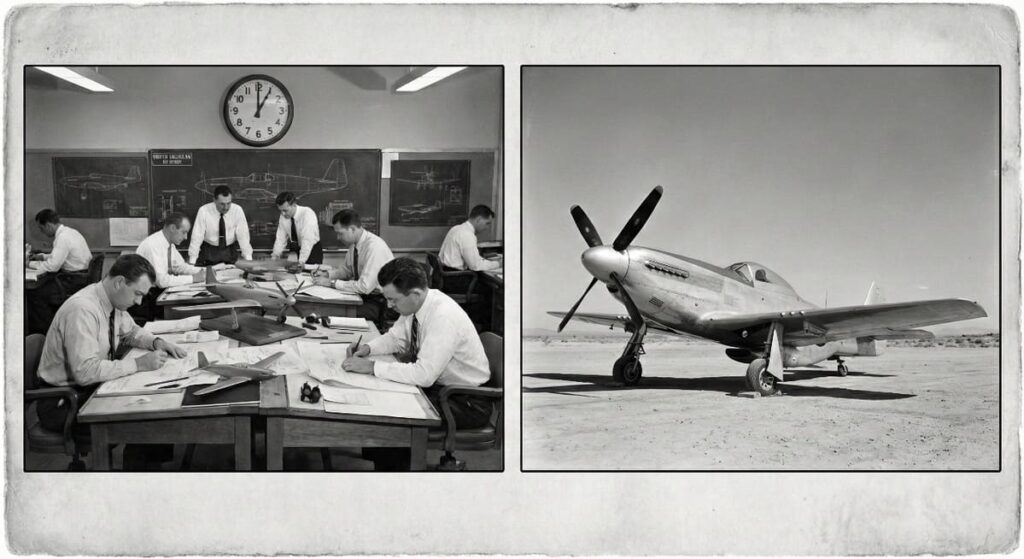
The early Mustang airframe was aerodynamically clean, efficient, and modern. Laminar flow wings. Sleek fuselage. Excellent range. On paper, it looked like a future classic.
In the air, it was… fine.
Not great. Not terrible. Just underwhelming at high altitude, where the real battles were being fought. The Allison engine it used performed well at low and medium levels but ran out of breath higher up. That limitation almost defined the aircraft’s legacy as a missed opportunity.
Almost.
The engine swap that changed everything
Here’s the part many summaries glide past too quickly: the Mustang’s dominance was not inevitable. It was engineered into existence through trial, skepticism, and a fair amount of desperation.
British engineers decided to experiment. They took the American airframe and fitted it with a Rolls-Royce Merlin engine instead of the Allison. On paper, it was a mismatch. In reality, it was transformative.

Suddenly, the Mustang could climb. It could fight at altitude. It could escort bombers all the way to Berlin and back. Its range, already impressive, became a strategic weapon. Its speed and agility meant it wasn’t just escorting. It was hunting.
The P-51 didn’t just improve. It became a different aircraft.
That hybrid of American airframe and British engine produced something neither country had managed to build alone. A rare case of transatlantic collaboration that quite literally changed the war in the air.
Range mattered more than raw performance
Plenty of fighters could dogfight. That wasn’t the unique advantage. The P-51’s real strength was endurance.
Before the Mustang, Allied bombers often flew without fighter cover deep into enemy territory. Losses were brutal. Crews knew the odds. They flew anyway.
The Mustang changed that equation. Drop tanks extended its reach. Efficient aerodynamics stretched its fuel. It could stay with the bombers, protect them, and then still have the legs to chase enemy fighters back to their own airfields.
That last part mattered more than most people realize. The Mustang didn’t just defend. It denied the Luftwaffe safe space to recover. Air superiority isn’t about winning individual fights. It’s about controlling where the enemy can exist at all.
The P-51 understood that before most strategists did.
It was brutal, not romantic
There’s a tendency to romanticize iconic fighters. Gleaming aluminum. Victory markings. Heroic silhouettes against the sky. The operational reality was harsher.
The Mustang was flown hard. Often at the limits of range. Pilots pushed fuel margins. Engines were run aggressively. Combat was sudden and violent. Survival depended on awareness, luck, and machine reliability.
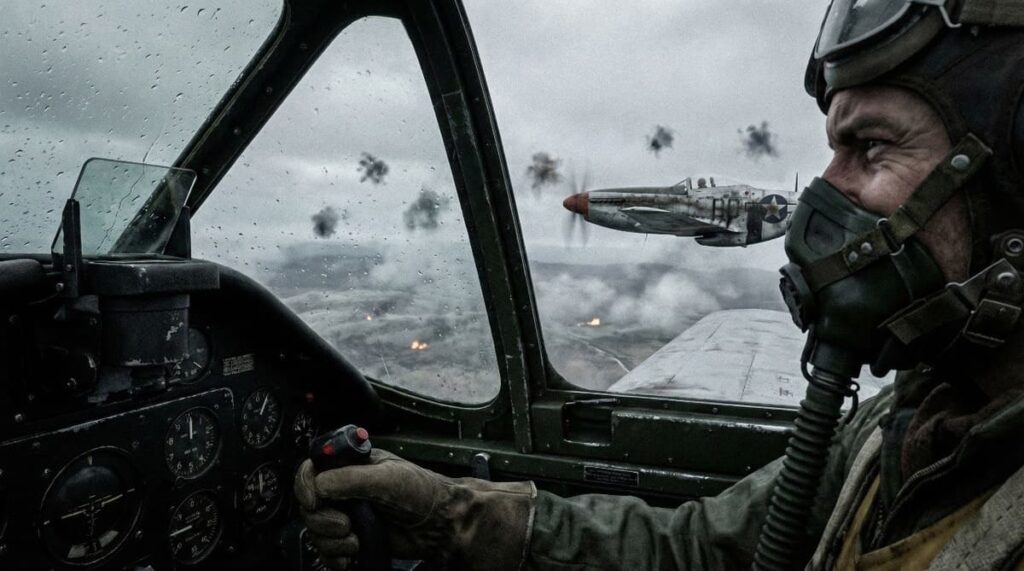
The P-51 earned its reputation not because it looked good in photos, but because it kept bringing pilots home. Because it could fight and still make the long journey back. Because it gave its crews a chance where previously there was none.
That’s not glamour. That’s trust.
Why the Mustang still commands attention
Decades later, the P-51 remains one of the most recognizable aircraft ever built. Airshows still stop when one starts up. That distinctive Merlin sound pulls people across entire airfields.
But beyond nostalgia, the design still holds up under scrutiny. Clean lines that weren’t aesthetic choices but aerodynamic ones. Purposeful proportions. A cockpit built around function rather than comfort.
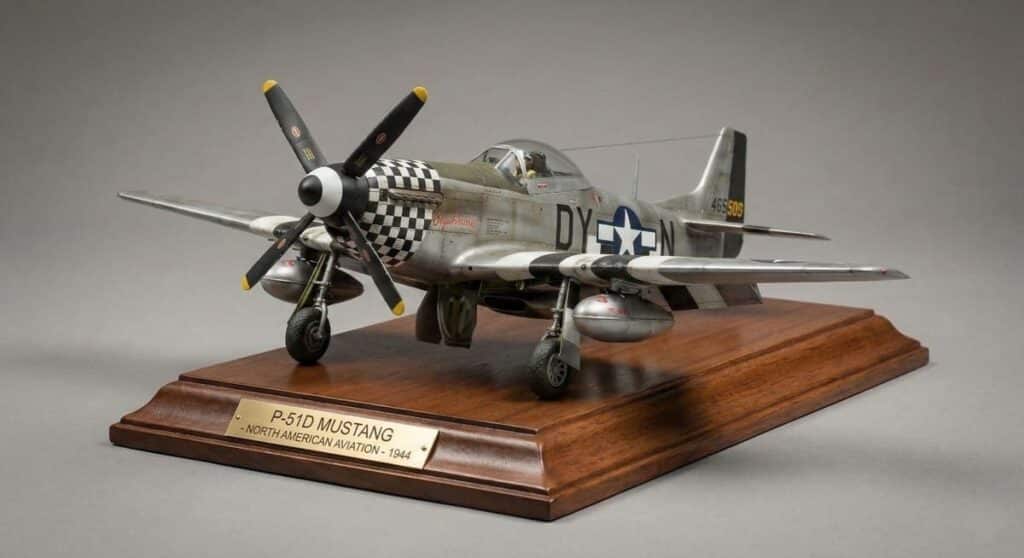
That’s why collectors and enthusiasts continue to study it closely. A detailed model plane of a P-51 isn’t just decorative. It reveals the aircraft’s logic. The wing shape. The radiator scoop. The way everything flows toward performance. A custom airplane model of a specific Mustang — with its squadron markings and weathered details — preserves individual histories that otherwise blur into general legend.
It becomes a way to keep the story specific, not abstract.
The real legacy of the P-51
The P-51 Mustang didn’t dominate the skies because it was perfect. It dominated because it evolved. Because engineers were willing to admit the original configuration wasn’t enough. Because someone took a chance on an unconventional engine pairing. Because pilots trusted it in the worst possible conditions.
Its story is less about destiny and more about adaptation.
That’s the part often left out.
The Mustang didn’t arrive as a legend. It earned that status through problem-solving, collaboration, and relentless operational pressure. And maybe that’s why it still resonates so strongly. Not just as a beautiful aircraft, but as a reminder that the most impactful machines are rarely born great.
They become great because people refused to accept their limitations.