
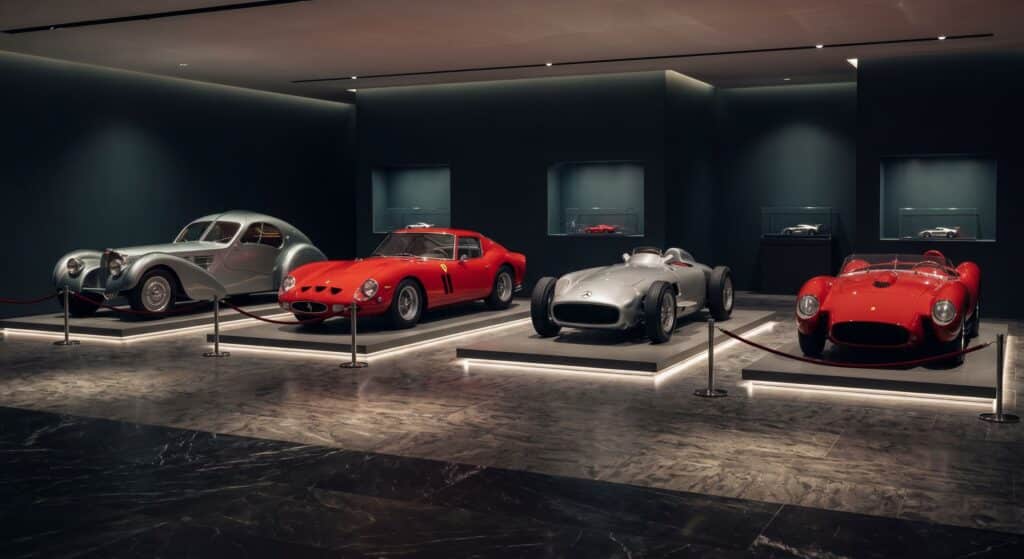
In August 2018, a 1962 Ferrari 250 GTO sold at auction in Monterey for $48.4 million. At the time it was the highest price ever paid for a motor vehicle at public auction. It held that record for approximately three years before another Ferrari 250 GTO sold privately for a figure believed to exceed $70 million. The buyer of the Monterey car was not a person who needed a 60-year-old racing car. They were a person who understood that the 250 GTO had crossed the boundary between automobile and cultural artefact — that its value was no longer measured against other cars but against other categories of significant object entirely. Against art. Against historical documents. Against the physical evidence of achievement that a civilisation decides, collectively, it cannot afford to lose.
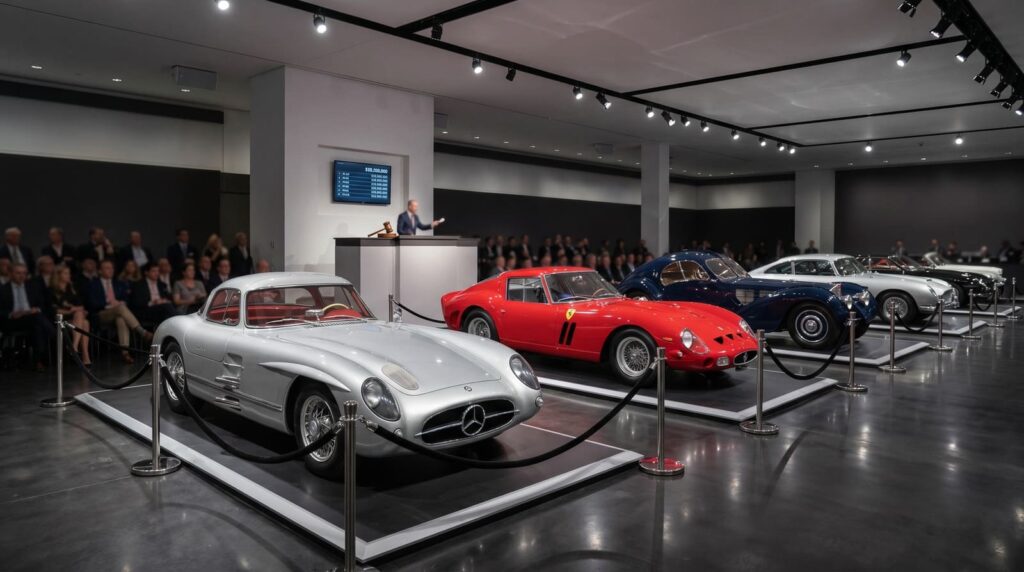
The most expensive cars ever sold at auction are interesting not because of the numbers — though the numbers are extraordinary — but because of what the numbers reveal. Every car on this list crossed a threshold where its value became about something other than its mechanical merit. Understanding what that something is, and why these specific cars crossed that threshold when so many others did not, is understanding something genuine about what automotive history actually means to the people who take it most seriously. And the model cars that reproduce these subjects in scale are, in their own way, the most democratically available form of the same collecting impulse that drives the auction records — the impulse to possess, in some permanent form, the evidence that these machines existed and mattered.
1. Ferrari 250 GTO — The Car That Redefined What a Car Could Be Worth
Record sale: $70 million+ (private, 2018) · Highest public auction: $48.4 million (RM Sotheby’s, Monterey, 2018) · Production: 36 units · Engine: 3.0-litre Colombo V12 · Years produced: 1962–1964
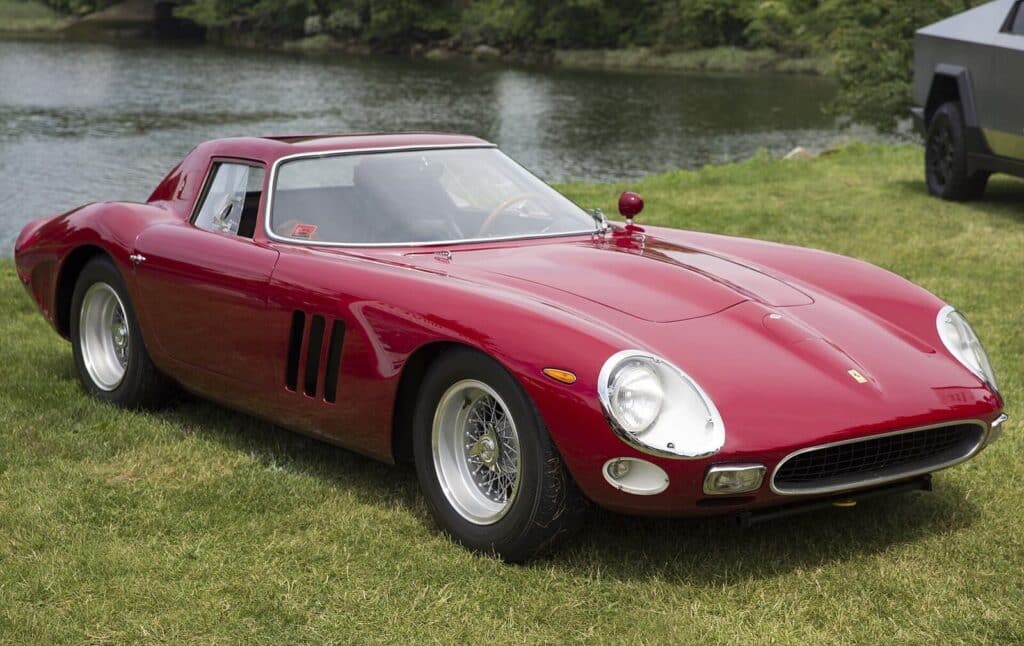
The Ferrari 250 GTO’s value story is unlike any other in automotive history. It was not expensive when it was new — it was priced comparably to other high-performance Ferraris of its era. Its value did not begin its extraordinary appreciation until the 1980s, when the collector market began to recognise that the combination of Le Mans class victories, FIA World GT Championship titles, racing provenance, Pininfarina-derived bodywork, and extreme scarcity had produced something that belonged in a different category from other valuable cars. By 1990, a 250 GTO was worth $10 million. By 2010, $30 million. By 2018, the public auction record of $48.4 million. The private transaction believed to have exceeded $70 million was not a surprise to anyone who had watched the trajectory.
What makes the 250 GTO’s value comprehensible is understanding what it represents rather than what it is. It is simultaneously the last pure racing car that road-registered customers could buy directly from Ferrari, the finest expression of the Colombo V12 engine’s development in competition, and one of the most visually resolved automobiles ever produced. Each of those qualities alone would produce a valuable car. Together, in 36 examples, they produced the most valuable car in history. Every one of those 36 examples is documented, numbered, and known to the collector community with a specificity that makes the provenance of each sale an event in itself.
2. Bugatti Type 57 SC Atlantic — The Most Beautiful Car Ever Made
Estimated value: $40–50 million (private collection, never publicly auctioned) · Production: 4 units (1 destroyed, 1 missing, 2 in collections) · Engine: 3.3-litre supercharged straight-eight · Year: 1936–1938
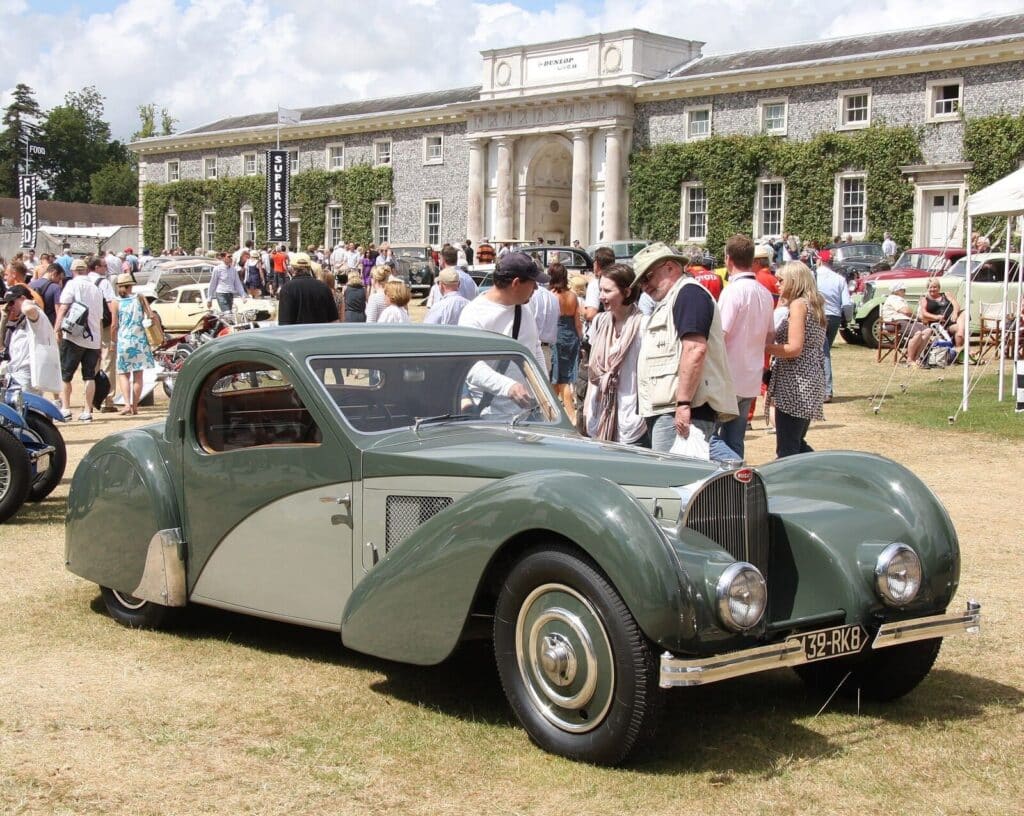
The Bugatti Type 57 SC Atlantic has never sold at public auction, which is why it does not appear in the official record books. But the two surviving examples — one owned by the Mullin Automotive Museum in California, one in a private European collection — are consistently valued by auction specialists at between $40 and $50 million, making either one of them the most valuable pre-war automobile in existence. The Atlantic’s body, designed by Jean Bugatti and characterised by the extraordinary dorsal fin seam running from nose to tail, was formed from electron alloy — a magnesium-aluminium compound so difficult to weld that the seam was riveted rather than welded, producing the ridge that defines the car’s appearance and distinguishes it from everything else ever put on four wheels.
Four were made. One was destroyed during the Second World War. One — the so-called ‘missing Atlantic’ — disappeared from records in 1938 and has not been definitively located since, though it is believed to have survived in private hands. The two confirmed survivors have not changed hands publicly since their current owners acquired them. The Atlantic’s value is not merely financial — it is the value of irreplaceability combined with the consensus, across automotive opinion, that no car before or since has achieved the same quality of design. It is the car that established that automobiles could be considered alongside the finest works of art on purely aesthetic grounds. That consensus has held for eighty years without significant dissent.
3. Mercedes-Benz W196 — Formula One History at $30 Million
Sale price: $29.6 million (Bonhams, Goodwood, 2013) · Driver: Juan Manuel Fangio · Championships: 1954, 1955 World Drivers’ Championship · Engine: 2.5-litre straight-eight desmodromic · Production: 14 units
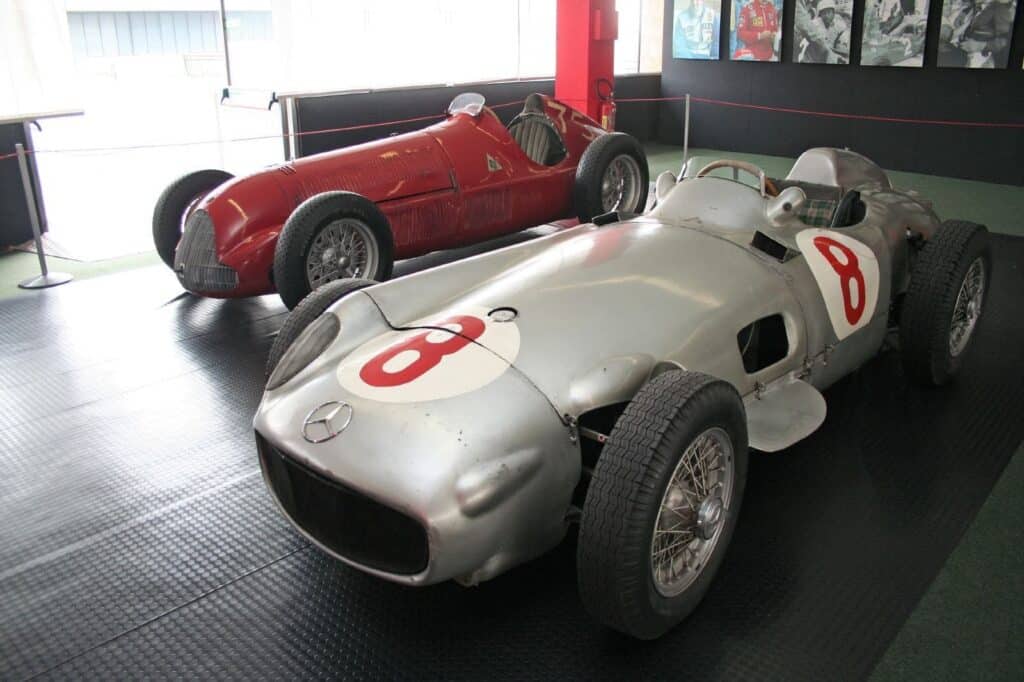
The Mercedes-Benz W196 that sold at Bonhams in 2013 for $29.6 million was not simply the most valuable Formula One car ever sold at auction. It was the specific chassis in which Juan Manuel Fangio won the 1954 French Grand Prix at Reims on the W196’s debut, having qualified on pole position and led every lap. Fangio went on to win the 1954 and 1955 World Drivers’ Championships in the W196, making it one of the most successful Grand Prix cars in the history of the sport. The chassis that sold at Bonhams had a documented racing history that connected it directly to those championships, in the hands of the driver most serious historians consider the greatest in Formula One history.
The W196’s sale demonstrated something that the auction community had suspected but not previously confirmed at this price level: that Formula One history, when sufficiently documented and sufficiently significant, commands values comparable to the most expensive road cars. The chassis that won a championship in Fangio’s hands is not a racing car in the conventional sense — it is a historical document, physical and three-dimensional, of one of the most significant sporting achievements of the twentieth century. The $29.6 million reflected that understanding entirely.
4. Shelby Cobra CSX2000 — The First and Therefore the Most Valuable
Sale price: $13.75 million (RM Sotheby’s, 2016) · Significance: first Shelby Cobra ever built · Engine: 260 cubic inch Ford V8 · Year: 1962 · Owner at sale: Carroll Shelby himself until his death in 2012
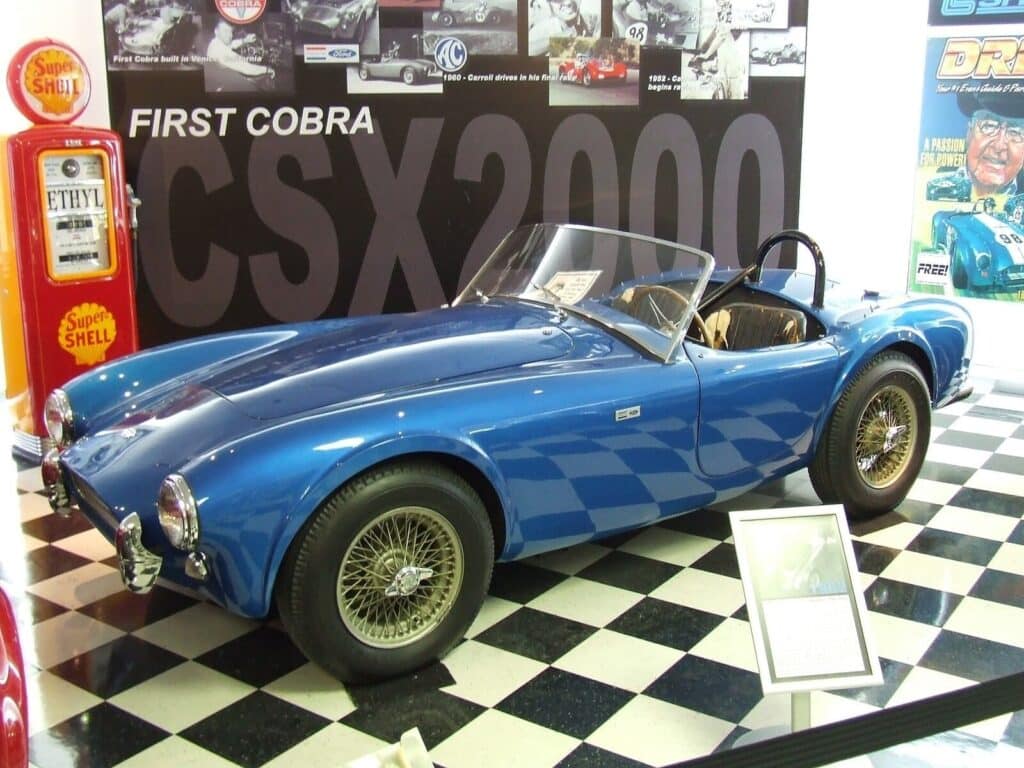
CSX2000 is the chassis designation of the first Shelby Cobra ever assembled — the car that Carroll Shelby built by fitting a Ford V8 engine into an AC Ace body in his Los Angeles workshop in January 1962, creating what he described as the most exciting sports car in the world. The car remained in Shelby’s personal possession for most of its life, which gave it a provenance so direct — the maker owned the first example of his most celebrated creation — that no documentation was required to establish its significance. When it sold in 2016, four years after Shelby’s death, the $13.75 million it achieved reflected the combination of historical significance, maker provenance, and the first-of-its-kind premium that the collector market consistently applies to founding examples of significant automotive lineages.
5. Ferrari 250 Testa Rossa — Le Mans in a Pontoon Fender Body
Sale price: $39.8 million (RM Sotheby’s, 2014) · Race history: Le Mans, Sebring, Mille Miglia · Engine: 3.0-litre Colombo V12 · Production: 34 units (various specifications) · Year: 1957–1958
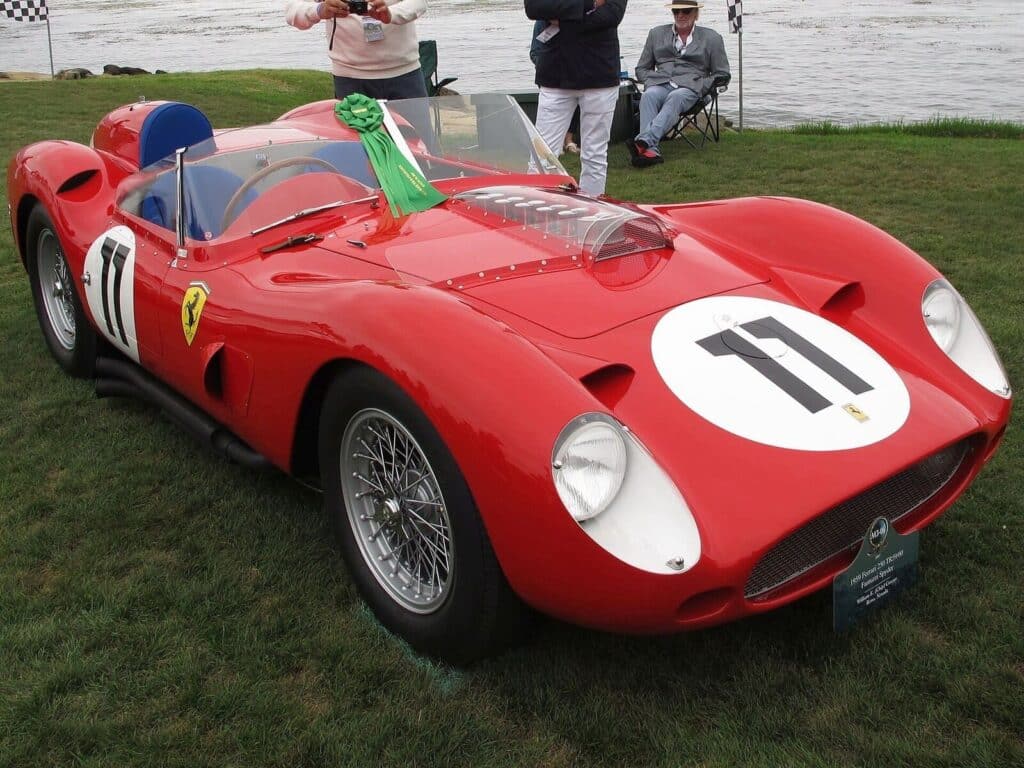
The Ferrari 250 Testa Rossa — named for the red cam covers of its V12 engine — is the road-racing Ferrari that preceded the 250 GTO in Ferrari’s competition programme and shares with it the Colombo V12 engine that defines the 250 series. The pontoon-fendered open sports racing body, designed around the engine and driver package by Sergio Scaglietti, is among the most visually dramatic racing car designs of the 1950s — a period when racing car aesthetics and aerodynamic function were in their most productive creative relationship. The specific example that sold in 2014 had competed at Le Mans, Sebring, and numerous other significant events, with a documented racing history that established its provenance with the specificity that serious collector car auction requires.
6. Aston Martin DBR1 — The Car That Won Le Mans for Britain
Sale price: $22.55 million (RM Sotheby’s, 2017) · Race history: 1959 Le Mans 24 Hours winner · Engine: 2.9-litre straight-six · Driver: Carroll Shelby and Roy Salvadori · Production: 5 units
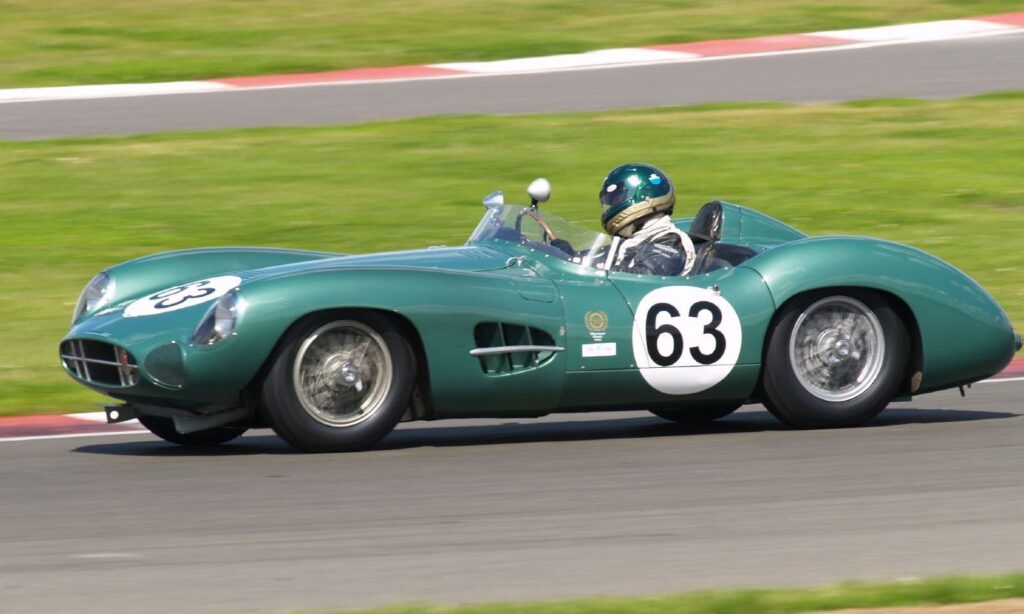
The Aston Martin DBR1 that sold in 2017 for $22.55 million is the specific car — chassis DBR1/1 — that won the 1959 24 Hours of Le Mans with Carroll Shelby and Roy Salvadori sharing the driving duties. It is the only Le Mans-winning Aston Martin ever to appear at public auction, and the only example of the DBR1 to carry the Le Mans victory as part of its documented race history. Aston Martin’s Le Mans victory in 1959 was the high point of the British marque’s competition history and remains the defining moment in a racing record that stretches across seven decades. The car that crossed the line first at La Sarthe that year is, in the most literal sense, the most important Aston Martin ever built.
Every car on this list crossed a threshold where its value became about something beyond mechanical merit — the record, the race, the maker’s hand, or the irreplaceable specificity of the first. That threshold, once crossed, does not reverse.
Why These Specific Cars — The Formula Behind the Records
The cars that set auction records are not the fastest, the most powerful, or the most technologically advanced cars of their respective eras. The McLaren F1 was technically superior to the Ferrari 250 GTO in almost every measurable performance category. It has never sold for more than $20 million. The reason is not performance — it is the combination of factors that produce genuine rarity combined with genuine historical significance, where rarity means that no substitute exists and historical significance means that the car’s story is part of a larger story that the culture has decided matters.
The formula is consistent across every car on this list: made in small numbers for a specific competitive purpose, used in competition by identified drivers in documented events with significant results, surviving in known and traceable condition, and representing a moment in automotive history that no other surviving example documents with equal specificity. The combination of all four factors — scarcity, provenance, condition, and historical specificity — is what produces the extraordinary values. Any car that achieves all four becomes, in the collector market’s assessment, an object that deserves to be compared with the finest works of art and the most significant historical artefacts. The prices reflect that comparison, not a car market operating within its own logic.
What the Scale Replica Preserves That the Auction Record Does Not
The person who paid $48.4 million for the Ferrari 250 GTO at Monterey in 2018 owns something that will be stored in a climate-controlled facility, insured for a figure that determines who can see it and under what conditions, and driven — if driven at all — on carefully selected occasions by arrangements that the insurance policy governs as much as the owner’s preferences. The car’s value has made it, paradoxically, less accessible to its owner than it would be if it were worth a fraction of the sum paid for it.
The collector who owns a precision 1:18 replica of the same car — in the correct Rosso Corsa, with the correct race numbers of the specific chassis they have chosen to document — owns something they can examine daily, display without insurance riders, and keep within arm’s reach of wherever they work and think. The replica does not replicate the original’s value. It replicates the original’s identity — the specific proportions, colours, and surface character that make the 250 GTO immediately recognisable from any angle and at any scale. That identity is what the auction record is really paying for. The replica makes it permanently and daily available to the collector who understands it, at a price that reflects craftsmanship rather than scarcity.
This is the argument for serious scale model collecting that the auction market makes, unintentionally, every time a car sells for a price that removes it from daily engagement with anyone who loves it. The cultural significance of these cars is not diminished by reproduction — it is documented by it. The 250 GTO that sold for $48.4 million and the precision scale replica on a collector’s desk are both expressions of the same recognition: that this specific object represents something in automotive history that deserves to be preserved, in whatever form is available to the person who values it, as permanently as possible.
Frequently Asked Questions
What is the most expensive car ever sold?
The most expensive car ever sold is believed to be a Ferrari 250 GTO, which sold privately in 2018 for a figure widely reported to exceed $70 million. The highest price paid at public auction for a motor vehicle is $48.4 million, also for a Ferrari 250 GTO, sold at RM Sotheby’s in Monterey in August 2018. The 250 GTO’s combination of racing history, extreme scarcity — 36 examples were produced — and design quality has made it the most consistently valuable automobile in the collector market across four decades of appreciation.
Why are some cars worth tens of millions at auction?
The cars that achieve extraordinary auction prices share a consistent set of characteristics: extreme scarcity combined with documented racing provenance, historical significance that connects the specific example to a moment in motorsport or automotive history that the collector community considers important, and condition that allows the car to be driven or displayed without compromising its originality. The intersection of all four factors — scarcity, provenance, significance, and condition — is what produces values that place cars alongside the most expensive works of art. Any single factor alone produces a valuable car. All four together produce a record.
What scale model replicas are available for the most expensive collector cars?
The most expensive collector cars — particularly the Ferrari 250 GTO, Ferrari 250 Testa Rossa, Aston Martin DBR1, and Bugatti Type 57 Atlantic — are among the most widely reproduced subjects in the precision scale model market. Production die-cast pieces from Autoart, CMC, and BBR are available at 1:18 for the most commercially significant subjects. Commissioned hand-built replicas can reproduce specific chassis numbers, race configurations, and period-accurate markings that production catalogue pieces cannot supply — producing the most historically specific available documentation of cars whose full-size originals are accessible to almost nobody.
The Record Is Not the Point — The Car Is the Point
The auction record attached to each car on this list will eventually be broken. Records always are. What will not be broken is the specific quality of the car that produced the record — the 250 GTO’s racing history, the Atlantic’s irreplaceable design, the W196’s World Championship provenance. These are fixed facts about specific objects, and the passage of time makes them more significant rather than less. The car that won at Le Mans in 1959 will still have won at Le Mans in 1959 in fifty years. The auction record it carries will have been superseded. The history it embodies will not have aged a day.
That is the distinction that serious collectors — at every level of the market, from the $48 million auction room to the collector’s desk with its precisely made 1:18 replica — understand most clearly. The record is evidence of the significance. The car is the significance. And the significance, unlike the record, does not depreciate.