
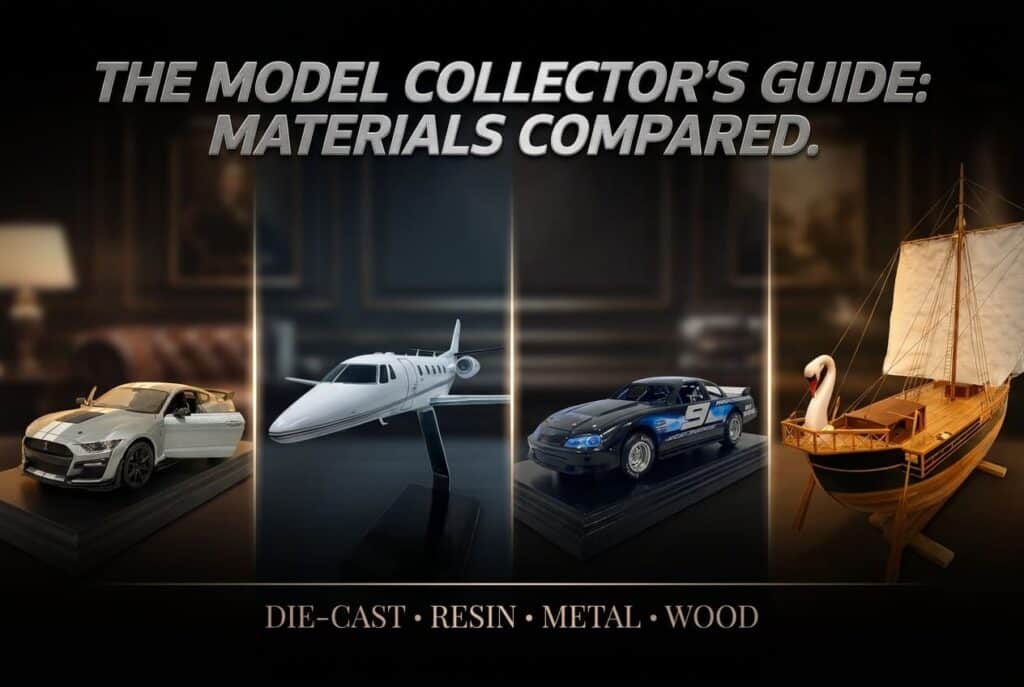
Every serious collector eventually confronts the material question. Not when they are starting out — at the beginning, the subject is everything and the material is whatever the subject happens to come in. But as a collection develops and the collector’s eye becomes more discriminating, the differences between a die-cast piece, a resin piece, a white metal kit build, and a hand-carved wooden replica become increasingly apparent — and the question of which material is right for which subject, at which scale, for which display purpose becomes one of the most consequential decisions in the collecting process.
This guide examines each of the four primary scale model materials in honest detail — what each one does well, what each one cannot do, how each one ages, and which collecting contexts each one suits best. There is no universal winner. The right material for a die-cast Boeing 747 fleet display is not the right material for a commissioned 1:18 Ferrari 250 GTO. Understanding why is the beginning of building a collection whose material choices are as considered as its subject choices.
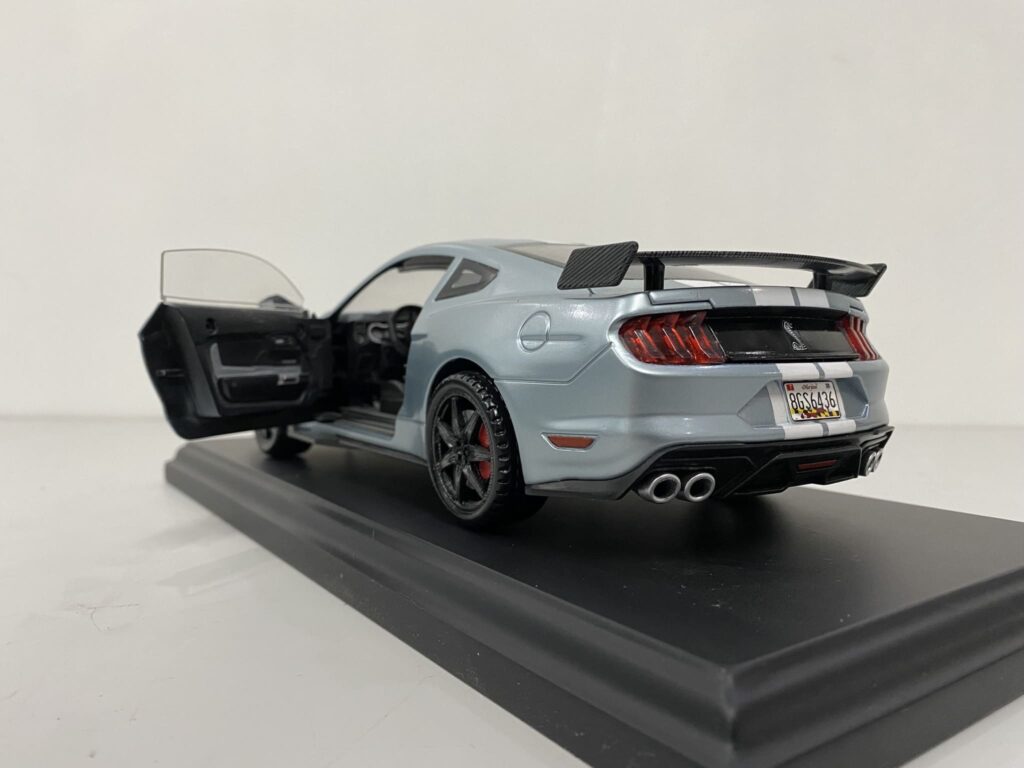
Die-Cast: The Market Standard — Strengths, Limits, and Long-Term Considerations
Material: Zinc alloy (Zamak) · Process: Pressure-cast into precision steel moulds · Strengths: wide subject range, consistent quality, accessible price · Weaknesses: detail ceiling, zinc pest risk, rubber/plastic component ageing · Best for: fleet displays, commercial aviation, broad subject coverage at 1:400 and 1:200
Die-cast production using zinc alloy — specifically the Zamak family of alloys — has dominated the scale model market since the 1950s. The process is straightforward in principle: molten metal is injected under pressure into a precision steel mould, producing a part with high dimensional consistency and excellent surface reproduction of the mould’s detail. Multiple parts are produced separately, assembled, and finished with paint and decals to produce the final piece. The result is a consistent, accessible product that the widest possible subject range is available in.

Die-cast’s primary strength is exactly that consistency and accessibility. The collector who wants a Boeing 747 in every major airline livery, documented at 1:400 across four decades of operation, is best served by die-cast — the subject range available from producers like Gemini Jets, JC Wings, and Phoenix Models is simply not replicable in any other material at comparable price points. The consistency of die-cast production also means that two pieces from the same tooling will be essentially identical — useful for collectors building comparative displays where scale accuracy across multiple subjects matters.
The limitations become significant at larger scales and higher accuracy requirements. Die-cast tooling produces surface detail to a specific level of resolution that is entirely adequate at 1:400 and 1:200, adequate at 1:72, and increasingly visible as a limitation at 1:48 and above. The physical properties of zinc alloy — heavier than resin or plastic, less dimensionally stable than precision-machined metal — also limit the undercut geometry that tooling can produce, which constrains the panel line depth and surface feature accuracy that more expensive materials and processes achieve. At 1:18 and above, the gap between a quality die-cast piece and a quality resin or hand-built piece is apparent to anyone who examines both carefully.
The long-term risk most relevant to serious collectors is zinc pest — a form of intergranular corrosion that affects zinc alloys, particularly older formulations, causing surface cracking and dimensional instability over time. Modern Zamak alloys are considerably more resistant to zinc pest than their mid-twentieth century predecessors, but the risk is not entirely eliminated. Die-cast pieces stored in humid conditions or with poor quality plating are most susceptible. Collectors planning long-term display of significant pieces should ensure storage conditions minimise humidity and avoid direct UV exposure, both of which accelerate the degradation mechanisms that affect zinc alloy.
Resin: The Collector’s Detail Standard — Higher Ceiling, Different Considerations
Material: Polyurethane resin · Process: Poured into silicone rubber moulds · Strengths: finest surface detail, lightweight, unlimited geometry · Weaknesses: fragile, UV yellowing, small-run economics · Best for: limited editions, high-detail military subjects, 1:48 and above where surface accuracy is primary
Resin casting using polyurethane materials is the technique that specialist and short-run model producers use when die-cast tooling economics are not viable and detail quality is the primary concern. The process uses silicone rubber moulds — considerably cheaper to produce than steel injection tooling — that capture surface detail to a level of resolution that die-cast mould technology cannot match. Resin casting can reproduce panel line depths, surface texture, and three-dimensional detail complexity that zinc alloy die-casting eliminates through the physical constraints of the process.
The practical consequence is that the most detailed scale models at 1:48 and above are almost always resin rather than die-cast. Military aviation subjects at 1:32 from producers like Tamiya’s high-end resin range, automotive subjects at 1:18 from BBR and Spark’s resin lines, and the broader short-run aftermarket for specialist collector subjects all use resin for the same reason: it is the most capable material for surface detail reproduction at collector scales without the investment of full die-cast tooling.
Resin’s weaknesses are well documented among serious collectors. Polyurethane resin is brittle — thin cast elements such as antenna arrays, landing gear struts, and wing trailing edges are susceptible to breakage from handling that a zinc alloy piece would survive. Long-term UV exposure causes yellowing in unpigmented resin, which affects clear parts most severely — canopies and windscreens on resin-cast aircraft subjects require UV protection for long-term display quality. And the small-run economics of resin casting — without the economies of scale that die-cast tooling achieves over large production runs — mean that quality resin pieces are consistently more expensive per unit than equivalent die-cast at the same scale.
White Metal: The Kit Builder’s Material — Craft, Weight, and Character
Material: Lead-free tin/antimony/bismuth alloy · Process: Gravity or centrifugal casting into rubber or vulcanised moulds · Strengths: weight and feel, paint adhesion, solderable · Weaknesses: heavy, softer than die-cast, requires assembly skill · Best for: 1:43 kit builds, figure modelling, professional model making where weight and workability matter
White metal — the family of low-melting-point tin-based alloys used in scale model production — occupies a specific niche in the collector market that die-cast and resin do not fill: the assembled kit for the serious builder who wants the finished piece to have a weight and feel that plastic cannot provide. White metal kits at 1:43 scale from producers like Provence Moulage, Western Models, and the early ABC Brianza range are among the most sought-after collector subjects in the European automotive model market — not because white metal as a material is superior to die-cast in every respect, but because the assembled and finished white metal piece has a quality of presence that its plastic and die-cast equivalents lack.
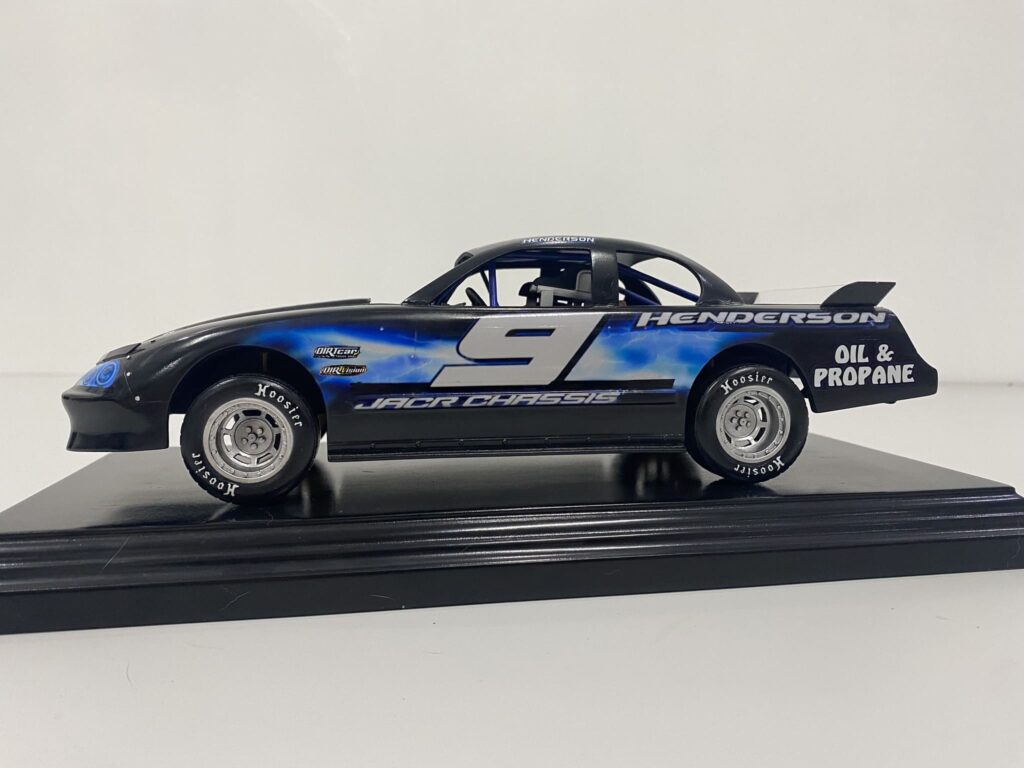
The weight of a properly assembled white metal model communicates something that lighter materials do not — the same quality that makes a solid metal pen feel different from a plastic one of the same dimensions. The alloy’s relatively soft surface takes paint adhesion exceptionally well, producing a painted finish with a depth and evenness that the primer-and-spray process on plastic kits approaches but does not consistently match. White metal is also solderable — joints between components can be reinforced with solder rather than relying entirely on adhesive, which produces a more durable assembly for complex multi-part builds.
The limitations are significant for non-builders. White metal kits require assembly, filling, sanding, priming, and painting — a process that produces excellent results in skilled hands and disappointing ones in inexperienced hands. The material’s softness relative to die-cast zinc alloy means that assembled pieces are susceptible to deformation from handling. And the weight that gives white metal its presence — typically three to four times heavier than a comparable resin piece — can be a display consideration for larger subjects.
No material is universally superior. Die-cast wins on range and consistency. Resin wins on detail ceiling. White metal wins on weight and buildability. Wood wins on longevity and the character that only a human hand can produce. The right material is the one that serves the specific subject at the specific scale for the specific display purpose.
Hand-Carved Wood: The Oldest Tradition — and the Most Durable Result
Material: Hardwood — typically lime, mahogany, walnut, or jelutong · Process: Hand-carved and sanded to shape, assembled, painted and detailed by hand · Strengths: longevity, warmth under light, no ageing failure modes of cast materials, each piece unique · Weaknesses: requires skilled maker, subject range limited to commission, higher price per piece · Best for: display replicas, commissions, gifts, exhibition pieces where permanence and craft quality are primary values
Hand-carved wooden scale models are the oldest form of scale replica — predating the aviation industry, the automobile, and every production material that subsequent collecting traditions have used. The Admiralty ship models of the seventeenth and eighteenth centuries were carved from wood by craftspeople whose skill was as technically demanding as any contemporary model maker. The tradition continues because the material’s properties — stability, warmth, the ability to be shaped by tools to compound curves that casting cannot replicate without expensive multi-part moulds — have never been fully superseded by manufactured alternatives.
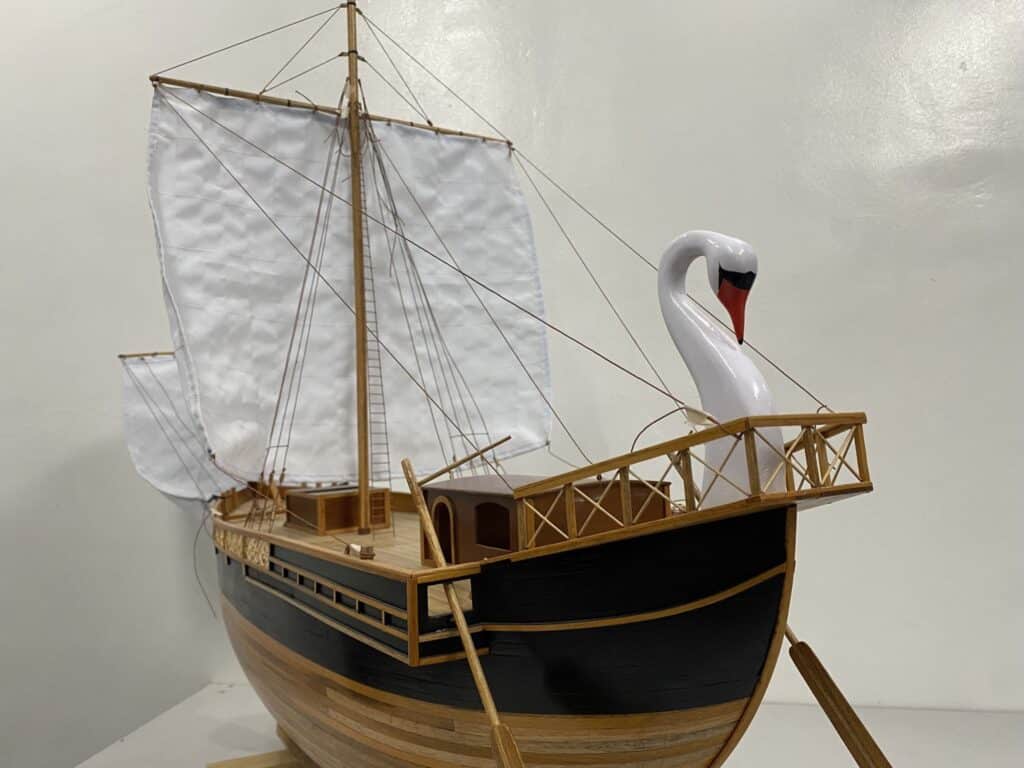
The practical case for wooden replicas in contemporary collecting rests on three distinct advantages. The first is longevity without the failure modes of cast materials — a properly sealed and finished hardwood piece does not experience zinc pest, resin yellowing, rubber hardening, or paint delamination. The surface is sealed wood, the paint adheres to it with excellent long-term bond strength, and the dimensional stability of a properly dried hardwood blank ensures the piece maintains its shape without the thermal cycling issues that affect metals. A well-made wooden replica from fifty years ago looks the same as it did when it was made. The same cannot be said for die-cast pieces from the same period.
The second advantage is the warmth that wood produces under display lighting. The grain structure of the underlying material — sealed and invisible beneath the paint but present in the object’s visual character — gives wooden pieces a quality under directional light that cast materials do not replicate. Under a desk lamp or a display spot, a wooden replica reads as a three-dimensional object with genuine material depth rather than a painted casting.
The third is uniqueness. Every hand-carved piece is slightly different from every other piece of the same subject — the maker’s decisions at each stage of the shaping process are embedded in the finished form. For collectors commissioning a custom car model or aircraft replica in wood, this uniqueness is part of the object’s value — the piece that results exists for one collection and no catalogue contains its equivalent. That combination of craft quality, longevity, and singularity is what the wooden replica offers that no production material delivers in the same form.
Choosing the Right Material — A Practical Decision Framework
Rather than ranking materials, the useful question is which material best serves the specific collecting context. Here is how the decision maps across the most common situations:
- Building a broad fleet display at 1:200 or 1:400 — Die-cast. The subject range, consistency, and price point of quality die-cast production at these scales is unmatched by any alternative.
- Single statement display piece at 1:48 or 1:32 — Resin or wood, depending on subject. Resin for military aviation where cockpit and surface detail are primary. Wood for commercial and civilian subjects where display warmth and longevity are the primary values.
- 1:43 automotive kit build — White metal for the builder who wants weight, feel, and paint adhesion quality. Resin for the builder who wants maximum surface detail on a short-run specialist subject.
- Commission for a personal or gifting subject — Wood for maximum longevity and the craft character that distinguishes a commissioned piece from a purchased one. The piece will outlast every cast alternative in display quality.
- Long-term investment piece — Wood or high-quality resin from a reputable producer. Both outlast die-cast in display quality over decades. Die-cast’s zinc pest risk and rubber degradation make it a less reliable long-term material for significant acquisitions.
Frequently Asked Questions
What is the difference between die-cast and resin scale models?
Die-cast models are produced by injecting molten zinc alloy under pressure into precision steel moulds — a process that produces consistent results at relatively high production volumes and accessible price points. Resin models are cast from polyurethane resin in silicone rubber moulds — a process that produces finer surface detail, handles more complex geometry, and suits small production runs but results in a more fragile piece at a higher price point. At scales of 1:48 and above, resin consistently outperforms die-cast in surface detail and geometry accuracy. At smaller scales and for fleet display purposes, die-cast’s wider subject range and lower price point are more relevant advantages.
Do wooden scale models last longer than die-cast?
Yes, in most display conditions. Properly sealed and finished hardwood scale models do not experience the failure modes that affect die-cast pieces over time — zinc pest corrosion, rubber tyre hardening and cracking, clear plastic part yellowing and crazing. A wooden piece displayed in normal indoor conditions with reasonable humidity control will maintain its surface quality indefinitely. Die-cast pieces, particularly older examples using earlier zinc alloy formulations, can develop zinc pest and surface degradation over decades of display even under good conditions. For collectors whose primary value is long-term display quality, wood is the most durable material available.
Is white metal the same as die-cast?
No. White metal refers to low-melting-point tin-based alloys — typically tin with antimony and bismuth — used primarily in gravity or centrifugal casting for kit production. Die-cast uses zinc alloys injected under pressure into steel moulds. White metal is softer, heavier, and lower-melting than die-cast zinc alloy, which makes it easier to cast in rubber moulds for small-run production but more susceptible to deformation from handling. White metal kits are assembled and finished by the collector; die-cast pieces are typically sold ready-assembled and finished.
Which scale model material is best for display?
For long-term static display where the piece will be seen daily and expected to maintain its quality for decades, hand-carved wood is the most durable material with no ageing failure modes. For maximum surface detail at collector scales of 1:48 and above, high-quality resin from a reputable producer delivers the finest available accuracy. For broad subject coverage at fleet display scales, die-cast from quality manufacturers is the practical standard. The correct answer depends on whether the primary value is longevity, detail, subject range, or the craft character of the individual piece.
The Material That Serves the Subject — Not the Other Way Around
The material decision is always in service of the collecting purpose — never the other way around. The collector who defaults to die-cast because it is familiar, or resin because it sounds premium, or wood because it sounds traditional, is making the material the decision rather than the subject and the purpose. The right sequence is always: what subject, at what scale, for what display purpose, expected to last how long, and valued for which specific quality. Those answers determine the material. The material does not determine the answers.
Understood in those terms, all four materials are correct — for different subjects, different collectors, and different collecting purposes. The die-cast fleet display and the hand-carved wooden commission are both legitimate outcomes of a well-considered collecting process. What distinguishes them is not which material is superior but which purpose each one serves — and how clearly the collector understood that purpose before making the choice.