
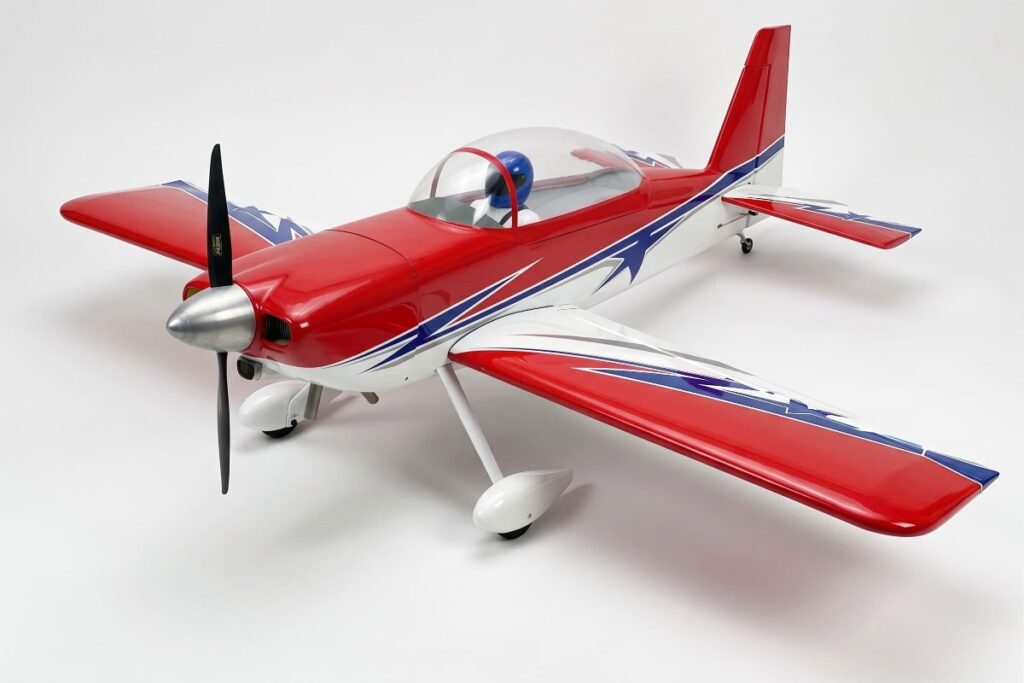
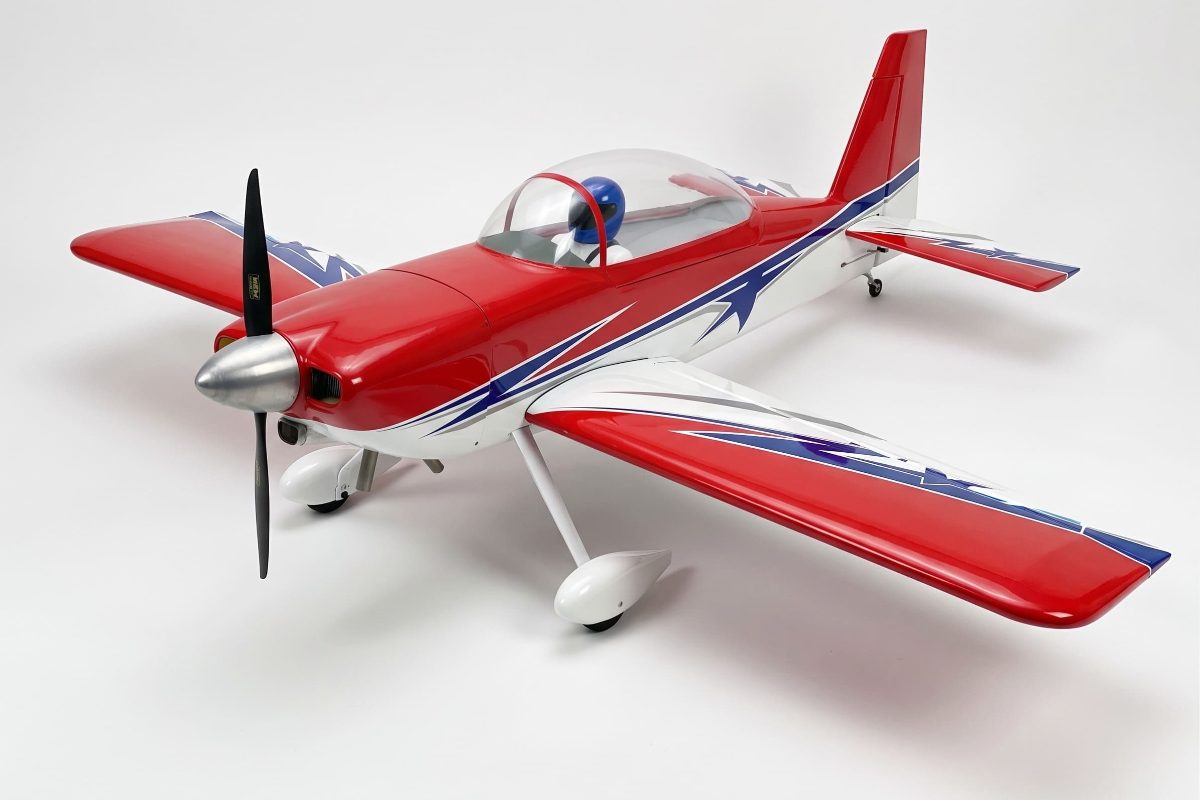
Search for large scale model airplanes and you will get two very different worlds on the same results page. One is the giant-scale radio control hobby, where an 80-inch plane with a gas engine is meant to leave the ground. The other is the display world, where a hand-built model of the same aircraft is meant to sit on a desk, a lobby plinth or a museum floor and look exactly like the real thing. Both are called “large scale,” and they are bought for completely different reasons. This guide explains where the line sits so you can pick the right one the first time.
What “large scale” means to an RC pilot
In radio control, the term is tied to wingspan, not to the scale ratio. Horizon Hobby describes giant scale as a minimum wingspan of 80 inches for a single-wing plane and 60 inches for a biplane or triplane. The International Miniature Aircraft Association uses the same cut-offs and also lets true quarter-scale models of small full-size aircraft qualify.
That definition shapes what you actually buy. A typical giant-scale ARF (almost ready to fly) airframe such as a 90-inch Cessna 195 lists at about $900, and an 88-inch Wilga at about $800, and that is before the engine, servos, radio and batteries. Even an 80-inch Spitfire calls for a 35 to 45 cc gas engine and about ten servos. You are buying a flying machine, so weight, balance and power matter more than paint detail.
The rules that come with flying big
Size brings paperwork. The Academy of Model Aeronautics caps a model at 55 pounds with fuel unless it is flown under its Large Model Airplane program, which covers airplanes from 55 up to 125 pounds and requires inspection and demonstration flights. Most giant-scale sport planes land well under that limit, but the biggest builds do not. You also need a field with enough runway and a safe distance from people, and you carry the risk of a crash every time you fly.
What “large scale” means for a display model
For a display model, large scale simply means a model big enough to show real detail. It never has to fly, so nothing is compromised for weight or power. Panel lines, rivets, cockpit interiors, markings and weathering can be reproduced at whatever size looks best. A hand-built display model starts from your photos, CAD files or blueprints and is finished to match one specific aircraft, down to the registration.
Because the size is your choice, it helps to turn the scale ratio into inches before you commit. A Cessna 172 has a wingspan of about 36 feet 1 inch. At 1/12 scale that is roughly 36 inches, which suits a desk or shelf. At 1/4 scale it is about 108 inches, which is a statement piece for a hangar or showroom. A P-51 Mustang, at about 37 feet, comes to roughly 111 inches at 1/4 scale. Our model scale calculator does this conversion for any aircraft, and the model scale chart shows common ratios side by side.
RC giant scale vs display model: side by side
| Giant-scale RC | Handcrafted display model | |
|---|---|---|
| Main purpose | Flying | Display, gifts, exhibits |
| Size driver | Weight, power, runway | Space, budget, impact |
| Detail | Limited by weight | As fine as the build allows |
| Aircraft choice | Whatever kits exist | Any aircraft, any livery |
| Upkeep | Engine care, repairs, batteries | Dusting |
| Rules | AMA limits and club fields | None |
Choose a display model if…
- You want an exact aircraft, such as your own tail number, a one-off paint scheme or a type nobody makes a kit for.
- The model is a gift, a retirement piece or a tribute to a pilot or a squadron.
- It will stand in an office, museum, dealership or trade show booth and needs to look right from two feet away.
- You have no interest in flying, repairing or tuning an engine.
Choose giant-scale RC if…
- The point is the flight itself and you have a field and a club nearby.
- You enjoy building, tuning engines and learning to fly a heavy model.
- A standard kit scheme is fine for you.
How big can a handcrafted model go?
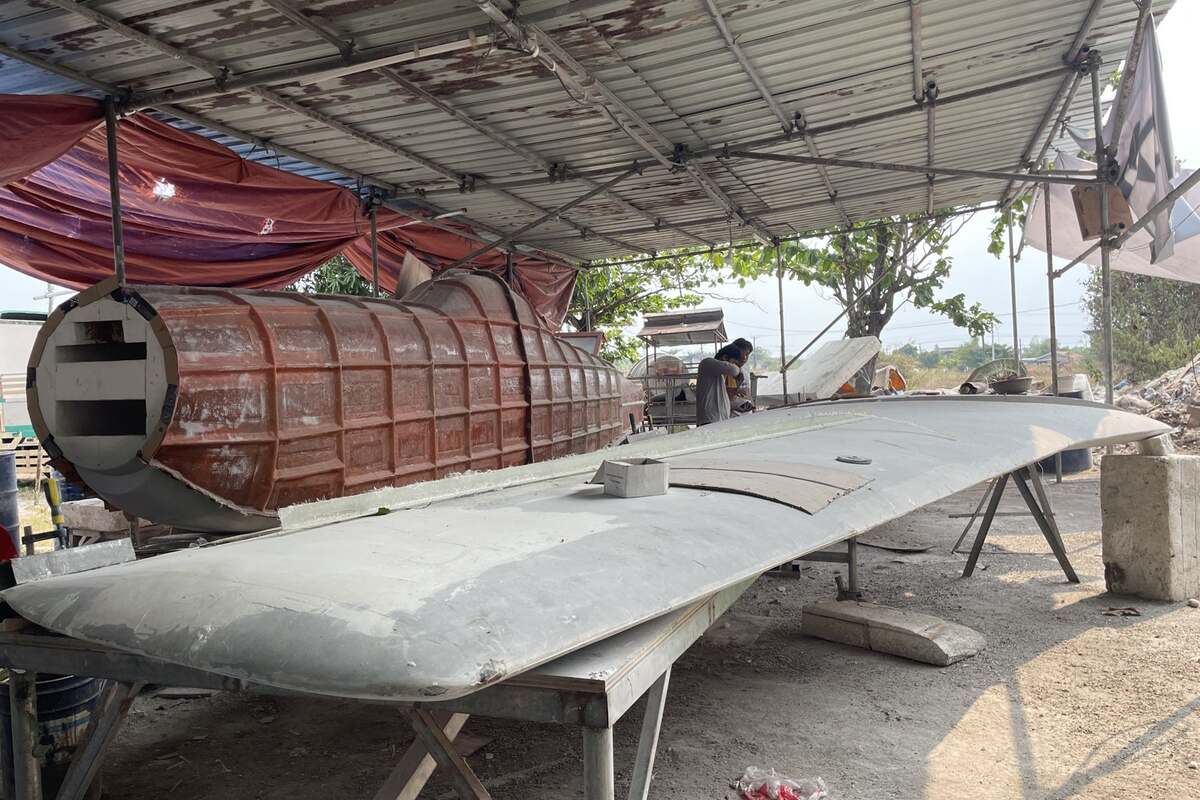
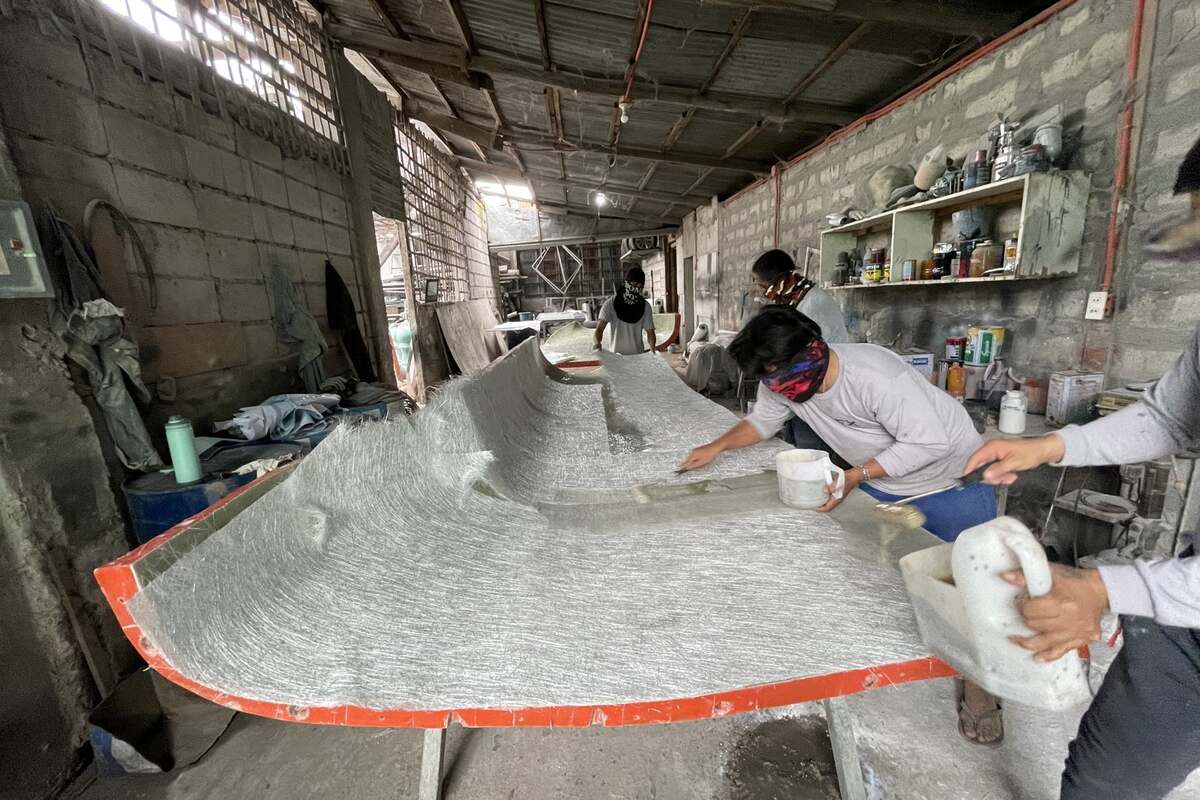
Far larger than any RC plane. Our workshop has built a full-size P-51 Mustang in fiberglass, from the fuselage mold and wing sections through hand-sanding the skin. It is the far end of the scale range, but the same craft goes into every smaller piece.

For most buyers the sweet spot is far smaller. Offices and homes usually fit a model with a wingspan of 24 to 48 inches. Lobbies, showrooms and museums go bigger. If you are weighing sizes, our guide to large scale aircraft models in aviation displays shows how different sizes work in public spaces.
Where to go from here
If you want something that flies, a giant-scale ARF from a hobby retailer is the right route. If you want a model that looks like one specific aircraft and stays on the shelf, browse our big model airplanes and large scale airplane models, or start a custom aircraft model. Production takes 12 to 16 weeks, and a rush build is possible in about four weeks for an additional 30%. The how to order guide walks through the steps, including the 50% deposit, and we ship worldwide by FedEx.
FAQ
What is the difference between large scale and giant scale?
Giant scale is the RC term for planes with an 80-inch or larger wingspan (60 inches for biplanes). Large scale is a looser term that is also used for display models, where it simply means a bigger model with more detail.
Can a display model fly?
No. Display models are built for accuracy and detail, not flight, so they are not fitted with engines or control gear.
How much do giant-scale RC planes cost?
Airframes commonly list around $800 to $900, and the engine, servos, radio and batteries come on top.
Do I need a license to fly a large RC plane?
Under AMA rules, models over 55 pounds need to go through the Large Model Airplane program. Lighter giant-scale planes do not, but you should still fly at an approved field.
Can you build a large scale model of my own aircraft?
Yes. Send photos, CAD files or blueprints and we will build the exact aircraft and markings you need.