

The electric car is no longer a novelty or a niche product for the environmentally committed. In 2024, one in five new cars sold globally was electric. In Norway, that figure exceeded nine in ten. The technology that seemed experimental a decade ago has become the default direction of the automotive industry — and the questions that millions of new and prospective EV owners are searching for answers to are among the highest-volume automotive queries on the internet. How do electric cars work? Do they need oil? How long does charging take? Can you install a home charging station? What happens to the transmission?
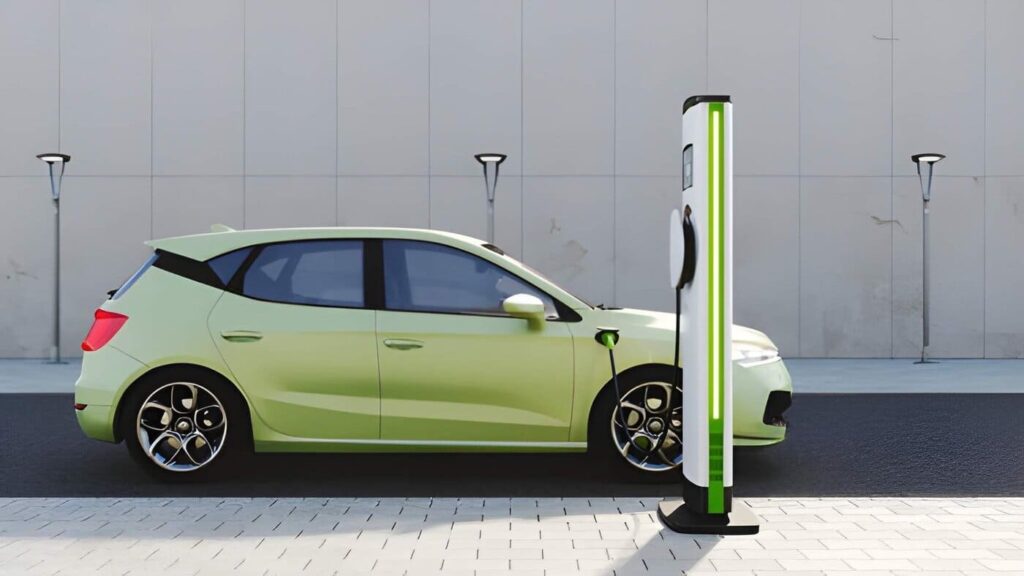
This guide answers every major electric car question clearly and directly — and ends with a perspective that the automotive collector community is increasingly discussing: why the electric vehicles being produced right now are already becoming significant subjects for the model cars market, and why the transition moment the industry is currently living through is exactly the kind of historical inflection point that serious collectors have always paid closest attention to.
How Do Electric Cars Work?
Direct answer: Electric cars use one or more electric motors powered by a rechargeable battery pack to drive the wheels. When the driver presses the accelerator, the battery sends electrical current to the motor, which converts it to rotational force. No combustion, no fuel injection, no exhaust.
The electric motor operates on a fundamentally different principle from the internal combustion engine. Where a petrol or diesel engine burns fuel to create expanding gases that push pistons, which rotate a crankshaft, which eventually drives the wheels through a transmission — a process with hundreds of moving parts and significant energy loss at each stage — an electric motor converts electrical energy directly into rotational force with very few moving parts and considerably higher efficiency. A modern electric motor converts approximately 85 to 90 percent of its input energy into useful motion. A comparable petrol engine typically converts around 20 to 40 percent.
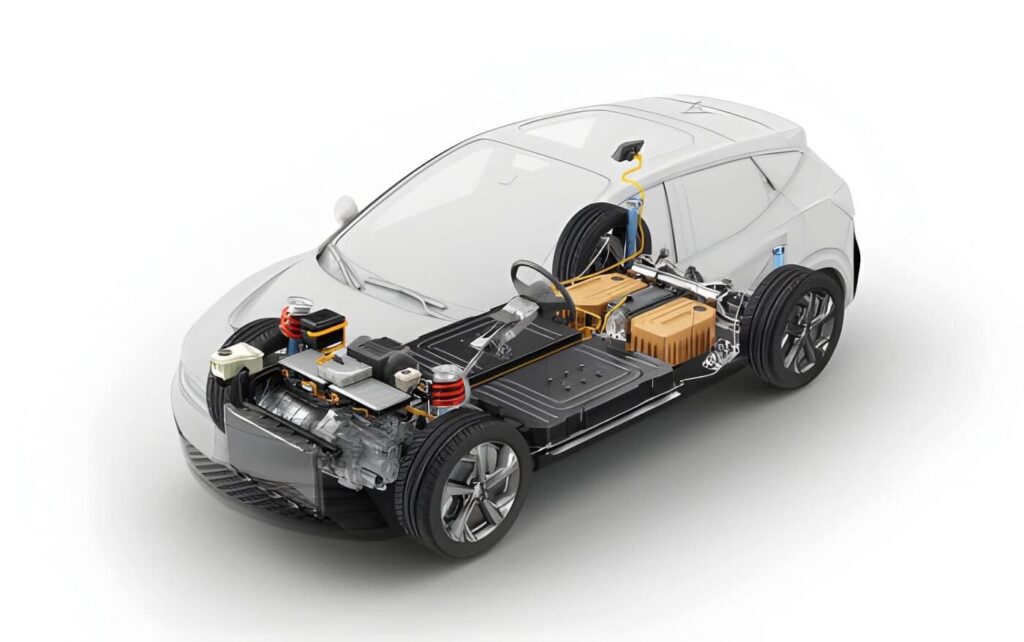
The battery pack — typically a lithium-ion system composed of thousands of individual cells — stores the electrical energy that powers the motor. Battery management systems monitor temperature, charge state, and cell balance continuously, protecting the pack from the conditions that degrade it most rapidly: extreme heat, deep discharge, and rapid charging at high state of charge. The range a battery delivers varies significantly by driving style, temperature, and speed — motorway driving at high speed depletes a battery considerably faster than urban stop-start driving, which is the opposite of petrol engine behaviour.
Do Electric Cars Need Oil Changes?
Direct answer: No. Electric cars do not require engine oil changes because they have no internal combustion engine. They do use small amounts of lubricant in gearboxes and other mechanical components, but this does not require regular consumer-level maintenance in the way petrol engine oil does.
The engine oil change is one of the most frequent maintenance requirements of the petrol-powered car — typically required every 5,000 to 10,000 miles depending on the engine and oil specification. Electric vehicles eliminate this requirement entirely, along with a significant list of other petrol-engine maintenance items: spark plugs, timing belts, fuel filters, exhaust systems, and the clutch in manual transmission vehicles. The reduced maintenance requirement is one of the most significant practical advantages of electric vehicle ownership, producing lower lifetime running costs for most drivers despite the typically higher purchase price.
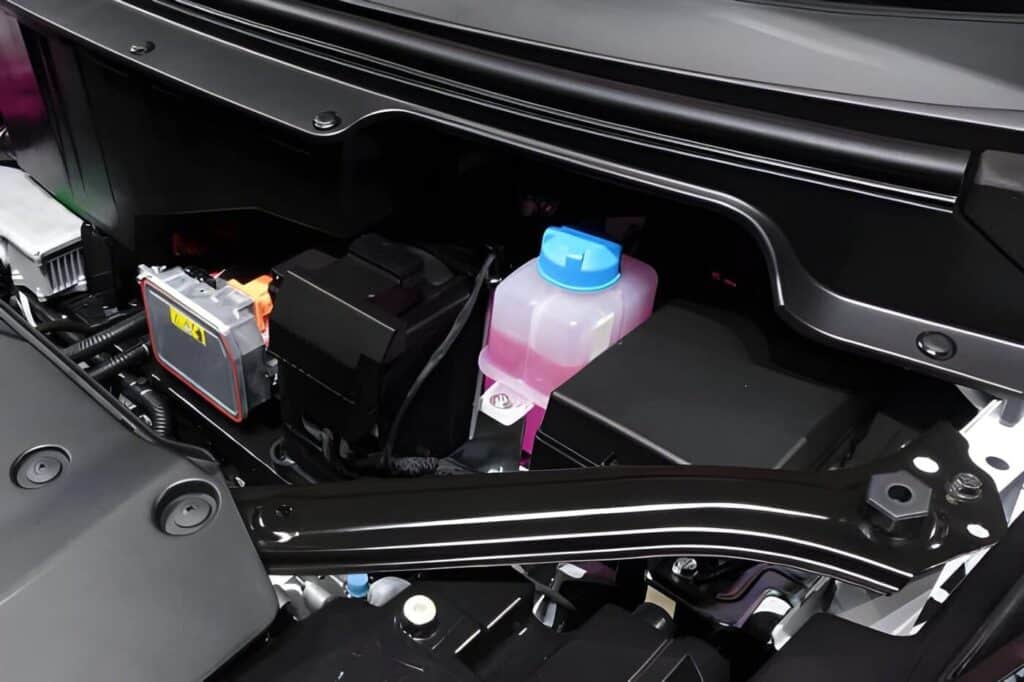
Electric vehicles do require maintenance in other areas — brake fluid changes, tyre rotation, cabin air filter replacement, and battery coolant system service at longer intervals. Brake wear is typically lower in electric vehicles than in petrol equivalents because regenerative braking — where the motor acts as a generator during deceleration, converting kinetic energy back into stored electrical energy — handles a significant proportion of the braking load that friction brakes would otherwise manage alone.
Do Electric Cars Use Oil at All?
Direct answer: Electric cars do not use engine oil. Some electric vehicles use a small amount of gear oil or differential fluid in their single-speed reduction gearbox, but this is factory-sealed in most models and does not require regular changes. No engine oil is used anywhere in the drivetrain.
The question of whether electric cars use oil is one of the most common asked by drivers considering the switch from petrol — and the answer produces one of the most significant practical differences in the ownership experience. The elimination of engine oil, and the entire lubrication system that manages it in a petrol engine — the oil pump, the oil filter, the sump, the oil pressure warning system — removes a category of maintenance concern and a category of failure mode simultaneously. Electric motors do not suffer from oil starvation, oil contamination, or the sludge formation that affects high-mileage petrol engines operated with infrequent oil changes.
Do Electric Cars Have Transmissions?
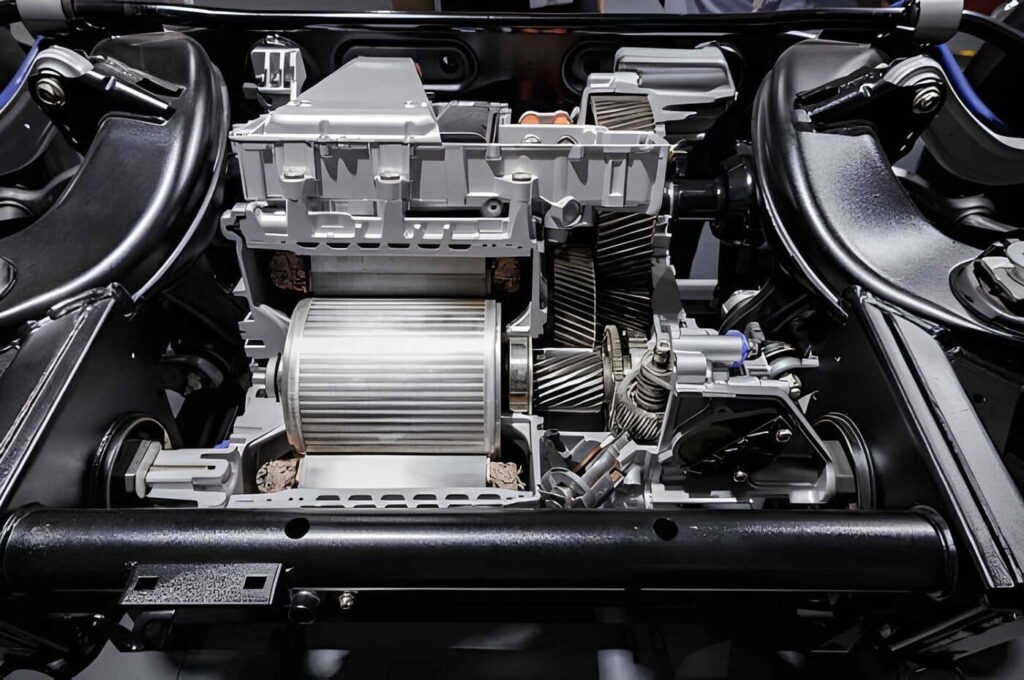
Direct answer: Most electric cars do not have a traditional multi-speed transmission. They use a single-speed reduction gearbox that connects the motor to the wheels. Because electric motors produce maximum torque from zero RPM and maintain it across a wide rev range, multiple gear ratios are unnecessary.
The multi-speed transmission in a petrol car exists to keep the engine operating within its optimal rev range across the full spectrum of vehicle speeds. At low speeds, lower gears multiply the engine’s torque to produce sufficient driving force. At high speeds, higher gears allow the engine to turn slowly while the vehicle moves quickly. The entire system exists because the petrol engine produces usable torque only within a relatively narrow band of engine speeds. The electric motor has no such limitation — it produces its maximum torque at zero RPM and maintains strong torque delivery across nearly its entire operating range. A single fixed reduction ratio connects the motor to the wheels and handles every driving condition from rest to maximum speed without shifting.
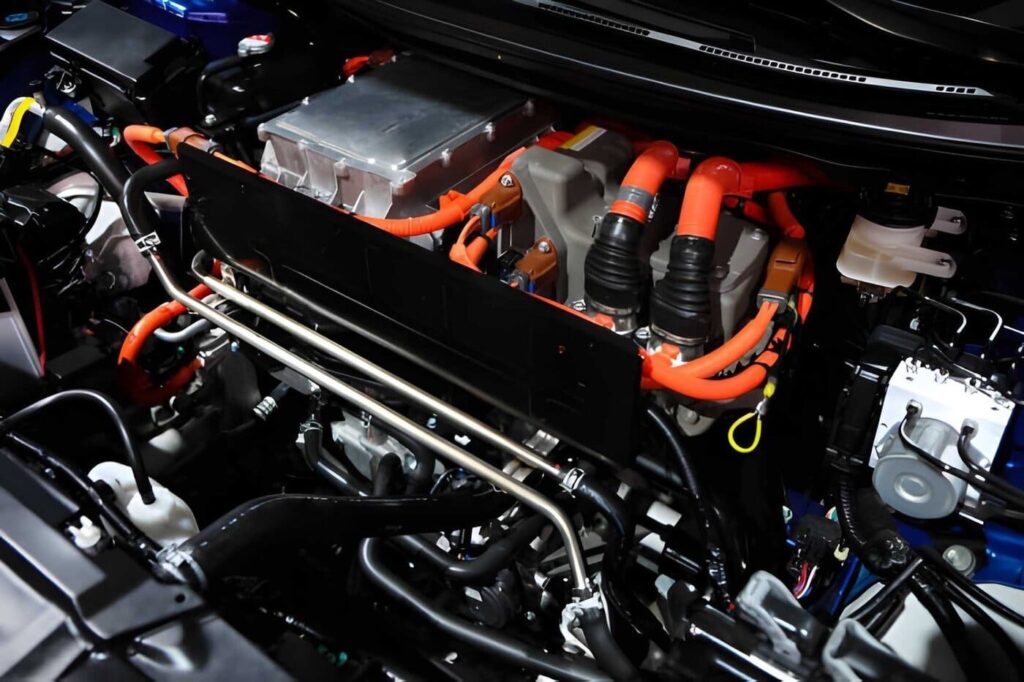
Some performance electric vehicles — the Porsche Taycan being the most notable example — use a two-speed transmission on the rear motor to extend high-speed performance beyond what a single-speed system can deliver at extreme velocities. This is an exception rather than the norm, driven by the specific performance requirements of a vehicle whose top speed and sustained motorway acceleration matter more than simplicity. For the vast majority of electric vehicles, the single-speed reduction gearbox is the complete drivetrain solution.
How Long Does It Take to Charge an Electric Car?
Direct answer: Charging time depends on the charger type and the car’s battery size. A standard home socket adds 3–5 miles of range per hour. A dedicated home wallbox (7kW) adds 20–30 miles per hour, providing a full charge overnight. A public rapid charger (50–150kW) can add 100+ miles in 20–40 minutes. Ultra-rapid chargers (150–350kW) can charge compatible vehicles to 80% in under 20 minutes.
The charging time question is the most common concern for drivers considering the switch to electric — and the answer is more nuanced than a single figure can capture. The key variable most discussions overlook is that most electric vehicle owners charge primarily at home overnight, making the charging time largely irrelevant to daily life in the way that refuelling a petrol car is not.

The car arrives at a full charge every morning without requiring a trip to a filling station. The charging time only becomes relevant on longer journeys that exceed the vehicle’s range — at which point the rapid charging infrastructure available on major routes determines the practical experience.
Installing a Charging Station for Electric Cars at Home
Direct answer: Installing a home EV charging station (wallbox) typically costs between $500 and $2,000 including hardware and installation, depending on the unit specification and the electrical work required. A qualified electrician connects the wallbox to a dedicated circuit from the consumer unit. Installation typically takes 2–4 hours. Government grants are available in many countries to offset the cost.
A dedicated home wallbox is the most practical charging solution for the majority of electric vehicle owners. The standard domestic socket charges too slowly for regular use — adding only 3 to 5 miles of range per hour — while a 7kW wallbox provides a practical overnight charge for most vehicles.
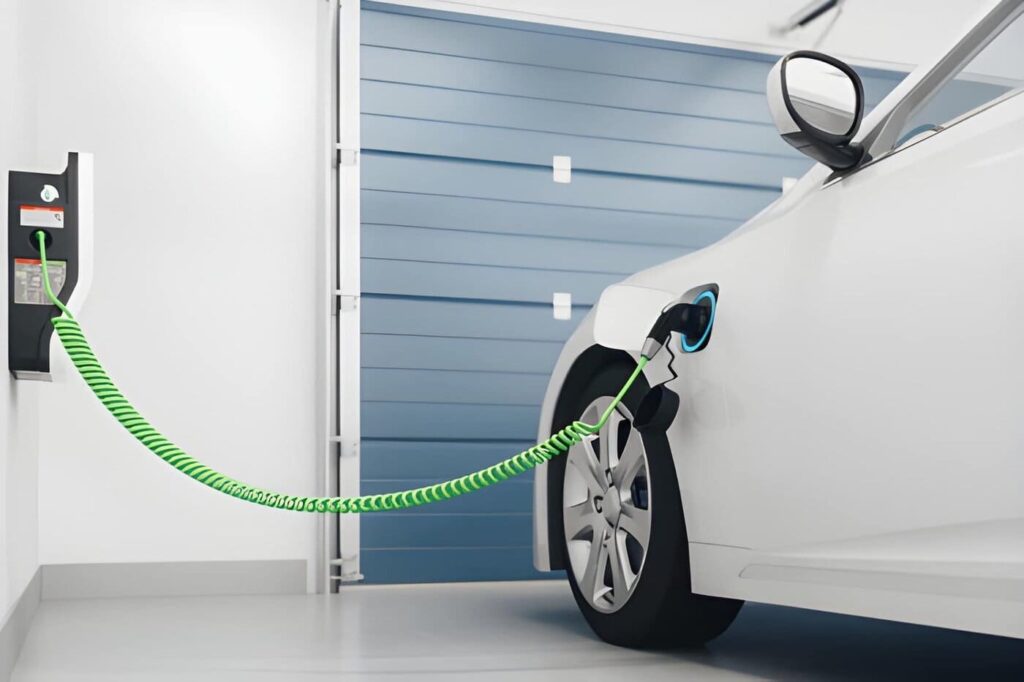
Installation requires a dedicated circuit from the consumer unit, which a qualified electrician can typically complete in a half-day visit. The wallbox connects via the vehicle’s standard charging port and can often be managed through a smartphone app, allowing off-peak charging scheduling to reduce electricity costs.
What Was the First Electric Car?
Direct answer: The first practical electric car is generally credited to Robert Anderson of Scotland, who built a crude electric carriage in the 1830s. The first true production electric vehicle was the Flocken Elektrowagen, built in Germany in 1888 — three years after Benz filed his petrol car patent. Electric vehicles dominated the early automotive market through the 1890s and early 1900s before petrol engines displaced them.
The history of the electric car is longer and more interesting than most people expect. Electric vehicles outsold petrol cars in the United States at the turn of the twentieth century — in 1900, approximately 40 percent of American automobiles were electric, 38 percent were steam-powered, and only 22 percent used petrol engines.
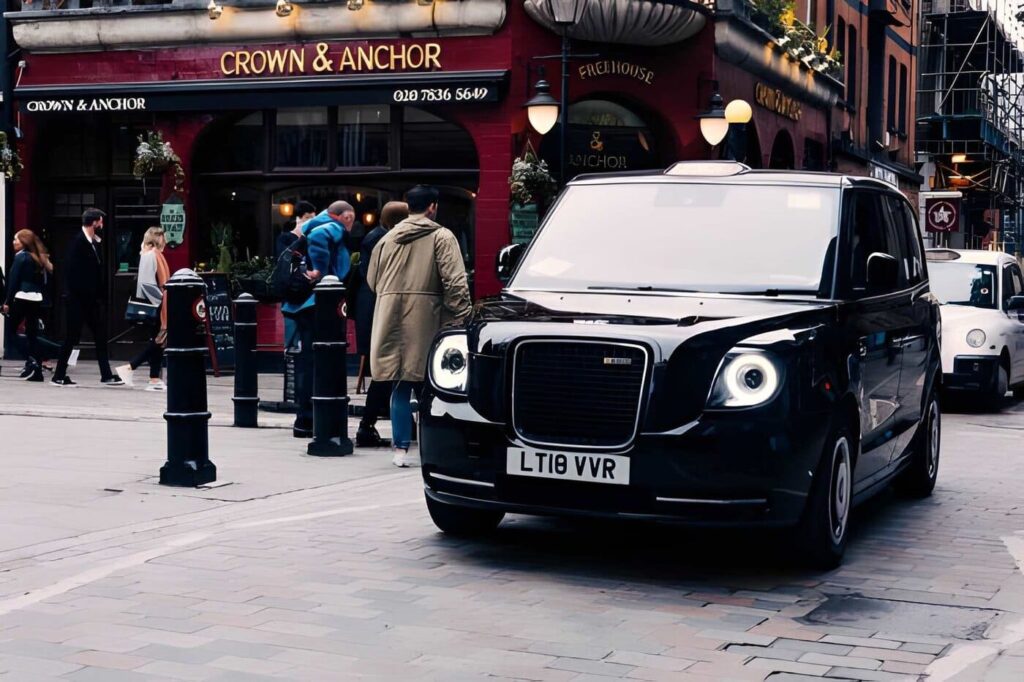
The electric car’s dominance ended not because the technology was inferior for urban use — it was quieter, smoother, and easier to operate than early petrol cars — but because the development of the electric starter motor eliminated the petrol car’s most significant disadvantage, the dangerous hand-crank start, while Henry Ford’s mass production economics made petrol vehicles dramatically more affordable. The century-long dominance of the internal combustion engine was not technologically inevitable. It was economically determined.
Electric cars dominated the early automotive market before petrol displaced them. A century later, the balance is shifting back — and the transition is already producing the most historically significant automotive subjects of the current decade.
Why the Electric Car Transition Is Already a Collecting Subject
The automotive collector community has always paid closest attention to transition moments — the periods when one engineering era gives way to the next and the vehicles produced during the transition carry a historical specificity that purely within-era models cannot match. The first petrol cars of the 1880s were collected almost from the moment they were superseded. The first jet-age aircraft were collected before the propeller era had fully ended. The first mass-market electric vehicles — the Nissan Leaf, the Tesla Model S, the early Chevy Bolt — are already being discussed in serious collector circles as the vehicles that documented the beginning of the automotive industry’s most significant engineering transition since the petrol engine displaced steam and electric power a century ago.
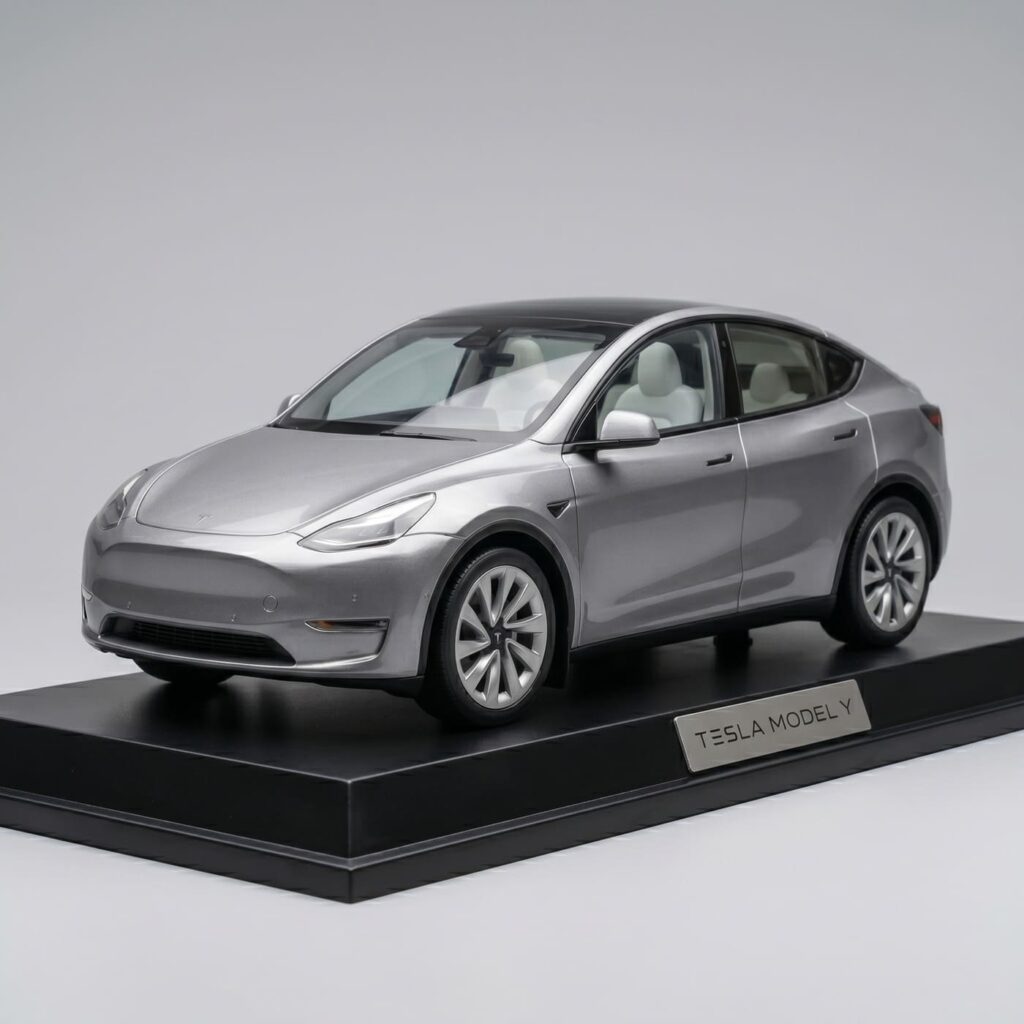
The Yugo GV, discussed elsewhere in automotive collecting culture, became a significant collector subject precisely because it documented a specific and unlikely moment in automotive trade history. The early electric vehicles of the 2010s are accumulating the same kind of historical specificity — as the first mass-market expressions of a technology that will define the automotive industry for the rest of the century. The collector who documents that transition now, rather than after it is complete, is making the same timing decision that the most prescient collectors in every previous transitional era made.
For those interested in the wider automotive model landscape — from the Yugo model car that documents the unlikely Cold War chapter of American automotive history, to contemporary precision model cars to build that replicate the specific vehicles that have shaped the collector’s own relationship with the automobile — the electric transition represents the newest and most historically charged chapter available to the contemporary automotive collection. The model cars that document the first decade of mass-market electric vehicles will be the most historically significant automotive collecting subjects of the next thirty years. The collector who understands that is already making decisions accordingly.
Quick Reference: Electric Car Questions Answered
How do electric cars work?
Electric motors convert battery energy directly into rotational force with no combustion, no fuel injection, and no exhaust. Efficiency is approximately 85–90%, versus 20–40% for petrol engines.
Do electric cars need oil changes?
No. Electric cars have no internal combustion engine and require no engine oil. Maintenance requirements are significantly lower than petrol equivalents.
Do electric cars use oil?
No engine oil is used. Some models use a small amount of sealed gear oil in their reduction gearbox, but this does not require regular consumer maintenance.
Do electric cars have transmissions?
Most use a single-speed reduction gearbox rather than a multi-speed transmission. Electric motors produce maximum torque from zero RPM, eliminating the need for gear changes.
How long does it take to charge an electric car?
Home wallbox (7kW): overnight full charge. Public rapid charger (50–150kW): 100+ miles in 20–40 minutes. Ultra-rapid (150–350kW): 80% charge in under 20 minutes for compatible vehicles.
Installing a charging station for electric cars — what is involved?
A qualified electrician installs a dedicated circuit from the consumer unit to the wallbox. Cost: $500–$2,000 including hardware and installation. Installation time: 2–4 hours. Government grants available in many countries.
What was the first electric car?
Robert Anderson built the first electric carriage in the 1830s. The first production electric vehicle was the 1888 Flocken Elektrowagen. Electric vehicles outsold petrol cars in the US in 1900 before economic factors shifted the market toward internal combustion.
The Electric Era — Understanding It, and Documenting It
The electric car’s rise from curiosity to mainstream is one of the most compressed and significant transitions in automotive history. The questions being asked right now — how they work, what they need, how long they take to charge — are the questions of a driving public encountering a fundamentally new relationship with the automobile for the first time. The answers are, as this guide has shown, often simpler and more practically advantageous than the questions’ frequency might suggest.
The collector who documents this transition — through the precision model cars that reproduce the electric vehicles reshaping the automotive landscape right now — is building the most historically forward-looking automotive collection available in the current market. The electric era has begun. The collecting record of it is only just starting to form.