
Aviation decor has quietly moved from niche hobby into mainstream interior design. Offices, home studies, and modern living rooms now feature aircraft blueprints, propellers, framed prints, and scale replicas. But when someone decides to bring aviation into a space, the same question usually appears pretty quickly:
Wall art or a model aircraft?
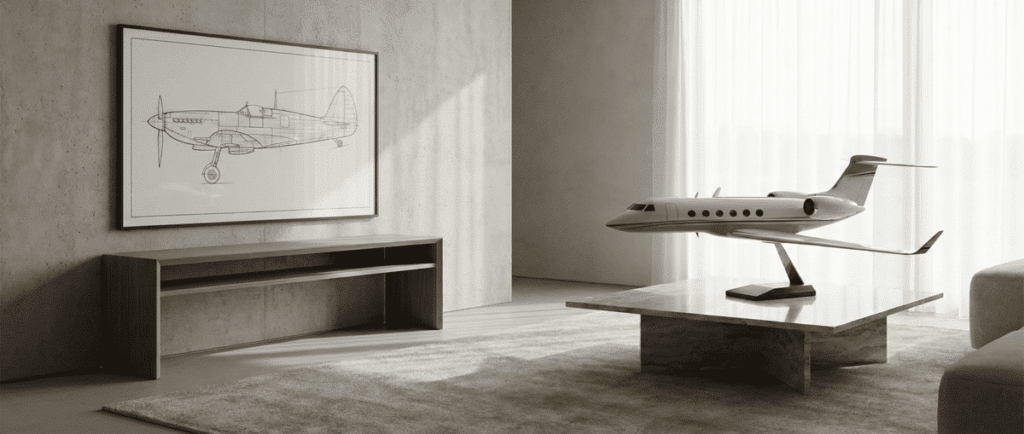
Both work. Both look great when done well. But they create very different moods, and choosing the right one depends more on the room than the aircraft.
Why aircraft wall art feels clean and architectural
Aircraft wall art fits naturally into modern interiors because it behaves like traditional art. Framed prints, blueprint drawings, and large aviation photography sit comfortably alongside minimalist furniture and neutral color palettes.
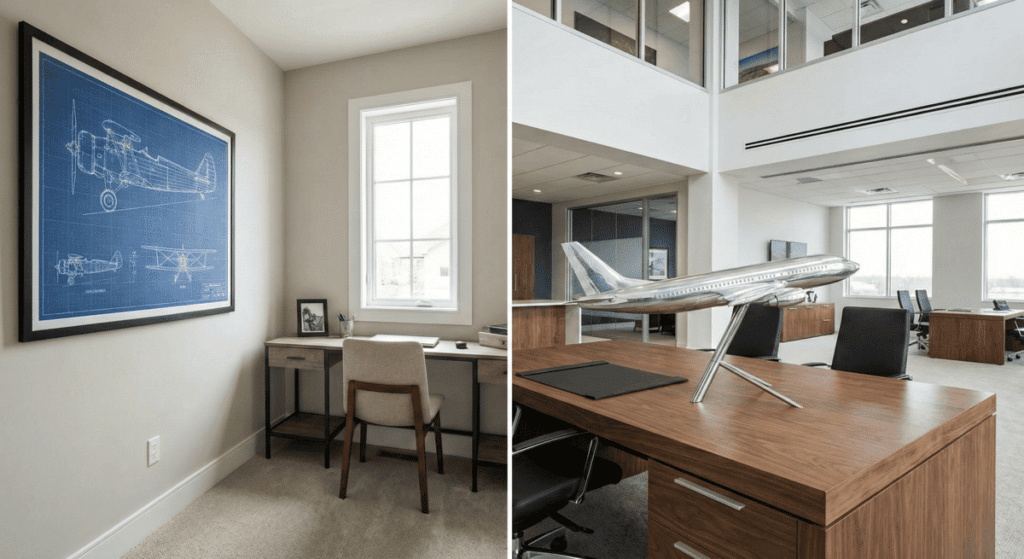
Wall art stays out of the way. It doesn’t take up floor or desk space. It adds interest without becoming the focal point of the entire room. In design terms, it’s subtle.
This makes it especially popular in corporate offices, conference rooms, and hallways where decor needs to feel polished but not distracting.
It signals interest without demanding attention.
Why model aircraft create presence
A model aircraft does the opposite. Instead of blending into the background, it creates a focal point.
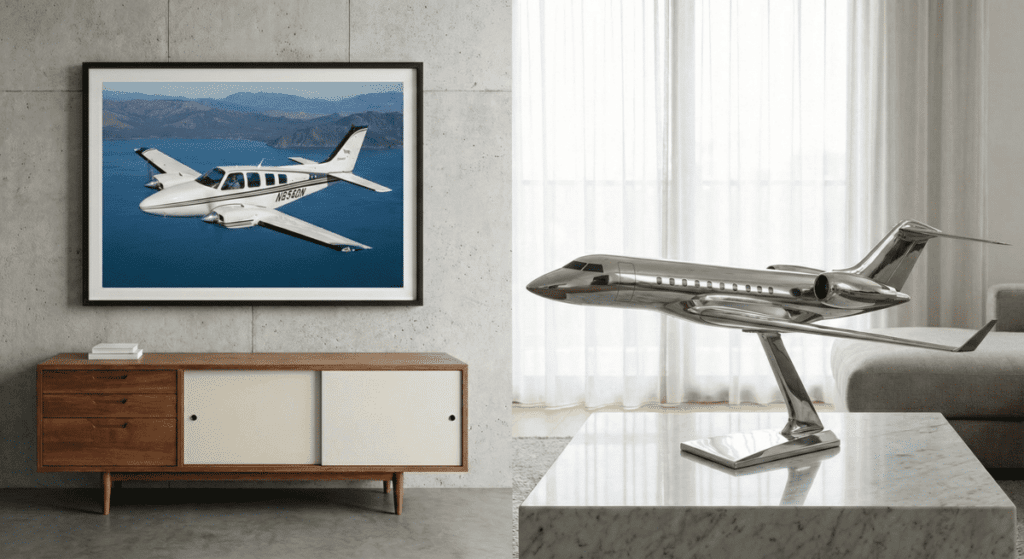
A carefully placed model immediately invites curiosity. People walk closer. They look at details. Conversations start without effort. The object has physical presence, and that changes how the room feels.
In modern interiors where clutter is minimal, one strong object can define the entire space. A well-crafted model aircraft often becomes that anchor.
Two different design roles
Wall art and model aircraft don’t compete as much as people think. They serve different roles.
Wall art adds atmosphere.
Models add personality.
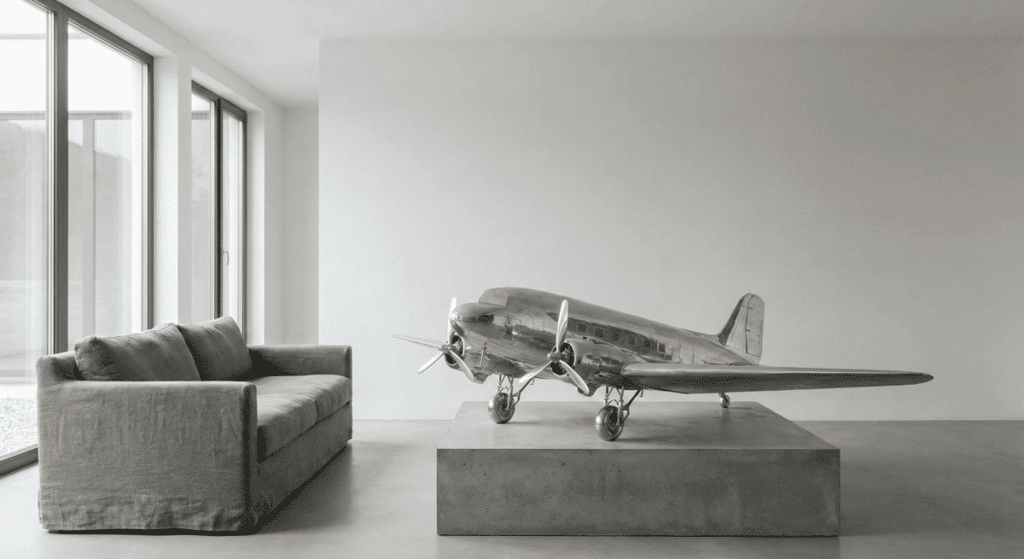
A blueprint of a Concorde can make a room feel thoughtful and technical. A scale model of the same aircraft sitting on a desk feels personal and intentional. One suggests admiration. The other suggests connection.
That difference is subtle but powerful.
Space changes the decision
Room size plays a bigger role than people expect.
In smaller spaces, wall art keeps the room feeling open. A large model in a compact office can feel crowded quickly. In larger rooms, the opposite is true. Big spaces often need a physical centerpiece to avoid feeling empty.
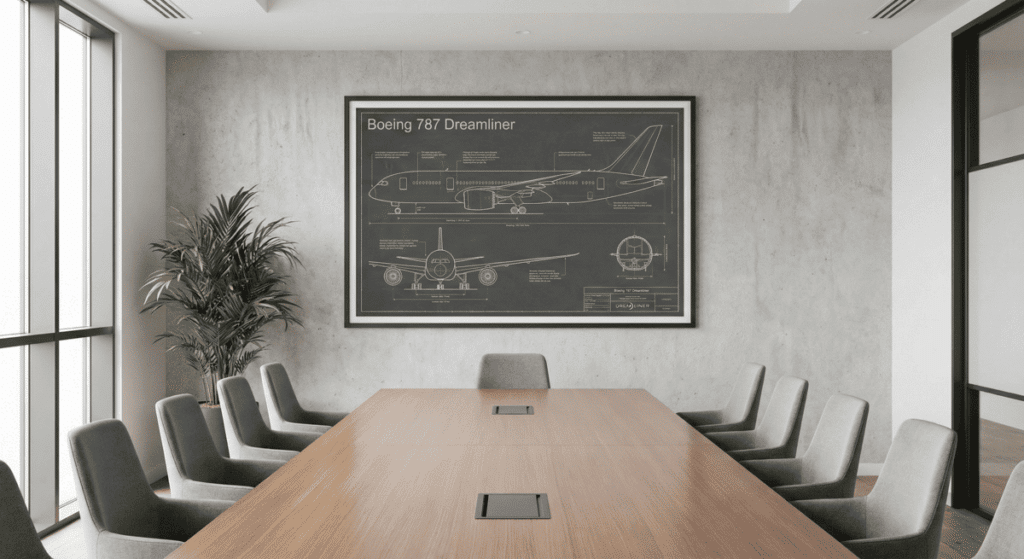
That’s why model aircraft tend to appear more often in executive offices, reception areas, and open-plan spaces where they have room to breathe.
The environment decides more than taste does.
The modern design trend toward “one strong piece”
Interior design has shifted toward fewer objects with stronger impact. Instead of filling shelves with small decorations, many spaces now feature one carefully chosen statement piece.
This trend naturally favors model aircraft.
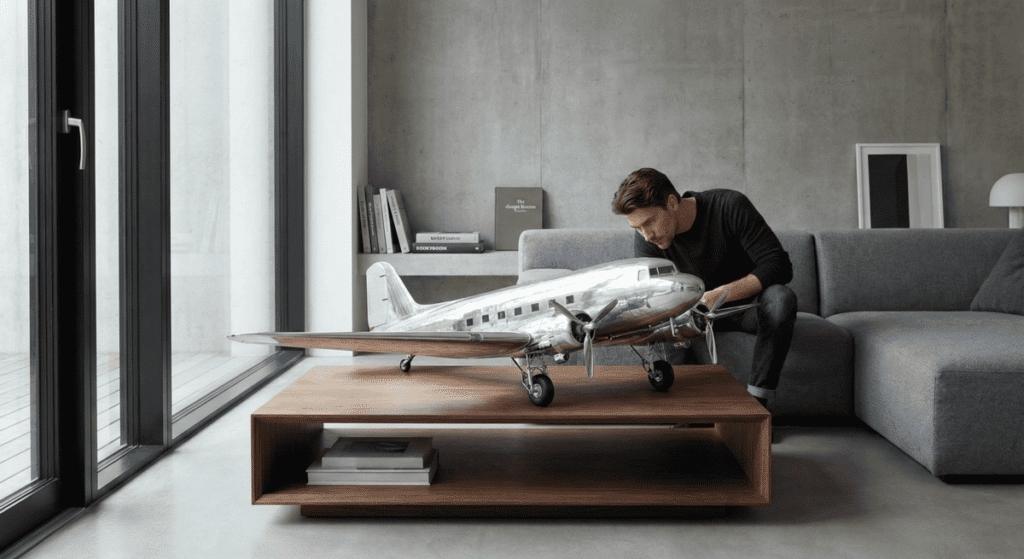
A single, well-crafted model feels intentional. It suggests curation rather than decoration. In modern design, that distinction matters.
Why enthusiasts often choose models
People who love aviation often gravitate toward model aircraft because they feel more personal. A specific aircraft type can carry memories — a first flight, a favorite airline, a career connection.
Wall art can inspire. A model can represent.

That emotional connection tends to grow over time, which is why model aircraft often become long-term fixtures in a room rather than temporary decor.
So which looks better?
There isn’t a universal winner. Aircraft wall art works beautifully when the goal is subtle sophistication. Model aircraft work best when the goal is a focal point that sparks conversation.
Many well-designed spaces eventually include both.
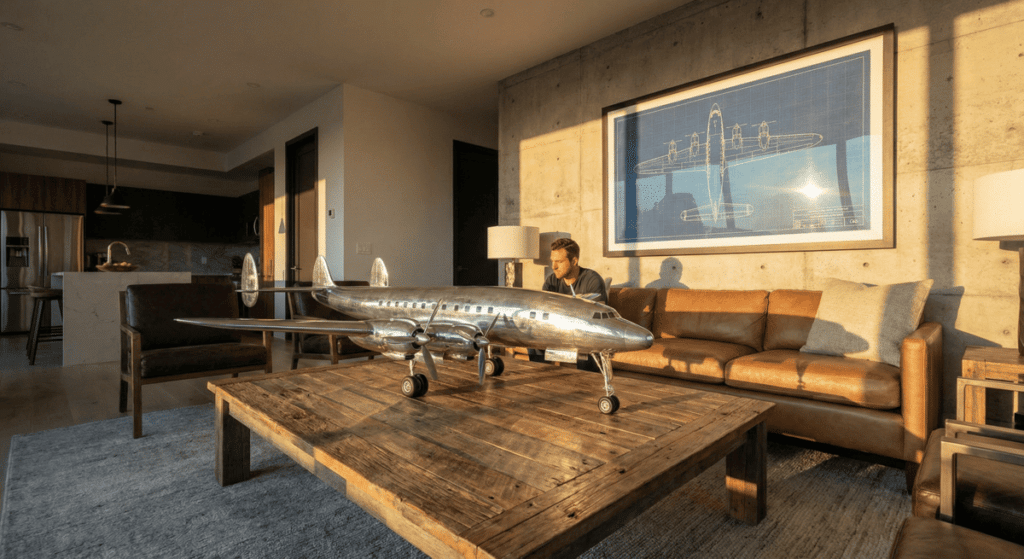
But if the goal is to create a centerpiece — something that quietly defines the room — model aircraft usually win that role. They don’t just decorate a space.
They give it identity.