
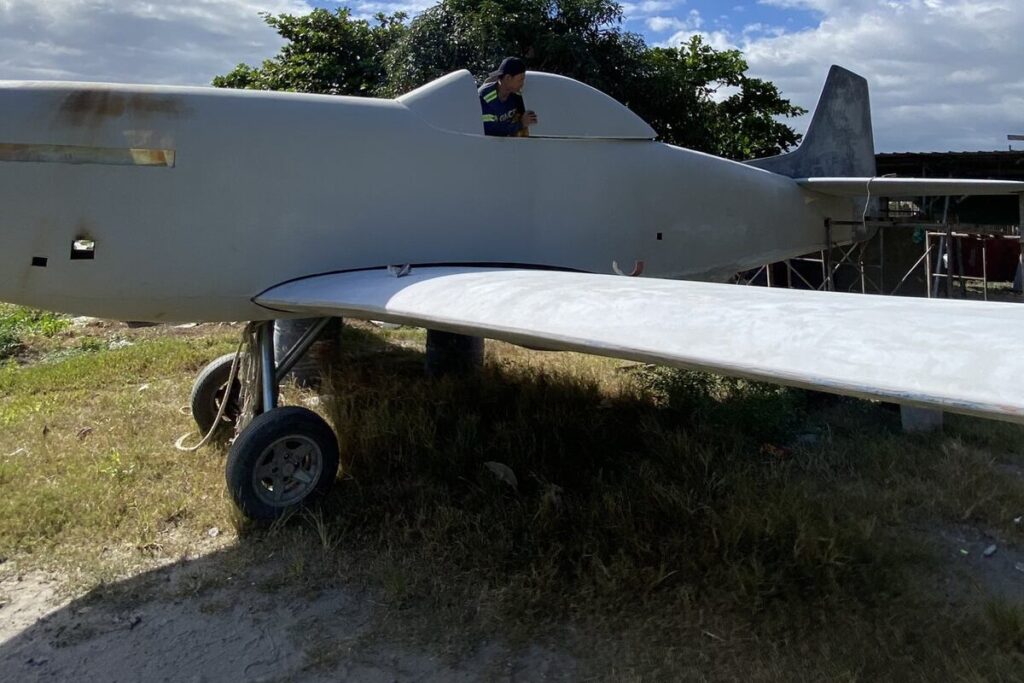
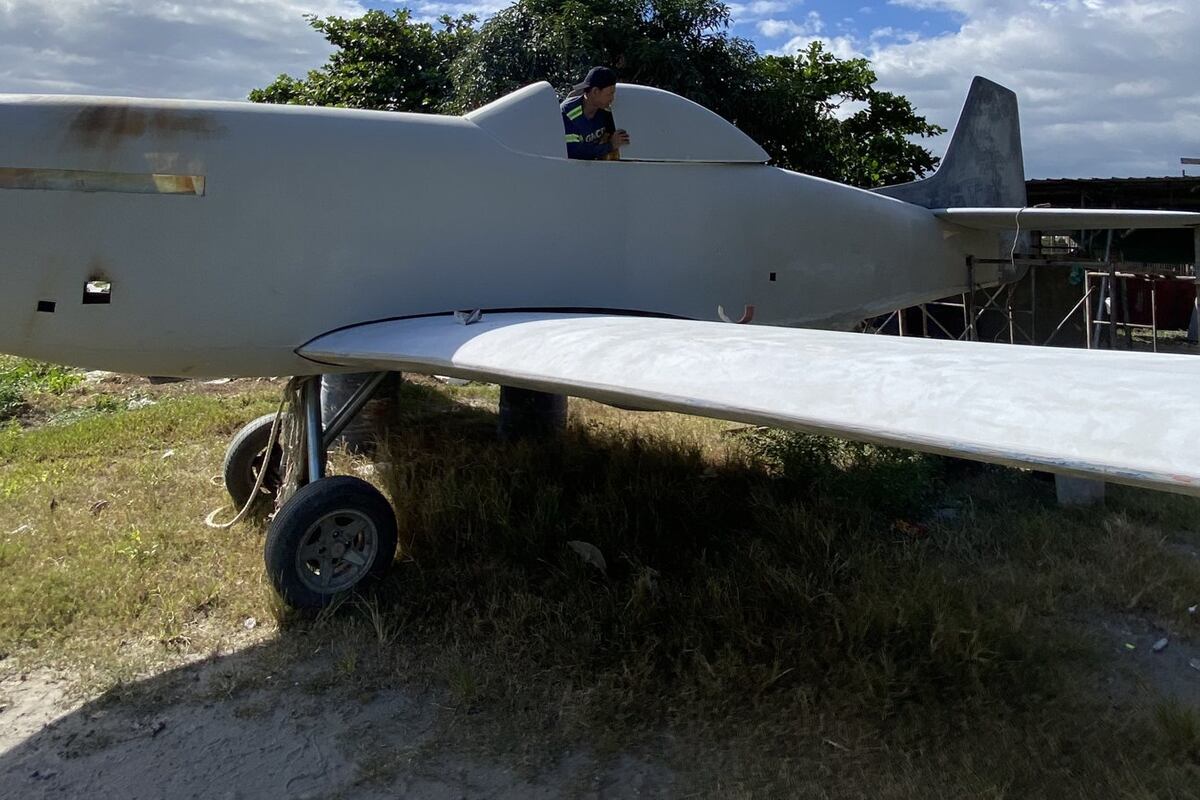
Most people meet the P-51 Mustang as a die-cast desk piece or a plastic kit. We are building one at the size the North American Aviation engineers drew it: 1:1. A real P-51D spans about 37 feet (11.28 m) and runs 32 ft 3 in (9.83 m) nose to tail, so a full-size replica is a machine you walk around, not a model you pick up. This post documents the build as it stands today: a work in progress by our production studio in the Philippines, shown through photos taken on the shop floor.
Why the P-51D, and why this size
The P-51D is the definitive Mustang. Wikipedia’s Mustang article lists 8,200 P-51D-NA and P-51D-NT aircraft built (about 6,600 at Inglewood and 1,600 at Dallas), out of 15,686 Mustangs of all types. It introduced the cut-down rear fuselage with the bubble canopy and carried six .50 caliber Browning machine guns. Power came from the Packard V-1650-7, a licence-built Rolls-Royce Merlin 66 with a two-stage, two-speed supercharger.
The history is just as specific. The British ordered the airframe from North American Aviation in 1940. The NA-73X prototype was finished in September 1940, only 102 days after the contract, and first flew in late October 1940. The original Allison engine lost power above roughly 15,000 ft. Pairing the airframe with the Merlin changed that and created the long-range escort fighter that flew with the Eighth Air Force over Germany. The Smithsonian National Air and Space Museum keeps a P-51D-30-NA (serial 44-74939) in its collection, and its record is a good reference for the dimensions we work from.
Scale math: what 1:1 means next to a shelf model
Take that 37-foot wingspan (444 inches) and divide it down. At 1:48 it is about 9.3 in, at 1:32 about 13.9 in, and at 1:72 about 6.2 in. At 1:1 it is the full 37 ft. The same arithmetic works for any aircraft you have in mind, and our model scale calculator does the conversion for you. If you want to see the sizes between desk and hangar, browse our giant scale models and large scale exhibition models.
How the build is going
Everything below comes from the shop floor of the current build. No renders, no stock photos.
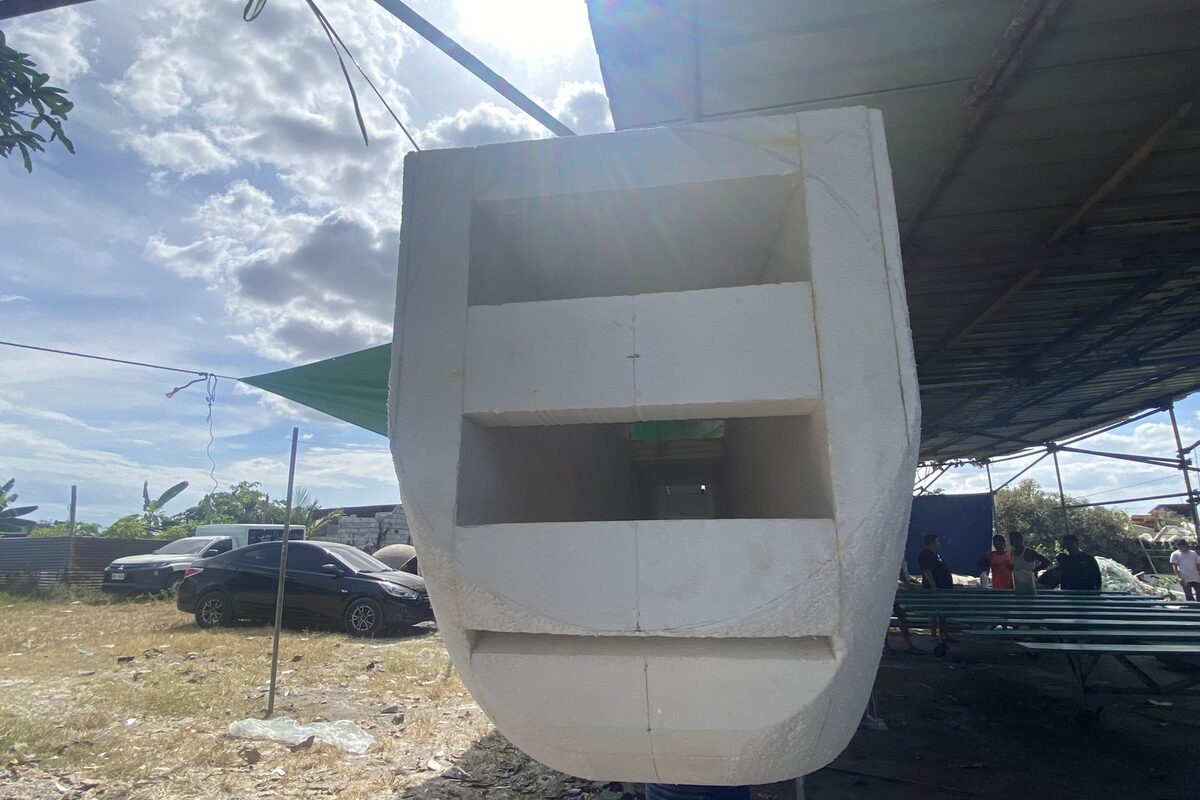
1. Foam forms define the shapes
Large sections start as foam. The white form below is the scoop (intake) section. Foam is quick to cut and sand to profile, and the finished shape becomes the pattern for the mold that follows.
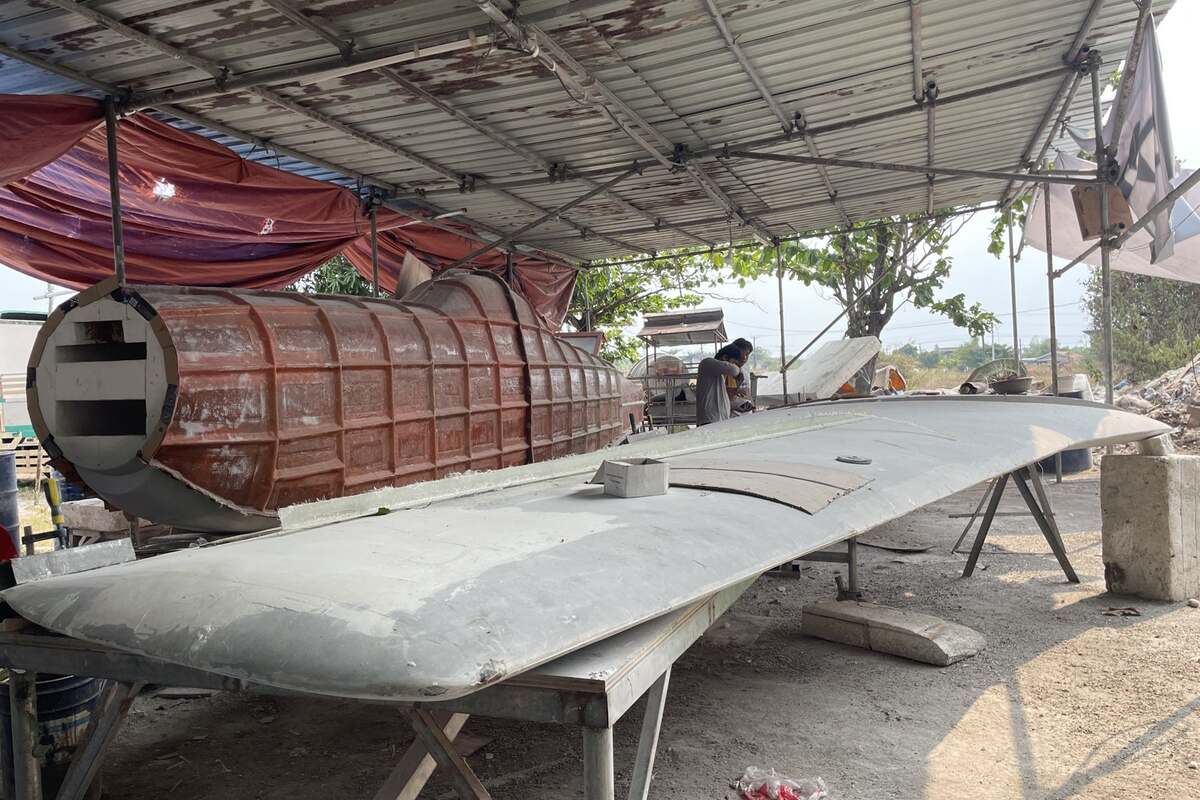
2. Molds for the fuselage skin
The red-orange ribbed structure is a fuselage mold. Ribs keep a mold this long from flexing, because any distortion would carry straight into every part pulled from it. Beside it, a finished grey wing section waits on its stand.
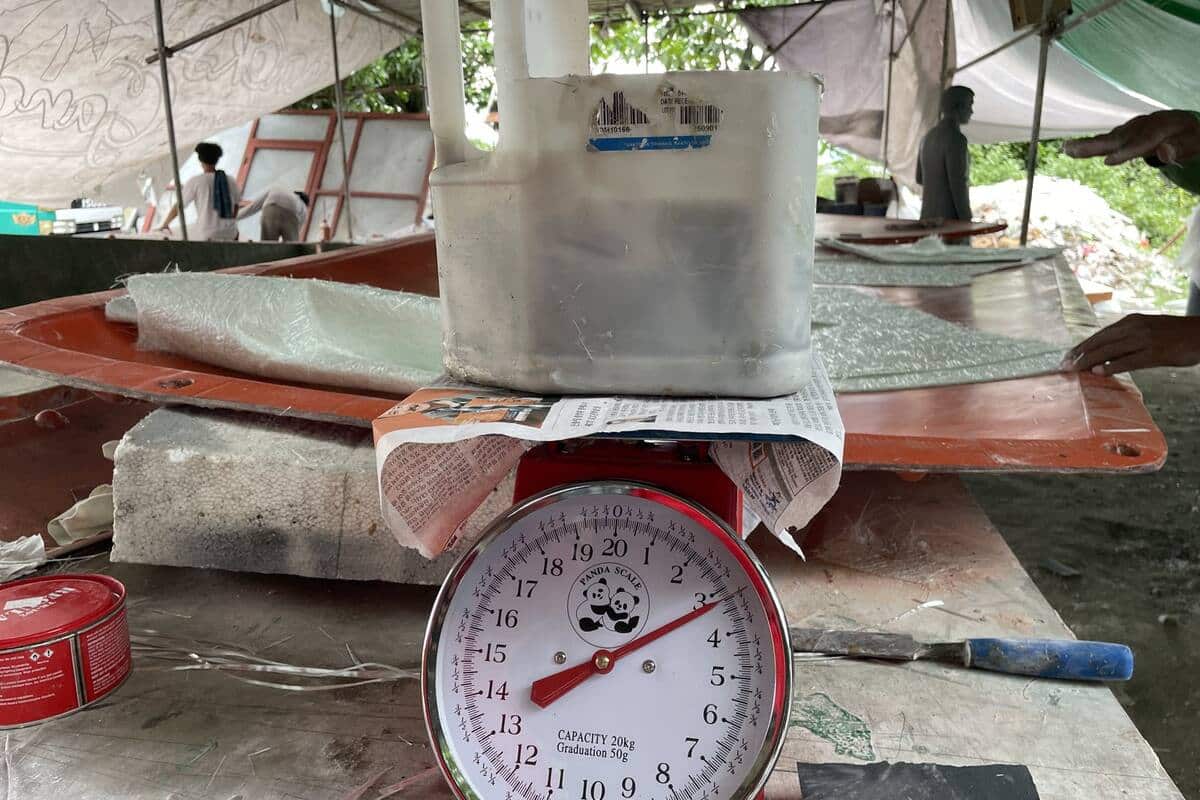
3. Weighing materials for each layup
Resin and glass are weighed, not guessed. The studio uses a 20 kg capacity scale, and the shell weight matters on an airframe this large: a heavy skin is harder to handle and ship. Consistent resin-to-glass ratios also keep the strength predictable from one panel to the next.
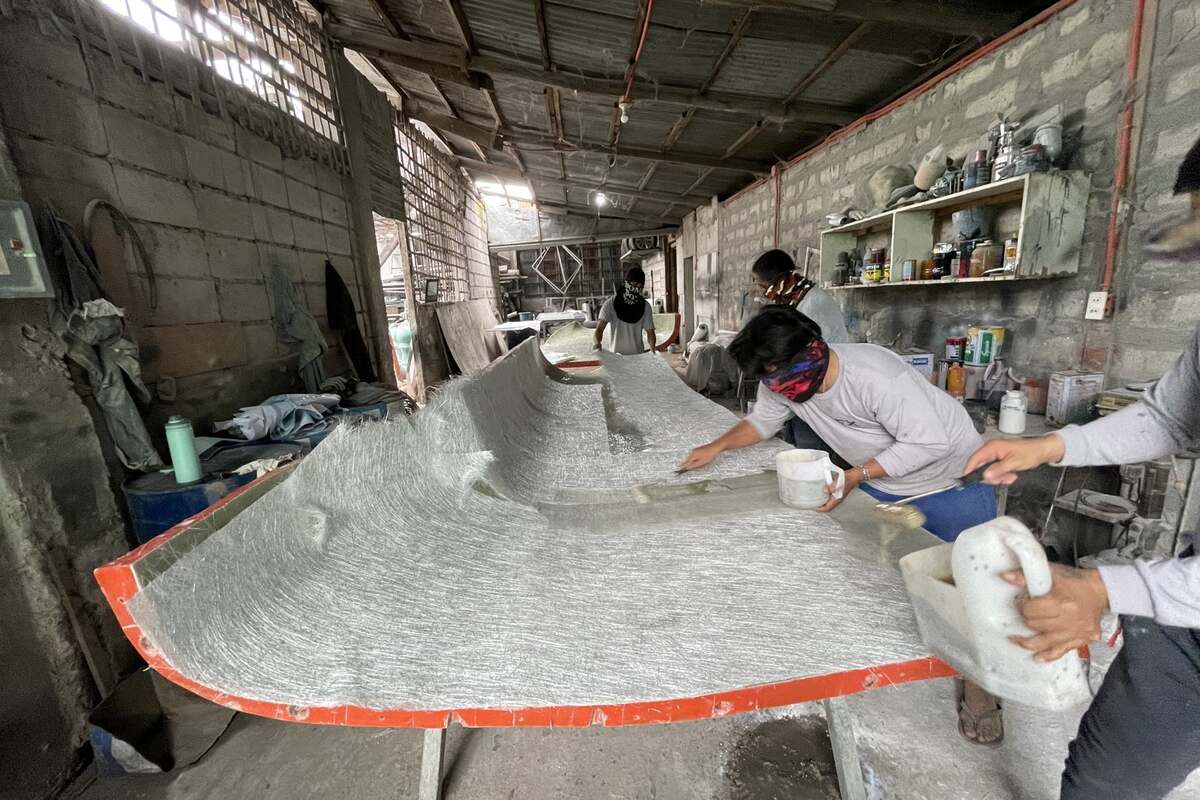
4. Fiberglass layup in the mold
Workers lay glass mat and resin into the mold half by hand, working it into the contours so no air is trapped. It is slow, skilled work, and it is why a hand-built replica carries the true panel shapes of the original.
5. Hand finishing the skin
After the shell comes out of the mold, the surface is sanded by hand until it is fair. That step decides how the paint and a bare-metal finish will read in the light.

The numbers we build to
Dimensions for the P-51D come from museum records, and they vary a little by source: wingspan is listed as 37 ft 0.25 in to 37 ft 2 in, length as 32 ft 3 in, and height between about 12 ft 2 in and 13 ft 8 in depending on whether the tail wheel is up and how the aircraft sits. Loaded weight is commonly given around 11,600 lb for the D-model. We work to the figures that match the reference airframe for each build and confirm them with you before cutting anything.
- Armament to model: six .50 caliber wing guns, with hardpoints for drop tanks or bombs under the wings.
- Canopy: the bubble canopy and cut-down rear fuselage are what separate a D from the earlier B and C models, so they get special attention in the mold work.
- Wing: the laminar-flow wing was developed with NACA, and its thin, smooth profile is a big part of the Mustang’s look from head-on.
In combat the Mustang earned its reputation: P-51 groups of the Eighth, Ninth and Fifteenth Air Forces claimed about 4,950 enemy aircraft shot down. That legacy is why customers keep asking for it, at every size from a desktop piece to the full-size aircraft in this post.
The videos
We are also filming the build as a YouTube series, with this aircraft working under the name P-51D “La Bomba”. Watch the Modelworks channel for the full-size footage as each stage is finished.
Want a full-size or custom-scale aircraft?
The same studio and process behind this Mustang builds our custom aircraft models, from desktop pieces to big model airplanes. See how we work from real specifications in our post on 1:1 scale aircraft models, look through the aircraft gallery, and when you are ready, start your order here. Tell us the aircraft, the size and the finish, and we will quote it.
Stay tuned
This Mustang is still in progress. We will post updates as the shell is joined, the cockpit takes shape and paint goes on. Check back for the next stage.