
The question of which was the first car ever made is deceptively simple — and the answer, depending on how you define a car, spans nearly a century of contested invention across France, Germany, Britain, and America. If a car requires a petrol engine, the answer is the 1885 Benz Patent-Motorwagen. If a car requires any self-propelled wheeled vehicle, the answer goes back to 1769 and a French military engineer named Nicolas-Joseph Cugnot, who built a steam-powered tricycle capable of carrying four passengers at walking pace before promptly crashing it into a wall — an event some automotive historians consider the first car accident as well as the first car journey.

The full story is considerably richer than any single answer captures. It is a story of parallel invention across different countries, competing definitions, and the peculiarly human tendency to solve the same problem independently and simultaneously when the underlying technology finally makes the solution possible. Understanding where the automobile came from is understanding something fundamental about how transformative technologies actually arrive — not in a single moment of genius but through decades of incremental progress that makes the eventual breakthrough feel, in retrospect, inevitable.
Before the Petrol Engine: Steam, the Road, and the First Self-Propelled Vehicles
1769 — Nicolas-Joseph Cugnot builds the Fardier à vapeur, a steam-powered tricycle · Top speed: approximately 4 km/h · Range: 15 minutes before the boiler required reheating · Fate: crashed on its second journey · Now preserved at the Musée des Arts et Métiers, Paris
Nicolas-Joseph Cugnot was a French military engineer commissioned to build a self-propelled artillery tractor — a vehicle that could haul heavy cannon across battlefields without requiring horses. The Fardier à vapeur he produced in 1769 was a three-wheeled steam vehicle with a copper boiler mounted over the single front wheel, which served as both the steering and driving wheel. It worked. It moved under its own power. It carried four passengers. It also had to stop every fifteen minutes to allow the boiler to reheat, steered with the responsiveness of a barge, and on its second recorded journey drove directly into a wall. The French authorities, apparently concluding that a self-propelled cannon carriage that crashed into things was not the military advantage they had hoped for, discontinued the project.
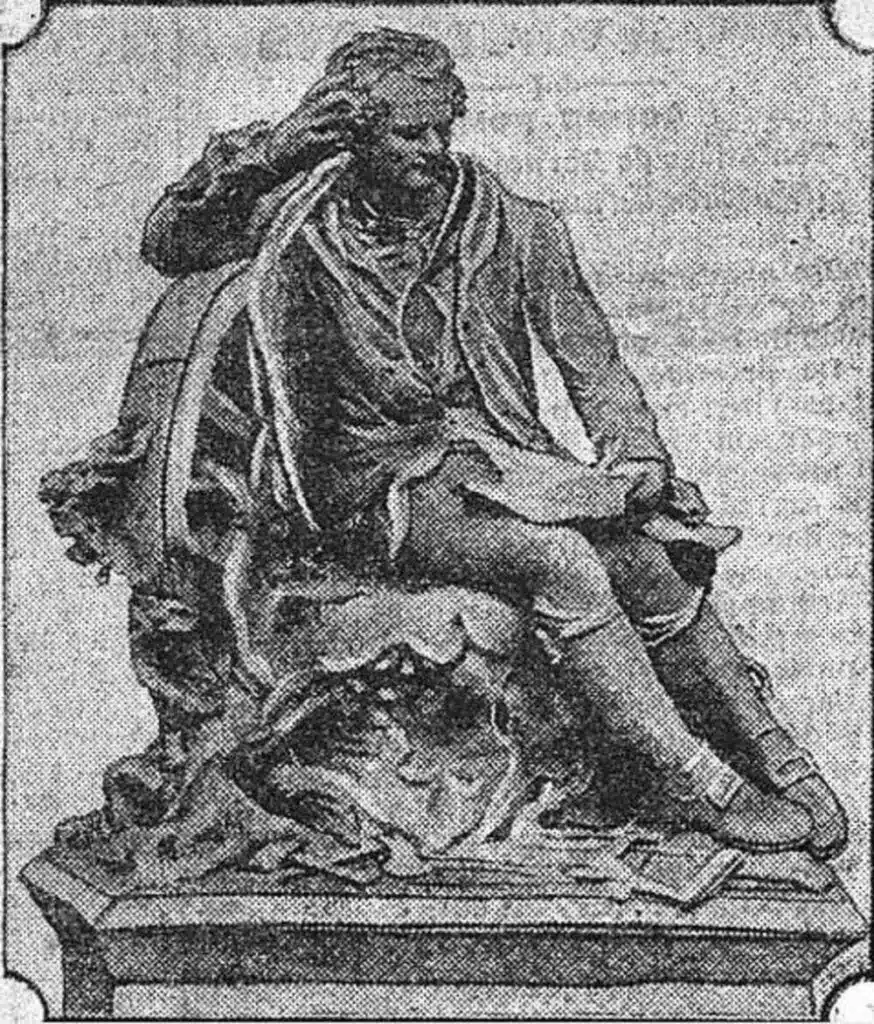
The steam-powered vehicle concept was not abandoned. Throughout the early nineteenth century, British engineers including Richard Trevithick, Walter Hancock, and Goldsworthy Gurney developed steam carriages capable of carrying passengers on public roads at speeds up to 20 miles per hour. Hancock’s Automaton ran a regular passenger service between Stratford and London in 1836. These were, by any reasonable definition, self-propelled passenger vehicles operating on roads — but they were steam-powered, expensive to operate, prone to boiler explosions, and deeply unpopular with the horse-owning establishment whose political influence produced the Locomotive Acts of 1865, which required self-propelled vehicles on British roads to travel at no more than four miles per hour and be preceded by a person carrying a red flag. The legislation effectively killed British automotive development for two decades and handed the initiative to Germany.
Karl Benz and the Patent-Motorwagen: The First True Automobile
1885 — Benz Patent-Motorwagen · Engine: single-cylinder four-stroke petrol · Displacement: 954cc · Power output: 0.75 horsepower · Top speed: 16 km/h · Weight: 265 kg · Patent filed: 29 January 1886 — widely recognised as the birth date of the automobile
Karl Benz built his first viable petrol-powered vehicle in Mannheim in 1885 — a three-wheeled carriage powered by a single-cylinder four-stroke engine of his own design, with electrical ignition, a differential gear for the rear axle, and a water-cooled engine using evaporative cooling. He filed the patent on 29 January 1886, and this date is now recognised by most automotive historians as the formal birth date of the automobile. The vehicle was not a conversion of a horse carriage — it was designed from the outset as a motor vehicle, with the engine, transmission, and chassis conceived as an integrated system rather than assembled from existing horse-drawn components.
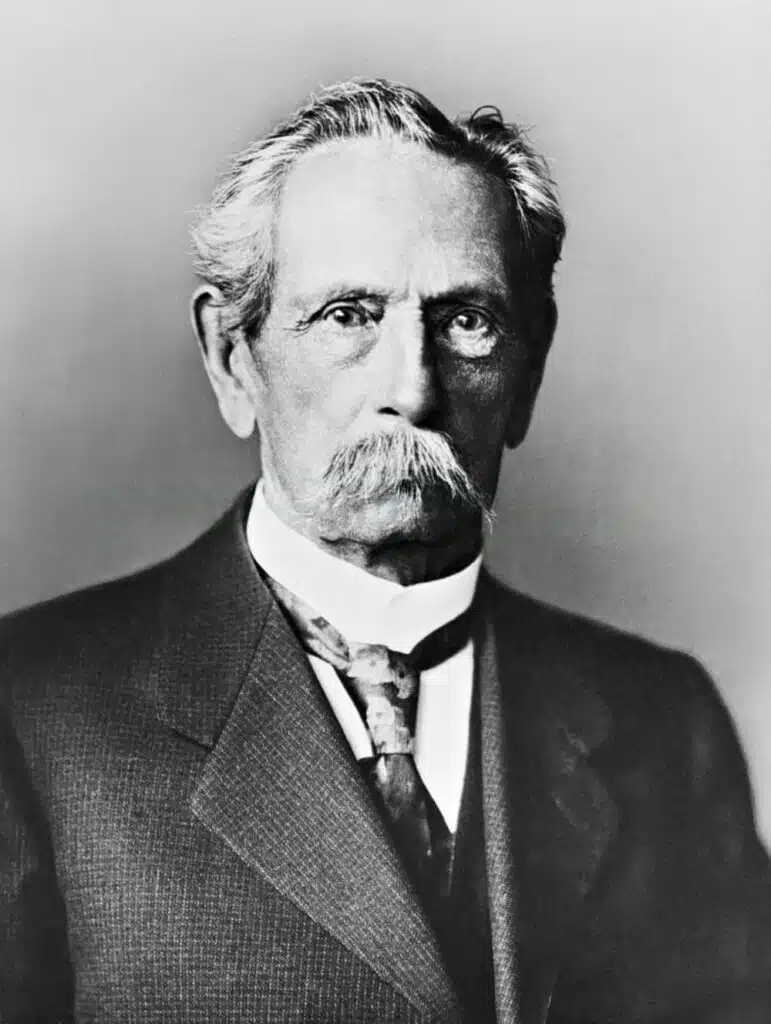
The public demonstration of the Patent-Motorwagen was a commercial disappointment. The vehicle attracted curiosity but not customers, and Benz struggled to sell it. The journey that changed public perception was not organised by Benz himself but by his wife, Bertha. In August 1888, without telling her husband, Bertha Benz took the Patent-Motorwagen on the first long-distance automobile journey in history — 106 kilometres from Mannheim to Pforzheim, accompanied by her two teenage sons. She replenished the fuel tank with ligroin purchased from pharmacies along the route, cleaned a blocked fuel line with her hat pin, and repaired a failed ignition wire using her garter. When she arrived in Pforzheim and telegraphed her husband, the automobile had its first road test and its first public relations event simultaneously.
The journey demonstrated three things that no trade exhibition had managed to establish: that the automobile could travel long distances reliably, that it could be operated by someone without engineering expertise, and that it had a practical use case beyond local demonstration. Orders followed. The automobile had its first market.
Gottlieb Daimler, Wilhelm Maybach, and the Four-Wheeled Automobile
1885 — Daimler Reitwagen: first petrol-powered two-wheeled vehicle (motorcycle) · 1886 — Daimler Motorised Carriage: first four-wheeled petrol automobile · Engine: Daimler Standuhr (grandfather clock) single-cylinder · Working independently of Benz in Cannstatt, 60 miles from Mannheim
While Benz was developing his three-wheeled Patent-Motorwagen in Mannheim, Gottlieb Daimler and Wilhelm Maybach were working independently sixty miles away in Bad Cannstatt on a different approach to petrol-powered transportation. Their 1885 Reitwagen — a wooden-framed two-wheeled vehicle powered by a single-cylinder petrol engine — is generally considered the first true motorcycle. Their 1886 motorised carriage, built by fitting a petrol engine to an existing horse-drawn carriage, produced the first four-wheeled petrol automobile.
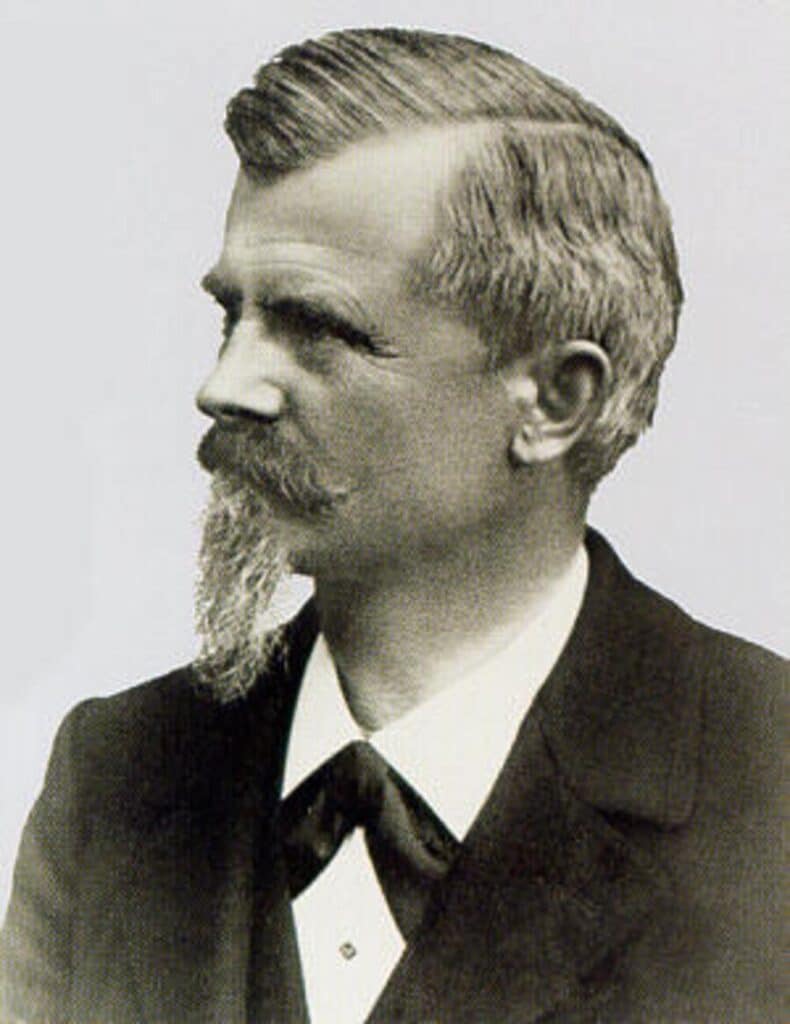
The remarkable historical coincidence — two separate German inventors, working independently, producing petrol-powered vehicles in the same year within sixty miles of each other — is explained by the technological context. The Otto cycle four-stroke petrol engine, invented by Nikolaus Otto in 1876, had made petrol-powered vehicles theoretically possible. Benz and Daimler both recognised the possibility simultaneously and pursued it through different design philosophies. Neither was aware of the other’s work during the critical development period. The automobile was not invented once — it was invented twice, concurrently, by men who did not know each other were solving the same problem.
France, America, and the First Production Automobile
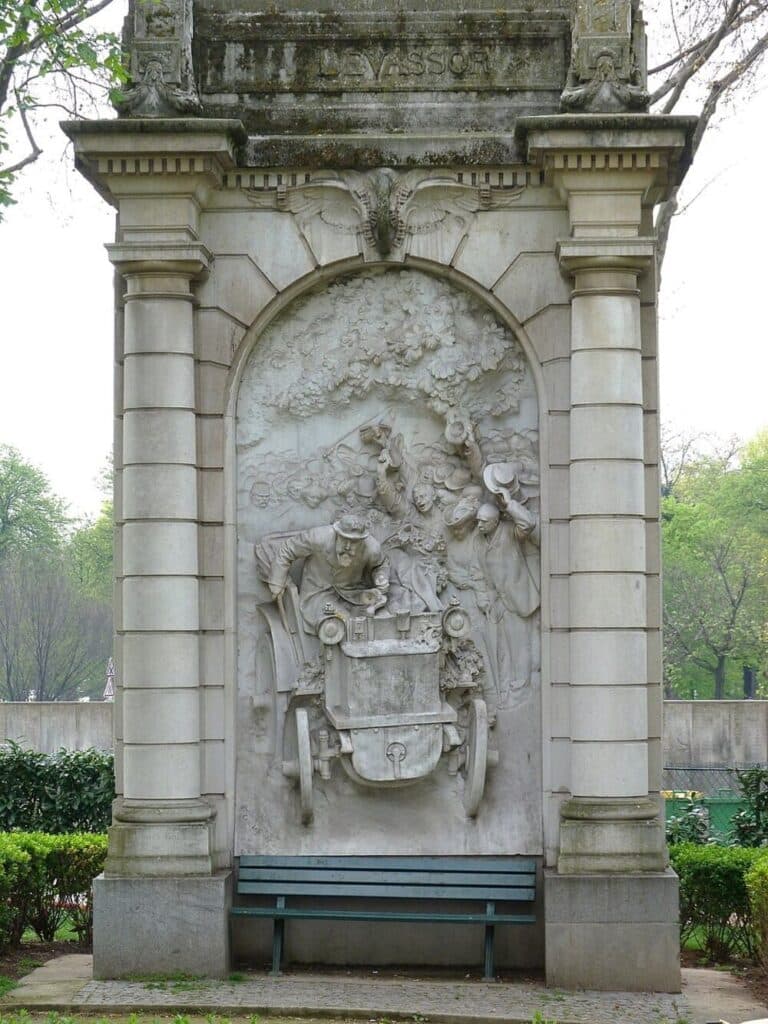
The German inventors built the first automobiles, but France became the first country to develop a genuine automotive industry. Panhard et Levassor licensed Daimler’s engine technology in 1889 and by 1891 were producing vehicles with the engine at the front, a sliding-gear transmission, and a rear-wheel drive layout that established the template followed by most cars for the next hundred years. Peugeot, De Dion-Bouton, and Renault followed within a decade. The 1895 Paris-Bordeaux-Paris race — 1,178 kilometres completed by Émile Levassor in just under 49 hours at an average speed of 24 km/h — demonstrated that the automobile was capable of sustained high-speed travel and established motor racing as the proving ground for automotive technology that it has remained ever since.
In America, the automobile arrived slightly later but scaled considerably faster. Charles and Frank Duryea built the first American petrol automobile in 1893 — a converted horse buggy powered by a single-cylinder engine. Henry Ford’s first vehicle, the Quadricycle, appeared in 1896. But it was Ford’s insight that the automobile’s potential was not as a luxury product for the wealthy but as a utility product for everyone that produced the transformation. The Model T, introduced in 1908, was not the first car — it was the first car that most Americans could afford, and its production volume changed the economics of the entire industry permanently.
The automobile was not invented in a single moment by a single genius. It emerged from a century of parallel development across multiple countries — each inventor building on the work of the previous generation until the solution became inevitable rather than merely possible.
From the Patent-Motorwagen to the Collector’s Shelf: Why Automotive Origins Matter
The vehicles that started automotive history are, almost without exception, too fragile and too historically significant for private ownership — they belong to museums and institutions that preserve them as the engineering artefacts they are. The original Benz Patent-Motorwagen is preserved at the Mercedes-Benz Museum in Stuttgart. The Cugnot Fardier is in Paris. The Duryea Motor Wagon is at the Smithsonian. These are not collector cars in any conventional sense — they are the physical evidence of invention, maintained as historical documents rather than as vehicles.
What the serious collector can engage with is the replica tradition — the precise scale reproduction of historically significant vehicles that communicates their design and engineering character at a size that can be examined, displayed, and understood in a way that museum-preserved originals, behind protective barriers, cannot fully permit. The models of automobiles that reproduce the Patent-Motorwagen’s three-wheel layout, tiller steering, and exposed engine allow the viewer to engage with the vehicle’s engineering logic in a way that a photograph or a museum visit through glass cannot replicate. The scale replica makes the design accessible — the relationship between the engine position, the wheel arrangement, and the steering geometry legible at arm’s length in a way that communicates why this particular configuration was the solution Benz arrived at after years of development.
The collector who builds a display spanning from the Patent-Motorwagen to a contemporary performance car is not assembling a timeline of vehicles. They are assembling an argument — about how a technology that began as a three-wheeled tricycle capable of 16 km/h developed, across 140 years of continuous engineering ambition, into vehicles capable of over 400 km/h, equipped with active aerodynamics, hybrid powertrains, and carbon fibre structures that their inventor could not have conceived. The distance between those two endpoints, held in scale across a single display, is one of the most compelling arguments in the history of human engineering.
Frequently Asked Questions
What was the first car ever made?
The Benz Patent-Motorwagen, built by Karl Benz in Mannheim in 1885 and patented on 29 January 1886, is most widely recognised as the first true automobile — a purpose-designed petrol-powered vehicle rather than a converted horse carriage or steam vehicle. Gottlieb Daimler and Wilhelm Maybach independently developed a four-wheeled petrol automobile in the same year. If steam-powered vehicles are included in the definition, the 1769 Cugnot Fardier à vapeur predates both by over a century.
Who invented the automobile?
Karl Benz is most widely credited with inventing the automobile based on his 1886 patent for the Patent-Motorwagen — the first vehicle designed from the outset as a petrol-powered motor vehicle. Gottlieb Daimler and Wilhelm Maybach produced a four-wheeled petrol automobile in the same year, working independently. Both claims are historically defensible, and the Mercedes-Benz company that exists today is the product of the eventual merger of the Benz and Daimler companies in 1926.
What was the first car in America?
The first petrol-powered automobile built and operated in America was the Duryea Motor Wagon, constructed by Charles and Frank Duryea in Springfield, Massachusetts in 1893. Henry Ford’s first vehicle, the Quadricycle, appeared in 1896. Ford’s Model T of 1908 — while not the first American car — was the first to be produced in sufficient volume and at a price accessible enough to transform the automobile from a luxury item to a mass-market product.
What did the first car look like?
The Benz Patent-Motorwagen looked nothing like a modern car — it was a three-wheeled vehicle with large spoked wheels, a tubular steel frame, a single-cylinder engine mounted at the rear, tiller steering on the single front wheel, and no weather protection of any kind for its passengers. It weighed 265 kilograms and its engine produced 0.75 horsepower. The Daimler motorised carriage of the same year looked more familiar — it was built on the body of an existing horse-drawn carriage, producing a four-wheeled vehicle with a higher seating position and enclosed cabin. Neither would be recognisable as a car to a contemporary observer without historical context.
From 16 km/h to the Present — One Continuous Line of Development
The Benz Patent-Motorwagen travelled at 16 kilometres per hour, required a pharmacist to refuel it, and steered with a tiller. The cars being produced in 2026 accelerate to 100 km/h in under two seconds, navigate autonomously on public roads, and contain more computing power than the Apollo programme. The distance between those two points is 140 years of continuous engineering development — one of the longest sustained periods of technological improvement applied to a single category of object in human history.
What connects them is not the technology — almost nothing about a contemporary electric vehicle would be recognisable to Karl Benz — but the fundamental aspiration: a vehicle that moves people under its own power, at a speed that walking cannot match, to destinations that their own legs cannot reach. Benz solved that problem in 1885 with 0.75 horsepower and a single cylinder. Every car since has been a refinement of the same answer to the same question. The automobile was not invented once. It has been invented continuously, every year, since the day Bertha Benz drove out of Mannheim without telling her husband where she was going.