
The best decorative objects do two things simultaneously: they look extraordinary, and they carry a story that the room benefits from having in it. A well-chosen model ship does both with an authority that generic home décor cannot approach. The fully rigged galleon on a study shelf. The Viking longship on a fireplace mantelpiece. The sleek destroyer in a library display case. Each of these objects commands the space around it, communicates the interests of the person who chose it, and holds attention from every visitor who encounters it. None of them requires explanation. They explain themselves.
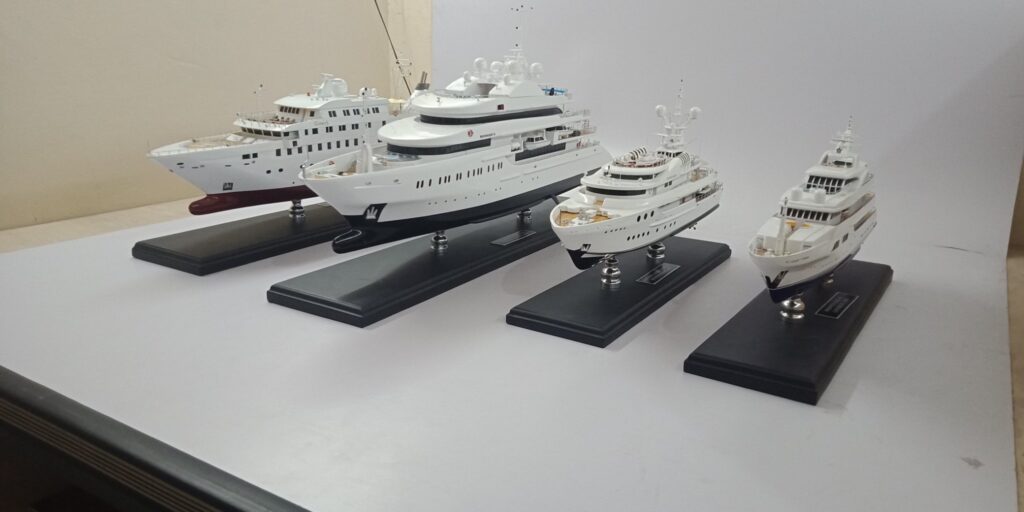
This guide covers everything you need to know about model ships as home décor and gifts — from the subjects that work hardest in an interior setting to the quality markers that separate a display-worthy piece from a generic ornament, and the gifting occasions where a well-chosen ship model consistently outperforms every alternative on the shelf.
Why Model Ships Work in Interiors When Other Decorative Objects Do Not
Interior designers have long understood that the most compelling rooms contain objects with genuine biographical or historical weight — things that were chosen because they mean something rather than because they fill a space. Model ships sit in this category with unusual authority because the subjects they represent carry histories that resonate across cultures, eras, and interests. You do not need to be a maritime enthusiast to find a fully rigged 17th-century galleon visually compelling. You simply need to be a person who responds to craftsmanship, scale, and the evidence of a world significantly larger and more dangerous than the room you are standing in.
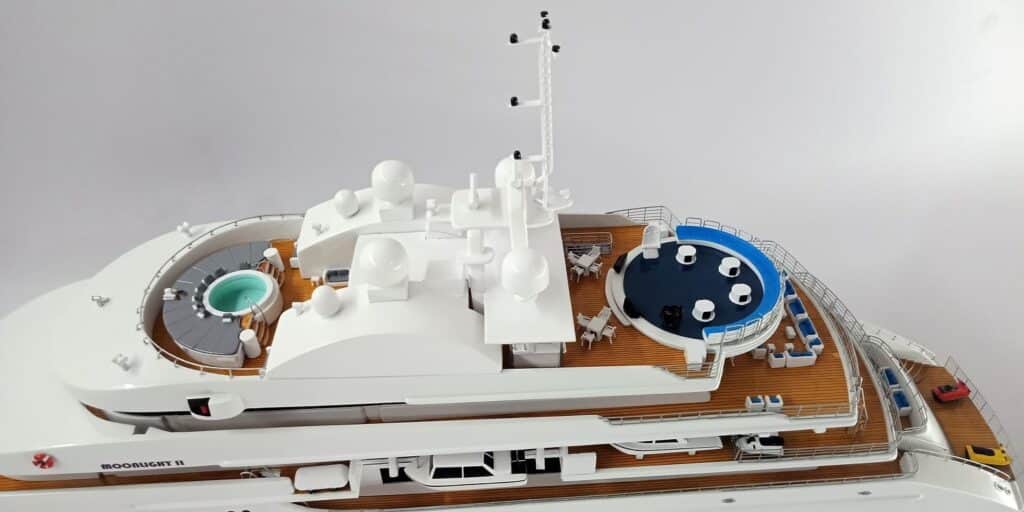
The three-dimensional quality of model ships also gives them a display versatility that flat wall art cannot match. From every angle, a well-made ship model presents a different silhouette, a different relationship between hull and rigging, a different play of light across the surface detail. A painting is the same from wherever you stand. A ship model changes continuously as you move around it — which is why they work equally well as centrepieces, shelf anchors, mantelpiece statements, and display case features.
Scale also matters enormously to the interior effect. A 1:75 scale galleon in a double-height entrance hall becomes the room’s defining object. The same model on a bookshelf in a study becomes an intimate focal point. A 1:350 warship in a glass display case on a side table reads as a precision collector’s piece. The same subject in different scales serves entirely different interior functions — which is why model ship selection requires as much thought about placement as it does about subject.
Four Model Ship Subjects That Work Hardest in Any Home Setting
1. The Pirate Ship Model — Drama and Historical Depth in Equal Measure
Best for: Study, living room, entrance hall — strong visual presence at any scale
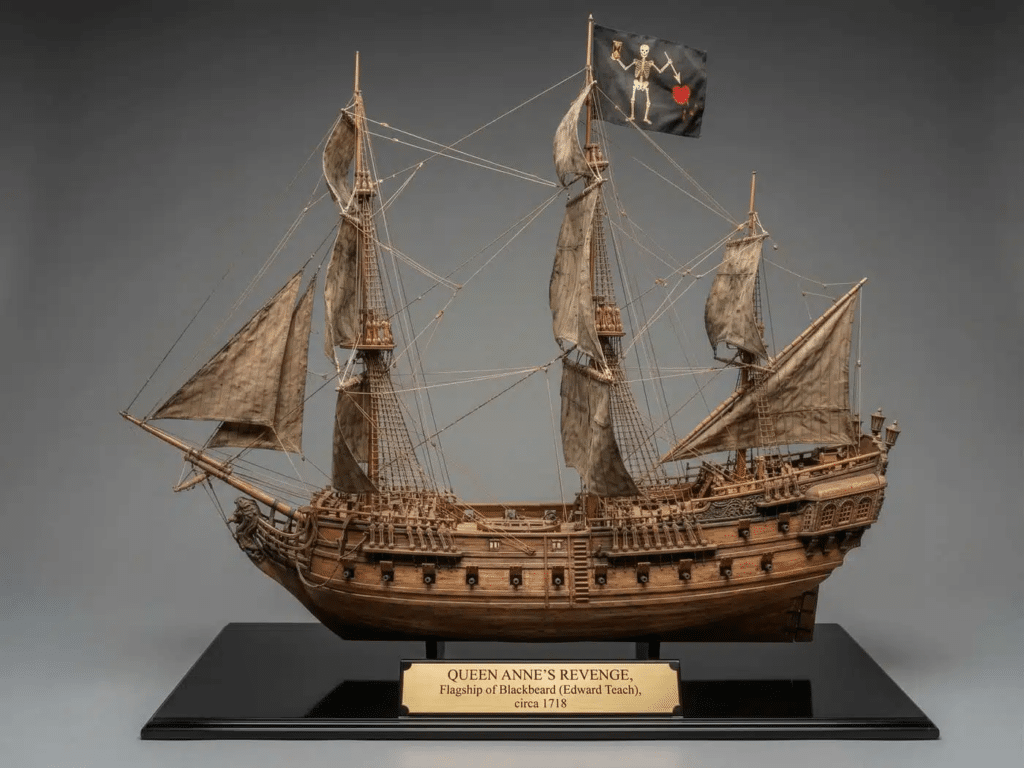
The pirate ship model is the most visually dramatic subject in the entire ship model category. The combination of black sails, complex multi-mast rigging, period-accurate hull armament, and the inherent narrative weight of the subject — the Caribbean, the age of sail, the line between commerce and piracy that every maritime nation walked in the 17th and 18th centuries — makes these models compelling to virtually any viewer regardless of their specific maritime knowledge. Blackbeard’s Queen Anne’s Revenge, the mythologised Black Pearl, the generic but historically-informed corsair brigantine: all carry the same quality of visual storytelling that makes them the most frequently gifted ship model subject across all occasions and budgets.
In an interior setting, a pirate ship model works best with space around it — a dedicated shelf with neutral backdrop, a mantelpiece given over entirely to the piece, or a display case that isolates it from competing objects. The rigging detail that makes these models extraordinary is also what makes them sensitive to crowded display contexts. Give a fully rigged galleon room to breathe and it will reward every visitor who encounters it.
2. The Viking Ship Model — Elemental Form and Historical Gravitas
Best for: Minimalist interiors, Scandinavian-influenced spaces, study or library — strong design presence
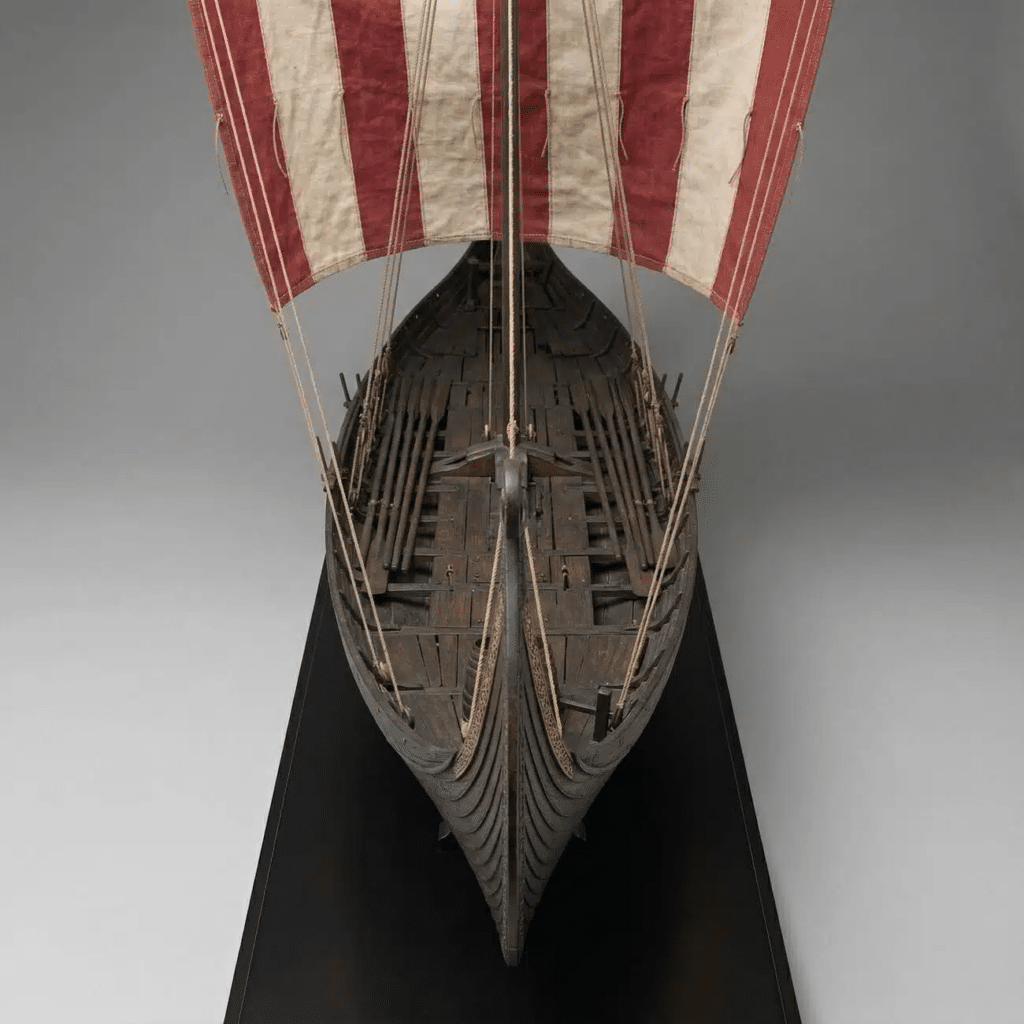
The Viking ship model occupies a distinct aesthetic category from the later tall ship subjects. The Viking longship’s form — the dramatically upswept prow and stern, the low freeboard, the single square sail, the bank of oar ports along each strake — is one of the most immediately recognisable hull profiles in maritime history. At 1:50 or 1:72 scale, it reproduces an object of genuine sculptural presence: the dramatic sheerline creates a silhouette that reads from across a room, and the strake planking detail rewards close inspection from anyone who approaches it.
The Viking longship also works exceptionally well in contemporary and minimalist interior contexts where the elaborate rigging of a later tall ship would feel visually cluttered. The longship’s relative simplicity — dramatic form, clean lines, limited superstructure — sits comfortably alongside modern furniture and architectural detailing in a way that a fully rigged 18th-century frigate might not. For design-conscious homeowners whose interiors lean toward the contemporary rather than the traditional, the Viking longship is consistently the stronger maritime choice.
3. The Age-of-Sail Galleon — The Classic Maritime Statement Piece
Best for: Traditional interiors, libraries, boardrooms — the definitive maritime display subject
The fully rigged 16th or 17th-century galleon — Spanish, English, or Dutch — is the subject that most people visualise when they think of a model ship. The three or four masts, the complex standing and running rigging, the gun decks, the carved stern gallery: these are the subjects that specialist wooden ship model workshops have been producing for generations, and the ones that represent the highest expression of the maker’s craft. A quality pre-built wooden galleon at 1:96 scale, finished by hand and presented in a quality display case, is the definitive maritime statement piece — appropriate for traditional and period-influenced interiors, boardrooms, and formal living spaces where visual authority rather than contemporary minimalism is the governing aesthetic.
4. The WWII Naval Vessel — History and Precision for the Serious Collector
Best for: Study, home office, military history enthusiast — strong collector and gifting appeal
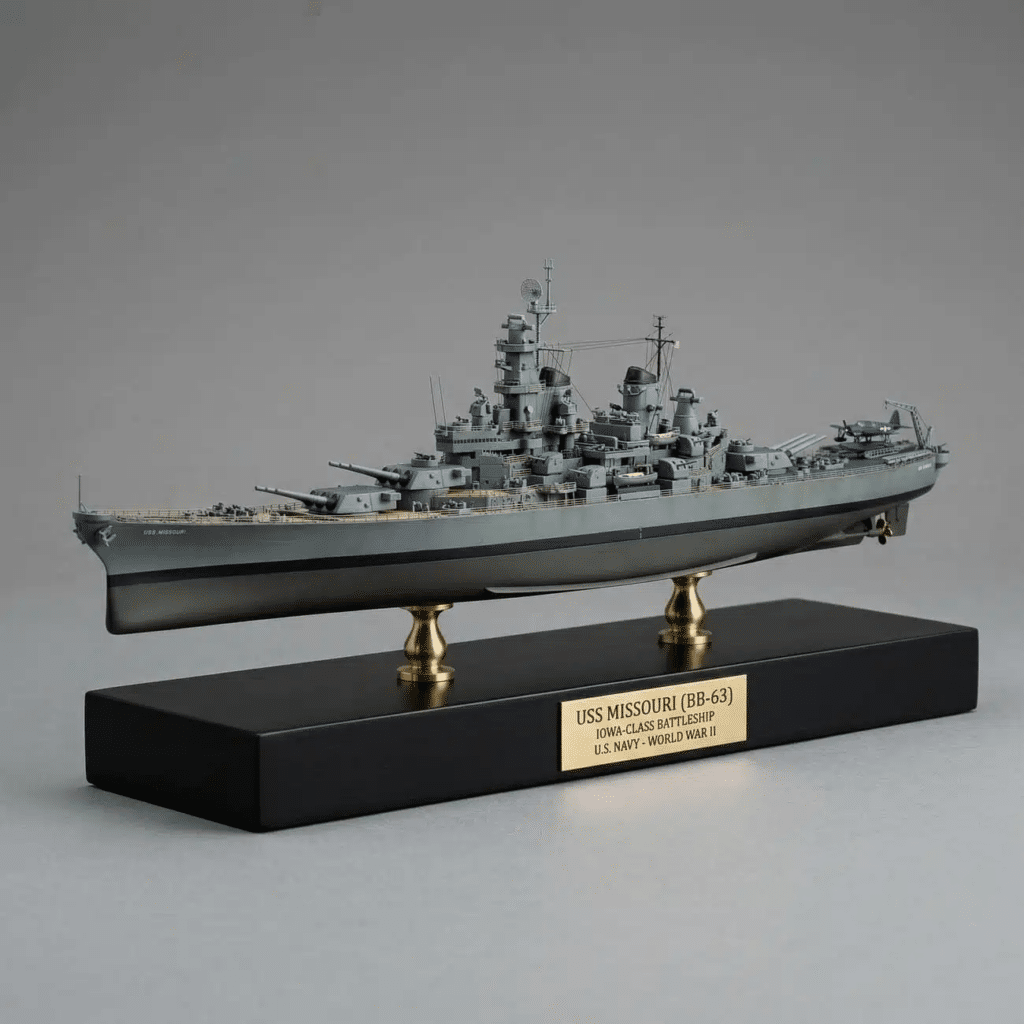
For the maritime enthusiast whose interest is historical rather than romantic, WWII naval vessels — destroyers, battleships, aircraft carriers — are the collector subject that rewards the deepest research and produces the most technically authoritative display pieces. A 1:350 scale USS Missouri or HMS Warspite at the correct waterline in a quality display case communicates an entirely different kind of presence from the tall ship subjects: precision over drama, documented history over mythology. For gifting to someone with a specific naval history interest, the accuracy of the subject and markings matters enormously — a piece that gets the configuration right earns immediate respect from the recipient.
The right model ship is never the most expensive one. It is the one chosen with genuine knowledge of the space it will occupy and the person who will look at it every day.
Model Ships as Gifts — Matching Subject to Occasion and Recipient
Model ships are among the most occasion-flexible gifts in the maritime category — appropriate for birthdays, retirements, housewarmings, corporate milestones, and significant personal occasions in a way that few other decorative gifts can match. The key is matching the subject to the recipient rather than defaulting to a generic maritime choice.

- For the maritime professional or naval history enthusiast: a period-accurate vessel from their area of specialist interest — the ship class they served on, the historical vessel they have spent years researching, or a named vessel from their company’s fleet history.
- For the design-conscious homeowner: a Viking longship or a clean-lined historical subject chosen to complement the existing interior aesthetic rather than impose a nautical theme on a space that does not want one.
- For the history enthusiast with broad interests: a pirate ship model or an age-of-sail galleon that carries enough historical narrative to sustain interest beyond the decorative — pieces with stories attached to them rather than generic maritime ornaments.
- For corporate and milestone gifting: a commissioned personalised replica of a vessel with direct relevance to the recipient’s professional history — the ship that defined a career chapter, the vessel class a company has operated for decades, or a named boat with personal significance.
What Separates a Quality Model Ship From a Generic Ornament
Before purchasing any model ship for display or gifting, assess these five quality indicators:
- Hull accuracy — does the hull profile match the actual vessel type, or is it a generic approximation? The sheerline, freeboard, and bow profile are the primary accuracy markers.
- Rigging quality — for tall ship subjects, the standing and running rigging should be taut, correctly rove through period-accurate blocks, and anchored at the correct belaying points.
- Material and finish — hand-crafted wooden models with individually planked hulls and brass fittings age differently from mass-produced resin or plastic equivalents. The material tells the story of the method.
- Display presentation — a quality display case or stand transforms a model ship from an object into a formal display piece. Without adequate presentation, even a well-made model reads as incomplete.
- Maker reputation — established specialist workshops with documented portfolios and verifiable client histories carry reputational weight that anonymous or low-cost producers cannot offer.
The Scale Model Logic That Applies Across Every Category

The same principles that govern model ship selection for home décor and gifting apply across the entire scale model category. A quality carmodel chosen for a study shelf or given as a milestone gift follows the same logic: specificity of subject, accuracy of reproduction, quality of materials, and relevance to the recipient’s personal history are the variables that determine whether an object stays on a shelf for decades or ends up in a cupboard within a year. The ship model and the automobile replica are different subjects with the same underlying collector philosophy — and that philosophy, applied consistently, is what separates a gift that lasts from one that does not.
Frequently Asked Questions
What size model ship is best for home display?
Scale and placement should be determined together. For a dedicated display cabinet or mantelpiece, a 1:75 to 1:96 scale model produces a visually commanding piece without overwhelming the space. For bookshelf display among other objects, 1:150 or 1:200 is more practical. For a statement piece in a large room — entrance hall, double-height living space, or boardroom — a 1:50 or larger model creates the focal point presence that smaller scales cannot deliver. Always measure the intended display space before selecting a scale.
Are model ships appropriate gifts for people who don’t have a maritime interest?
Yes — provided the subject is chosen for its visual and historical appeal rather than its specialist maritime significance. A pirate ship model or a Viking longship carries enough cultural recognition and visual drama to appeal to anyone with an appreciation for history, craftsmanship, and three-dimensional design objects. The maritime expertise is not required to appreciate the gift — only the ability to recognise something well-made and visually compelling, which is a universal capability.
What is the best model ship for a minimalist interior?
The Viking longship is the most consistently recommended model ship for minimalist or contemporary interiors. Its clean, dramatic hull form and relatively simple rigging sit comfortably alongside modern furniture and architectural detailing without imposing a traditional nautical aesthetic on the space. For the same reason, early medieval and ancient vessel subjects — Greek triremes, Roman merchant vessels, Norse knarrs — work well in contemporary settings where elaborate later rigging would feel visually inconsistent.
Can model ships be personalised as gifts?
Yes. Specialist model makers accept commissions for model ships built to a specific vessel’s name, livery, flag state, and configuration — including custom nameplates, engraved display cases, and accompanying documentation for formal presentation. For retirement gifts, corporate milestones, and significant personal occasions where the standard production range does not carry the required subject, commissioned personalised pieces represent the premium gifting tier. Lead times typically run eight to fourteen weeks depending on scale and complexity.
The Object That Earns Its Place
A well-chosen model ship is one of the few decorative objects that grows more interesting over time rather than less. Every visitor who examines it sees something different — the rigging detail they missed on the previous visit, the hull form they had not noticed, the historical reference they recognise from something they read. It does not become familiar in the way that a print or a generic decorative object becomes familiar. It continues to reward attention, and the room that contains it is richer for having it.
That is the standard a model ship should meet. And when it does — when the subject is right, the quality is genuine, and the placement is considered — it is an object that earns its place in a room and keeps it for decades. The sea has been producing stories worth preserving for as long as human beings have been building boats to cross it. A well-chosen model ship brings one of those stories into your home and leaves it there permanently.