
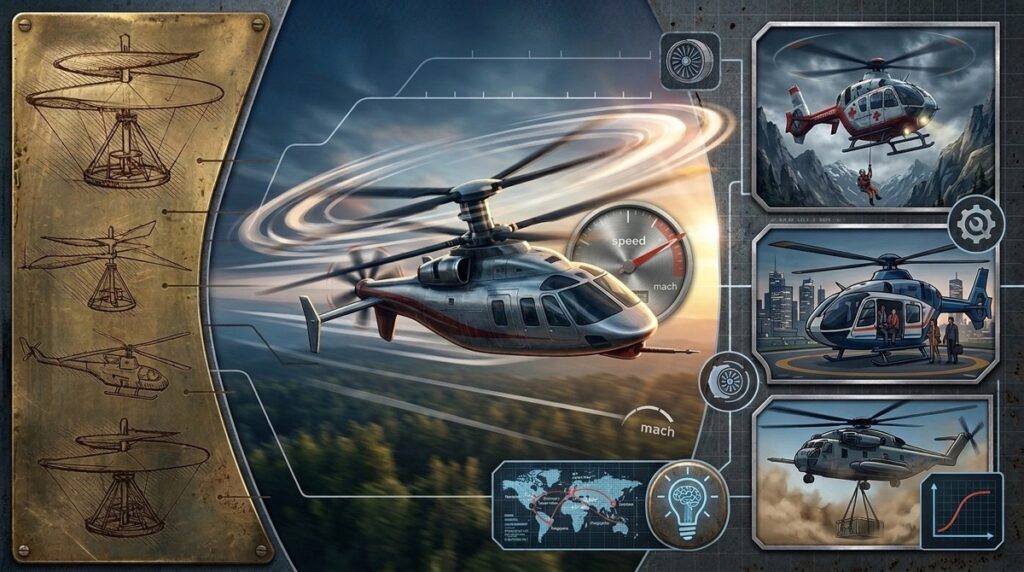
Few aircraft generate more questions than the helicopter. The physics that keep it airborne are counterintuitive, the engineering history behind it spans centuries of failed experiments, and the performance envelope — how fast, how high, how far — varies more dramatically across types than almost any other aircraft category. Whether you are an aviation enthusiast, a student, or a collector researching the subject behind a helicopter model, this guide answers the four questions people ask most — directly, specifically, and with the engineering context that makes the answers genuinely useful.
When Were Helicopters Invented?
The first practical, fully controllable helicopter — the Focke-Wulf Fw 61 — flew successfully in Germany in 1936. The first helicopter to enter full production and military service was the Sikorsky R-4, developed by Igor Sikorsky in the United States and introduced in 1942.
The concept of vertical flight is considerably older than the practical helicopter. Leonardo da Vinci sketched an aerial screw design in 1489 that articulated the theoretical principle — a rotating helical surface generating lift — that all helicopters still use. Practical experiments with rotary-wing flight began in earnest in the nineteenth century, with coaxial rotor models demonstrating vertical lift as early as 1784, when Launoy and Bienvenu flew a model powered by a wound bow string before the French Academy of Sciences.
The gap between theoretical understanding and practical achievement was enormous. The fundamental problem was control: a single-rotor helicopter generates torque that spins the fuselage in the opposite direction to the rotor unless actively countered. Early experimenters could achieve lift but not directional stability. Juan de la Cierva’s autogyro of 1923 — a hybrid aircraft with a freely spinning rotor providing lift and a conventional propeller for forward thrust — was the most successful pre-helicopter rotary-wing design, and its articulated rotor blade technology directly influenced subsequent helicopter development.
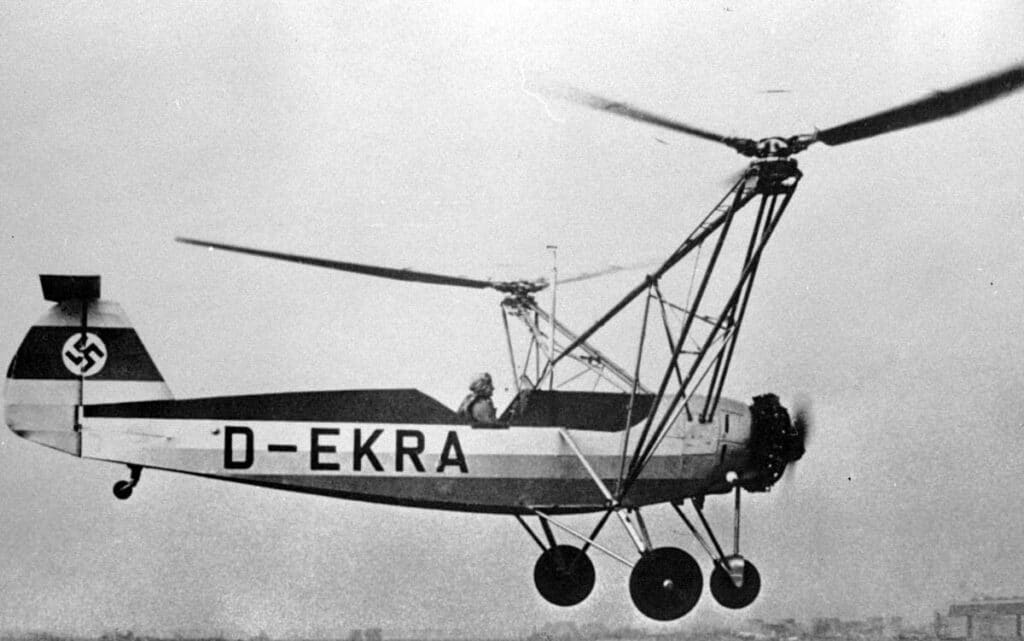
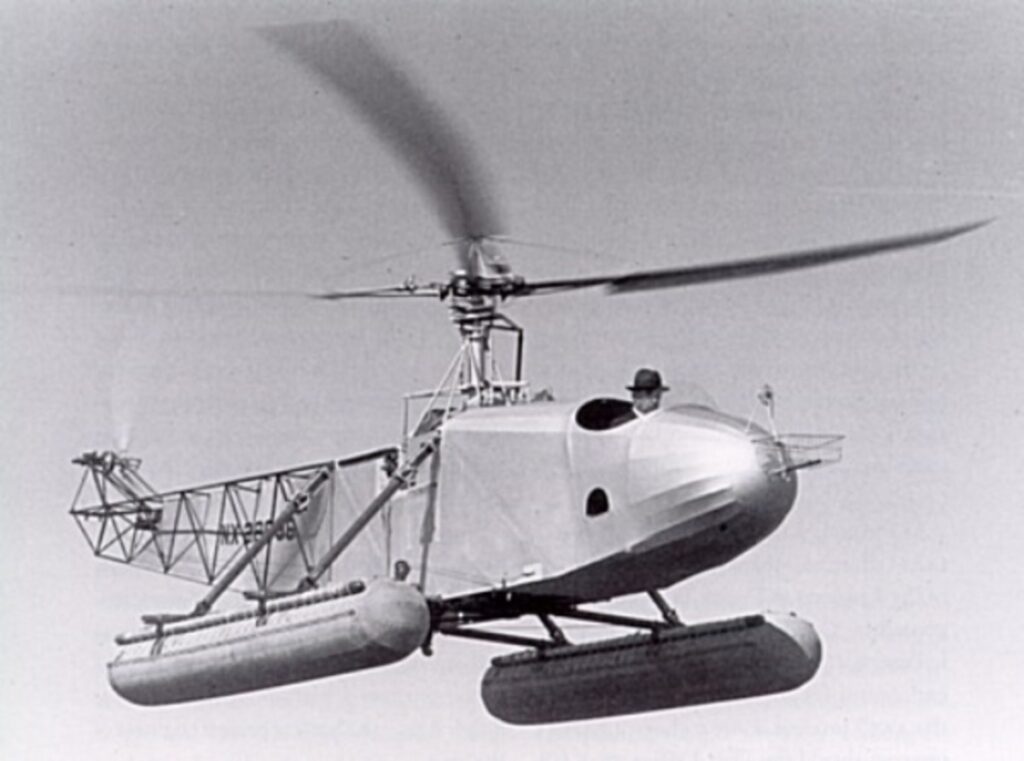
The breakthrough came simultaneously in Germany and the United States in the mid-1930s. The Focke-Wulf Fw 61, which flew in 1936 under the control of German test pilot Hanna Reitsch — who famously demonstrated it inside the Deutschland-Halle in Berlin in 1938 — achieved genuine controlled flight with twin counter-rotating rotors that eliminated the torque problem. Igor Sikorsky’s VS-300 of 1939, which used a single main rotor and a tail rotor for torque compensation, established the configuration that the majority of helicopters still use today. His Sikorsky R-4 became the world’s first production helicopter in 1942, entering service with the US Army Air Forces and Royal Air Force.
How Fast Do Helicopters Fly?
Most civil and military helicopters cruise between 120 and 180 mph (105–155 knots). The world speed record for a conventional helicopter is 249 mph (216 knots), set by a modified Westland Lynx in 1986. Specialist compound helicopters like the Airbus H175M Racer have exceeded 255 mph in trials.
Helicopter speed is constrained by a fundamental aerodynamic problem that does not affect fixed-wing aircraft: retreating blade stall. As a helicopter moves forward, the advancing rotor blade — moving in the same direction as flight — generates increasing lift. The retreating blade, moving against the direction of flight, generates decreasing lift. Above a certain forward speed, the retreating blade stalls entirely, causing uncontrollable roll. This speed limit, known as Never Exceed Speed (VNE), defines the practical ceiling for conventional helicopter performance.
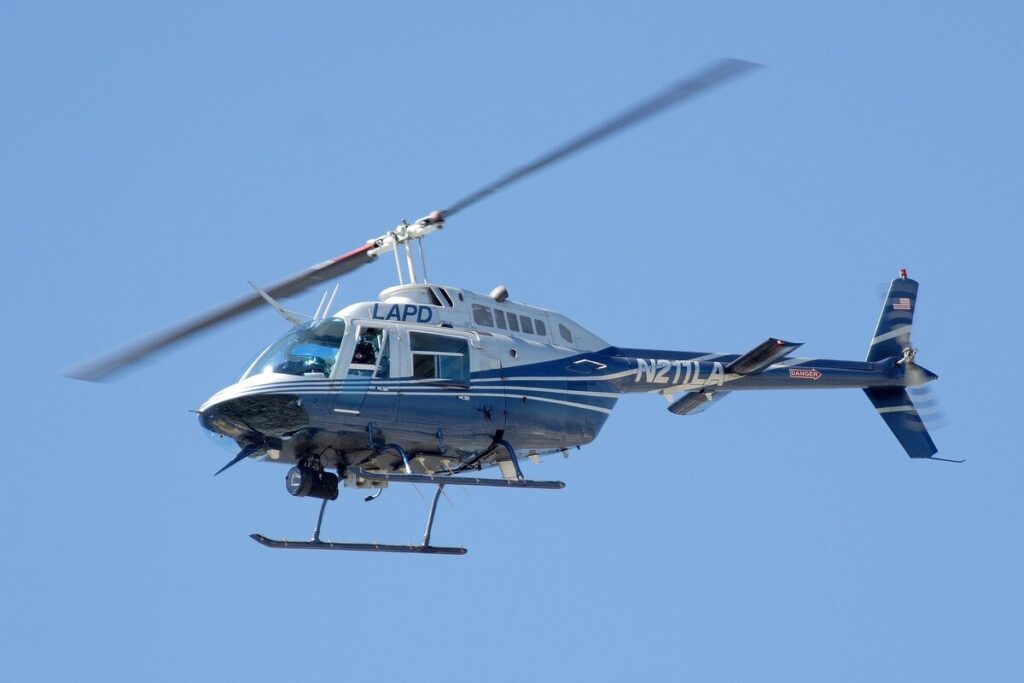
Different helicopter types operate at very different cruise speeds within these physical constraints. Light utility helicopters like the Robinson R44 cruise at approximately 113 mph. The Bell 206 JetRanger, one of the most widely operated turbine helicopters in history, cruises at around 130 mph. Military attack helicopters — the Boeing AH-64 Apache, the Mil Mi-24 Hind — cruise at 150–175 mph with maximum speeds approaching 200 mph in dive configurations. The Sikorsky UH-60 Black Hawk, the US Army’s primary utility helicopter, cruises at approximately 174 mph.
The speed frontier in rotary-wing aviation is currently being pushed by compound helicopters and tiltrotor designs. The Bell Boeing V-22 Osprey tiltrotor, which converts between helicopter and fixed-wing flight, cruises at 277 mph — well beyond any conventional helicopter. The Airbus Racer compound helicopter programme, which adds a pusher propeller to a conventional rotor, aims to bring 250+ mph cruise speeds to production military helicopter platforms within the current decade.
The helicopter’s speed ceiling is set by physics that no engineering solution has yet overcome entirely — which is precisely why the designs that push closest to that ceiling generate the most intense collector interest.
How High Can a Helicopter Fly?
Most civil helicopters have a service ceiling of 10,000–14,000 feet. The absolute altitude record for a helicopter is 40,820 feet (12,442 metres), set by a modified Aérospatiale SA 315B Lama in 1972. Military high-altitude operations typically occur below 20,000 feet.
Helicopter altitude capability is limited by rotor efficiency in thin air. As altitude increases, air density decreases, and the rotor must spin faster or with greater blade pitch to generate the same lift — eventually reaching the limits of engine power and rotor blade structural tolerance simultaneously. The practical service ceiling for most helicopter operations is determined by the point at which the aircraft can no longer hover out of ground effect (HOGE) — maintaining a stable hover without the pressure cushion created by proximity to the ground.
Different missions impose different altitude requirements. Offshore oil platform support operations, urban air transport, and news gathering typically occur below 3,000 feet. Mountain rescue operations in the Alps and Himalayas regularly operate above 12,000 feet, where the performance margins available to a helicopter are dramatically reduced. The 2005 Eurocopter AS350 B3 landing on the summit of Mount Everest at 29,029 feet — piloted by Didier Delsalle — remains the highest helicopter landing ever recorded, achieved with a lightly loaded aircraft at the absolute performance boundary of what the type could sustain.
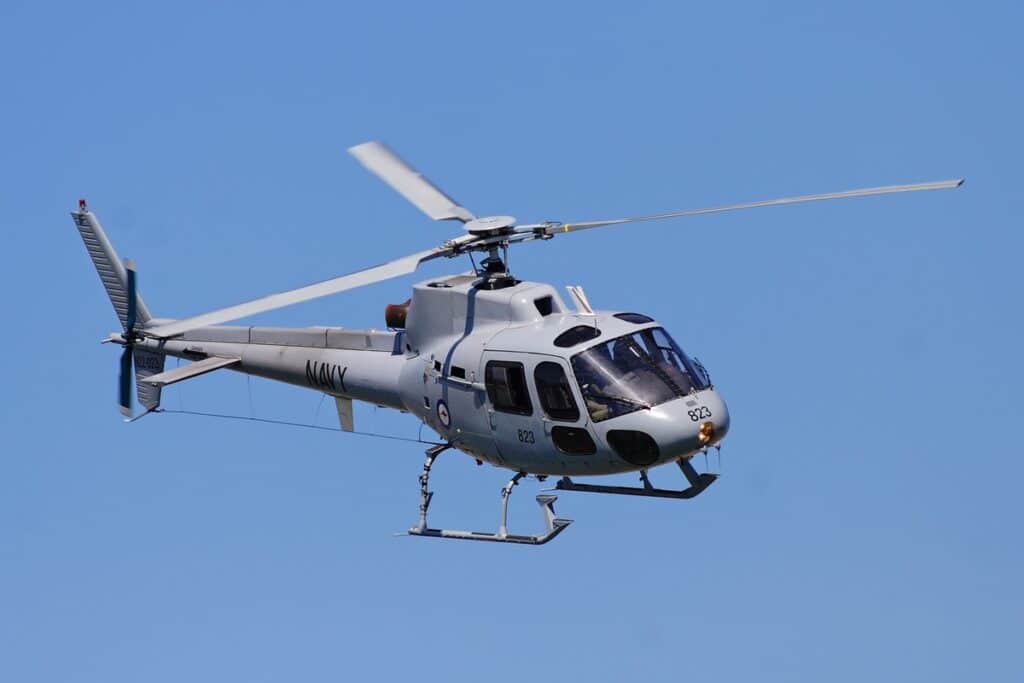
Military helicopters designed for high-altitude operations — the Sikorsky CH-47 Chinook, which operates regularly in Afghanistan’s mountainous terrain above 10,000 feet — use tandem rotor configurations and high-power turbine engines specifically selected for density altitude performance. The performance penalty of high-altitude operation is significant: a helicopter capable of carrying 6,000 lbs at sea level may carry less than half that payload at 10,000 feet.
How Far Can a Helicopter Fly?
Most civil helicopters have a standard range of 200–400 miles on internal fuel. With auxiliary fuel tanks, ranges of 600–700 miles are achievable. The longest helicopter flights use aerial refuelling — Ross Perot Jr. flew a Bell 206L around the world in 1982 covering 24,901 miles over 29 days using this method.
Helicopter range is determined by fuel capacity, cruise speed, fuel burn rate, and payload weight — the same variables that govern any aircraft’s endurance, but with considerably less favourable economics than fixed-wing equivalents. A helicopter burns significantly more fuel per mile than a fixed-wing aircraft of comparable payload capacity, which is why helicopter operations are generally short-range by design rather than preference.
Common civil helicopters illustrate the range spectrum clearly. The Robinson R44 piston helicopter, the world’s best-selling civil helicopter, has a range of approximately 300 miles on standard fuel. The Airbus H135 turbine helicopter — widely used for emergency medical services, police, and offshore support — has a range of around 350 miles. The Sikorsky S-92, used for offshore oil platform crew transfer over extended distances, achieves ranges of 550 miles with standard tanks and can extend beyond 700 miles with auxiliary fuel systems.
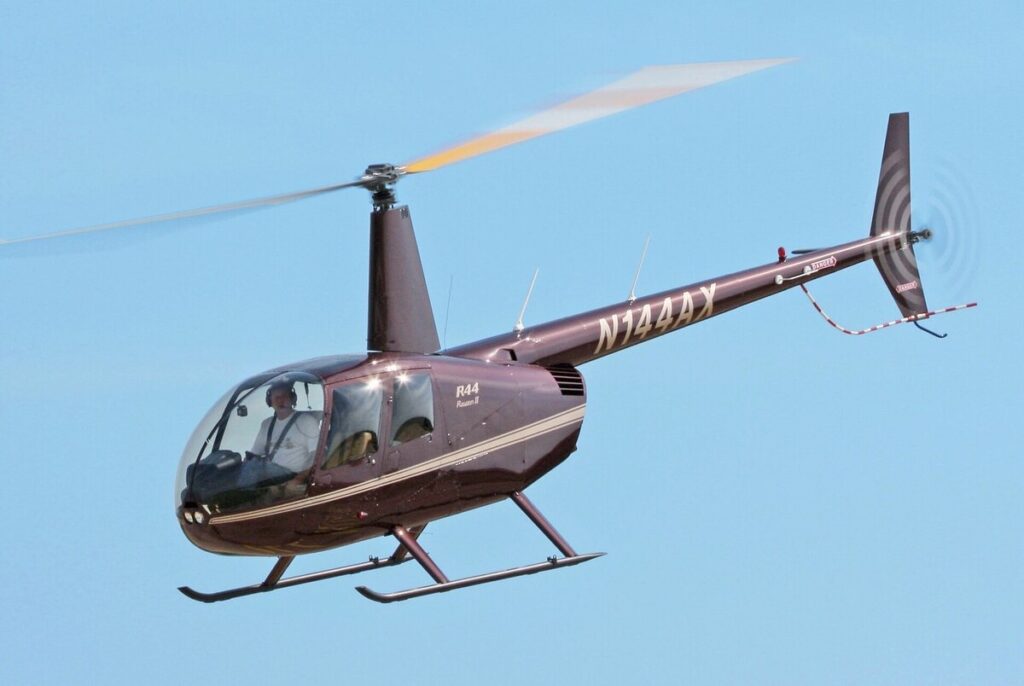
Military operations requiring extended helicopter range typically use aerial refuelling — a technique developed during the Vietnam War that allows helicopters to remain airborne almost indefinitely with sufficient tanker support. The US Special Operations Command’s MH-60 and MH-47 variants are equipped with refuelling probes as standard equipment, enabling the kind of long-range clandestine insertion missions that defined post-9/11 special operations aviation.
Why Helicopters Make Exceptional Scale Model Subjects
The helicopter’s mechanical complexity — rotor head articulation, tail rotor geometry, skid or wheel undercarriage, exhaust configuration — makes it one of the most detail-rich subjects in the aviation scale model category. A well-executed helicopter model at 1:32 or 1:48 scale reproduces the rotor head’s swashplate mechanism, the individual blade pitch links, and the tail rotor’s anti-torque configuration in a way that makes the aircraft’s operating principles immediately visible. For aviation enthusiasts who understand how helicopters work, a scale replica that gets those details right is considerably more interesting than one that approximates them.
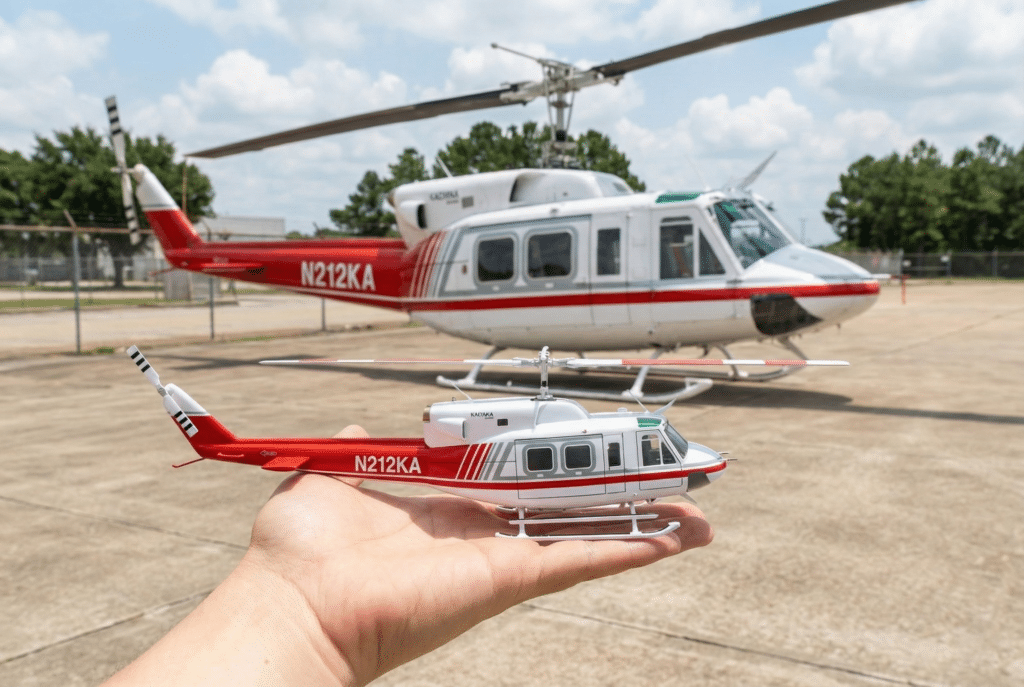
The range of subjects available spans military, civil, and rescue categories across every era of helicopter development. The Sikorsky R-4 — the world’s first production helicopter — through the Bell UH-1 Iroquois that defined Vietnam War aviation, to the modern AH-64 Apache and civilian EC135: each represents a distinct chapter in rotary-wing history that serious collectors document through aviation custom models built to specific operational configurations and period-accurate markings.
For collectors who prefer the warmth and craft presence of traditional materials, wood scale models of iconic helicopter subjects — the Bell 47 with its distinctive bubble canopy, the Mil Mi-24 Hind’s aggressive gunship profile, or the Sikorsky S-55 in early commercial livery — reproduce these subjects in hand-shaped hardwood with hand-applied finishes that die-cast production cannot approach for display quality. A wooden helicopter model on a study shelf carries the same craft authority as any hand-built scale subject — and the complexity of the rotor geometry, when accurately reproduced in wood, announces its own difficulty to anyone who examines it closely.
More Frequently Asked Questions
Who invented the helicopter?
Igor Sikorsky is most widely credited with inventing the practical helicopter in its modern configuration. His VS-300 prototype, which flew in September 1939, established the single main rotor and tail rotor design that the majority of helicopters still use. However, Heinrich Focke’s Fw 61 — which flew in 1936 using twin counter-rotating rotors — achieved controlled helicopter flight three years earlier. Both engineers solved the torque problem through different means; Sikorsky’s solution proved more commercially and operationally durable.
What is the fastest helicopter in the world?
The fastest conventional helicopter ever flown is the modified Westland Lynx that set the absolute speed record of 249.09 mph in 1986 — a record that still stands for conventional single-rotor helicopters. Among production military helicopters currently in service, the Eurocopter Tiger and the Sikorsky UH-60 Black Hawk variants reach maximum speeds approaching 195–200 mph. The Airbus H175M Racer compound helicopter programme, currently in development, aims to achieve sustained cruise speeds above 255 mph in production form.
What helicopter can fly the highest?
The Aérospatiale SA 315B Lama holds the absolute altitude record at 40,820 feet, set in 1972. For practical high-altitude operations, the Eurocopter AS350 B3 Écureuil is the most capable production civil helicopter — it was used for the 2005 Everest summit landing at 29,029 feet. Military high-altitude platforms include the Boeing CH-47 Chinook, specifically the extended-range D and F variants that serve in high-altitude theatres including Afghanistan, routinely operating above 12,000–15,000 feet with useful payloads.
What are the best helicopter models for collectors?
The Bell UH-1 Iroquois (Huey), the Sikorsky UH-60 Black Hawk, the Boeing AH-64 Apache, and the Mil Mi-24 Hind are the most consistently sought-after military helicopter subjects in the scale model collector market. For civil subjects, the Bell 47, the Sikorsky S-55, and the Eurocopter AS350 are popular at collector level. At the premium end of the market, commissioned helicopter model builds — reproduced in the specific markings and configuration of a named aircraft from a collector’s personal aviation history — represent the highest tier of the category, built to a standard no production kit or die-cast can match.
The Machine That Defied the Obvious
The helicopter took over a century from da Vinci’s sketch to Igor Sikorsky’s production aircraft — not because the idea was wrong but because every element of the solution had to be invented independently before the whole could work. The rotor system, the control mechanics, the anti-torque tail rotor, the engine-to-rotor transmission: none of these existed before someone built them specifically for this purpose. The result is the most mechanically complex common aircraft in service, capable of doing things no fixed-wing aircraft can approach — hovering, landing on a postage stamp, flying backwards — and doing them at speeds and altitudes that continue to expand with every generation of development.
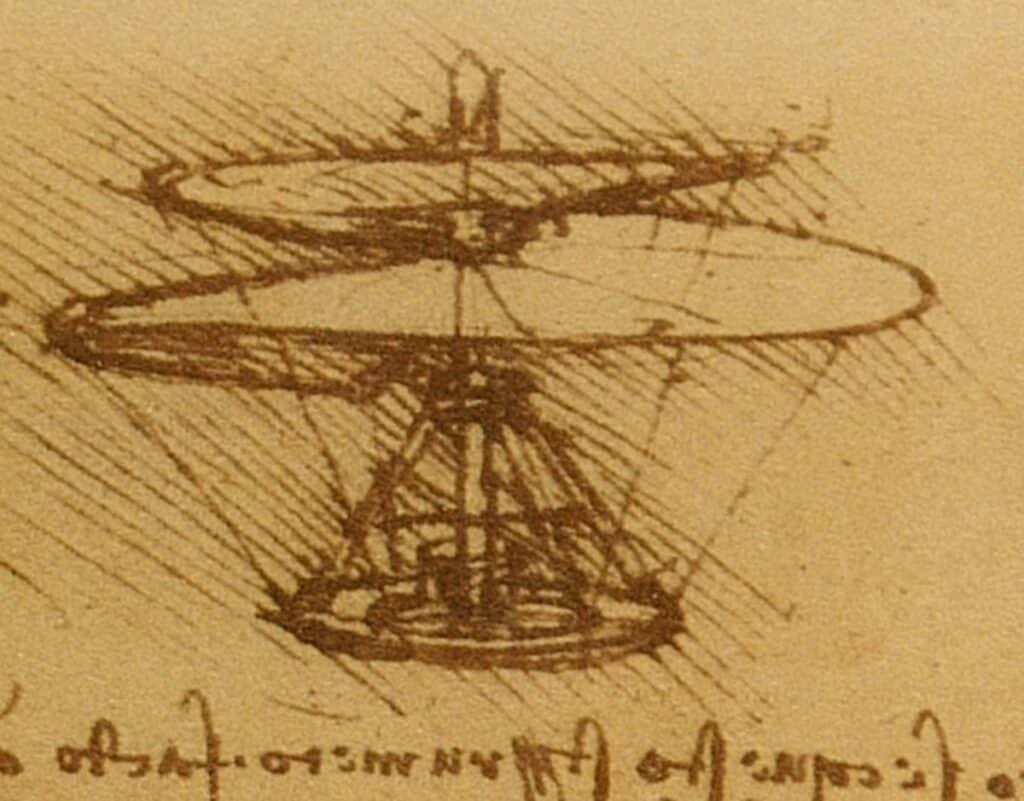
That combination of mechanical ingenuity, operational versatility, and a history that spans from WWII rescue missions to modern special forces operations makes the helicopter one of the most rewarding aviation subjects to collect, study, and preserve in scale. The questions people ask about it — how fast, how high, how far, and where it came from — are not idle curiosity. They are the beginning of a genuine engagement with one of the most consequential machines in the history of flight.