
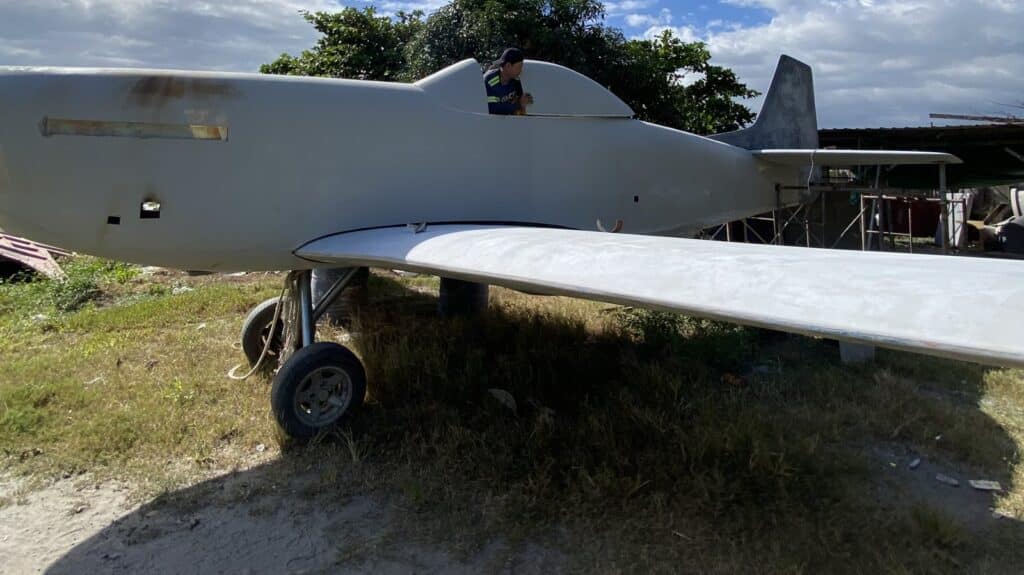
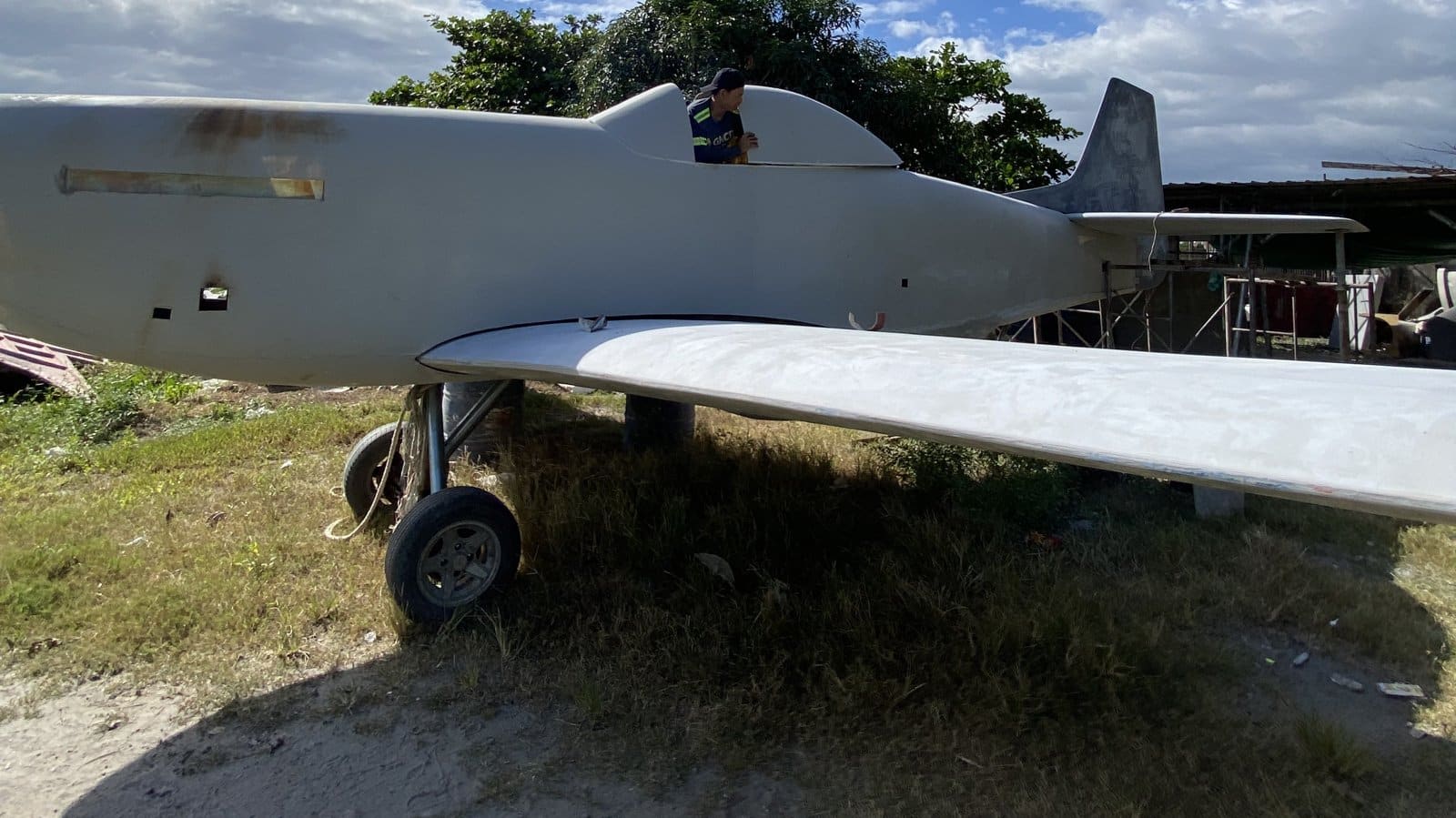
A P-51D Mustang is 32 ft 3 in long, with a 37 ft wingspan and a 235 sq ft wing. Most scale models shrink those numbers until the whole aircraft fits on a shelf. 1:1 scale aircraft models keep them. Every length, curve and cockpit opening matches the real aircraft, and you can walk around it, stand under the wing and look into the cockpit.
We are building one right now: a full-size P-51 Mustang, and the build is still in progress. This article uses that build, plus the published P-51D data, to show what a 1:1 replica involves. If you want to see what else we make at this size, our big model airplane page covers builds for museums, airports and corporate displays.
What 1:1 Scale Means for a P-51 Mustang
At 1:1, the model’s dimensions equal the aircraft’s. These are the P-51D’s published figures, and they are the targets the build has to hit:
- Length: 32 ft 3 in (9.83 m)
- Wingspan: 37 ft 0 in (11.28 m)
- Height: 13 ft 4.5 in (4.077 m)
- Wing area: 235 sq ft (21.8 m²)
Compare that with common collector scales. At 1:18 the same fighter is about 21.5 inches long with a wingspan of roughly 24.7 inches. At 1:48 it is about 8 inches long. A 1:1 build is not a bigger shelf model. It is closer to aircraft construction, with molds, internal structure and a team working on it over a long build.
Why Aircraft Collectors Choose 1:1 Scale
Full-size replicas get commissioned because they do things small models cannot:
- Museums and visitor centers: visitors can stand beside a fighter at true size. Our exhibition models are built for this kind of display.
- Private collectors and hangars: a full-size P-51 turns a hangar, garden or private collection into a centerpiece.
- Airports, trade shows and corporate displays: a replica at real size draws people in and works as a landmark.
The Engineering Behind 1:1 Scale Aircraft Models
Every build starts with paper. Original drawings, manuals and photographs set the dimensions, and public collections such as the National Air and Space Museum’s archives hold technical manuals and scale drawings. Good aircraft documentation is the first thing we gather.
The Mustang’s wing shows why accuracy matters. It used a laminar-flow section, the NAA/NACA 45-100 airfoils developed by North American Aviation together with NACA. A replica that gets the wing section or taper wrong reads as wrong even to a casual viewer.
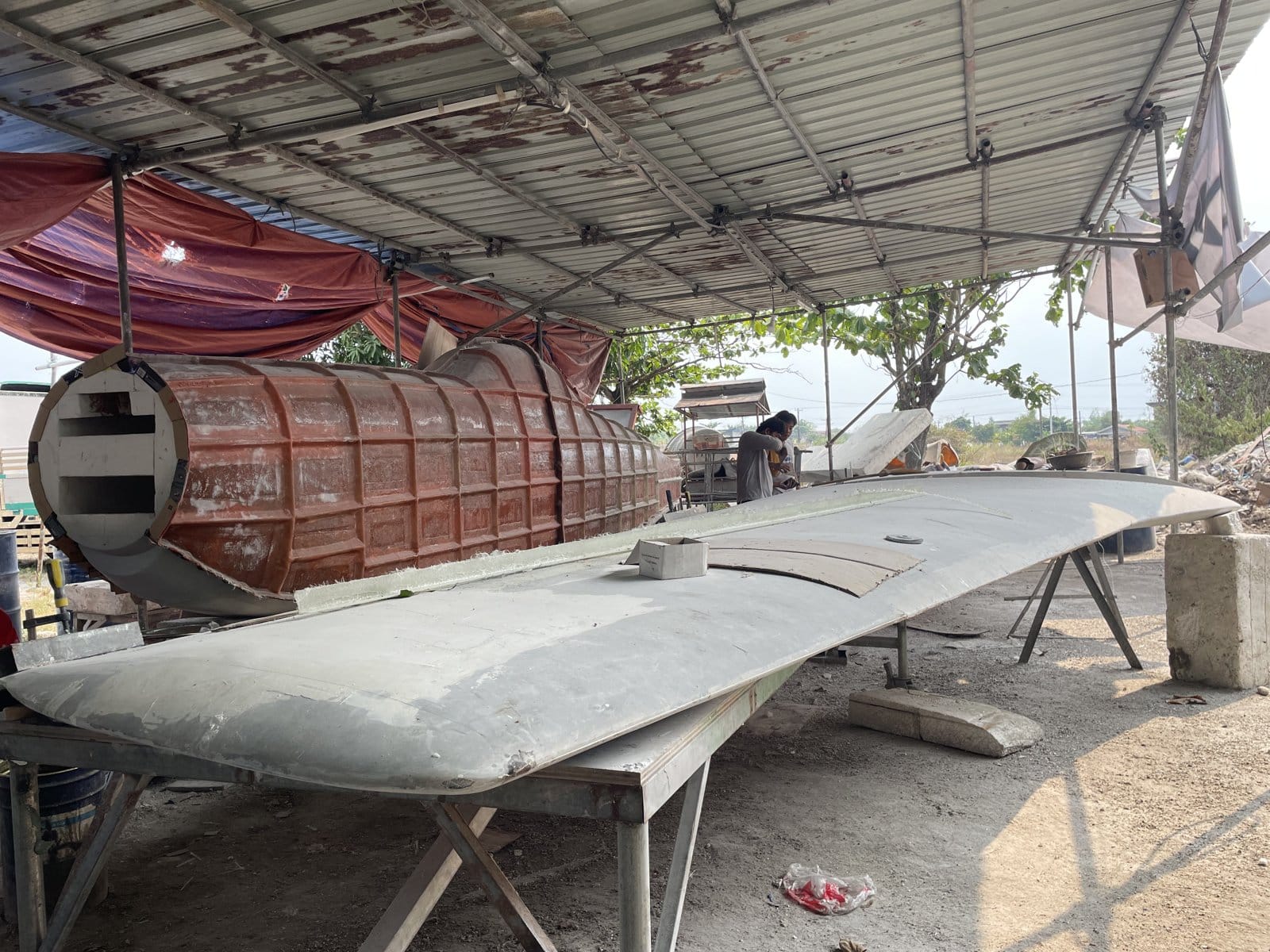
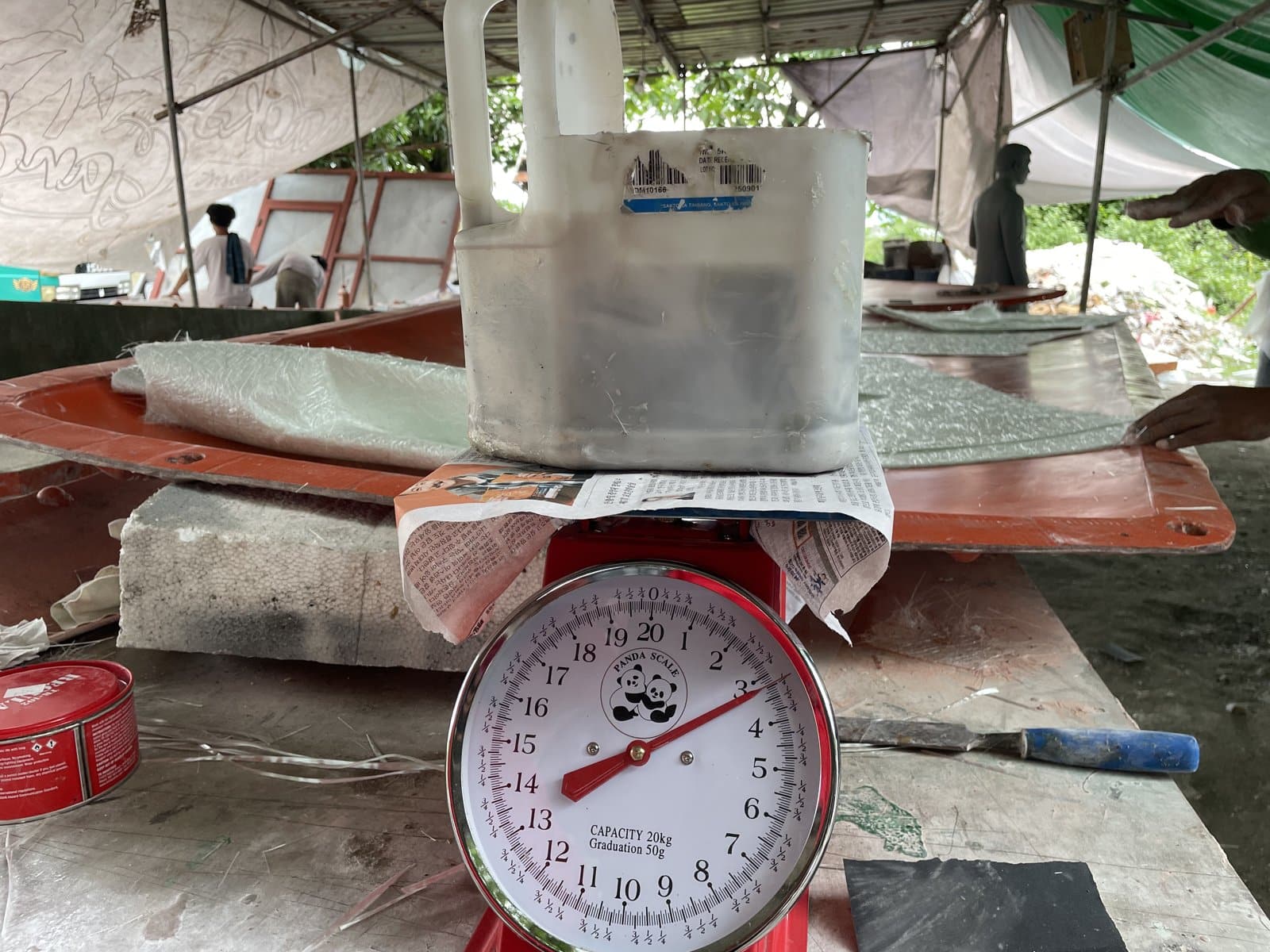
On our P-51, the shell is built in molds. Fiberglass is laid in by hand and wetted out with resin, layer by layer.
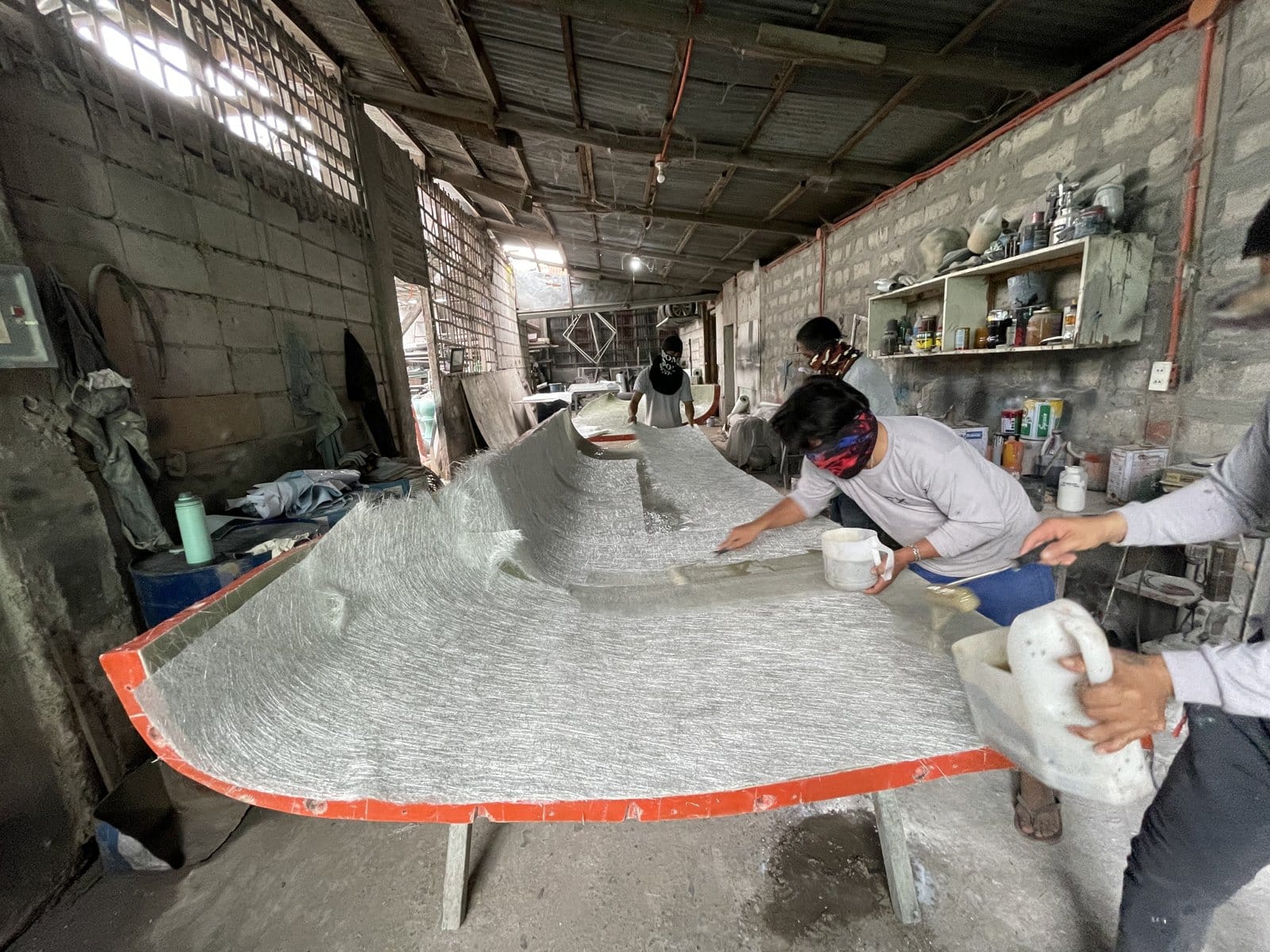
Material is weighed on a scale during layup, because weight adds up quickly on a structure this size.
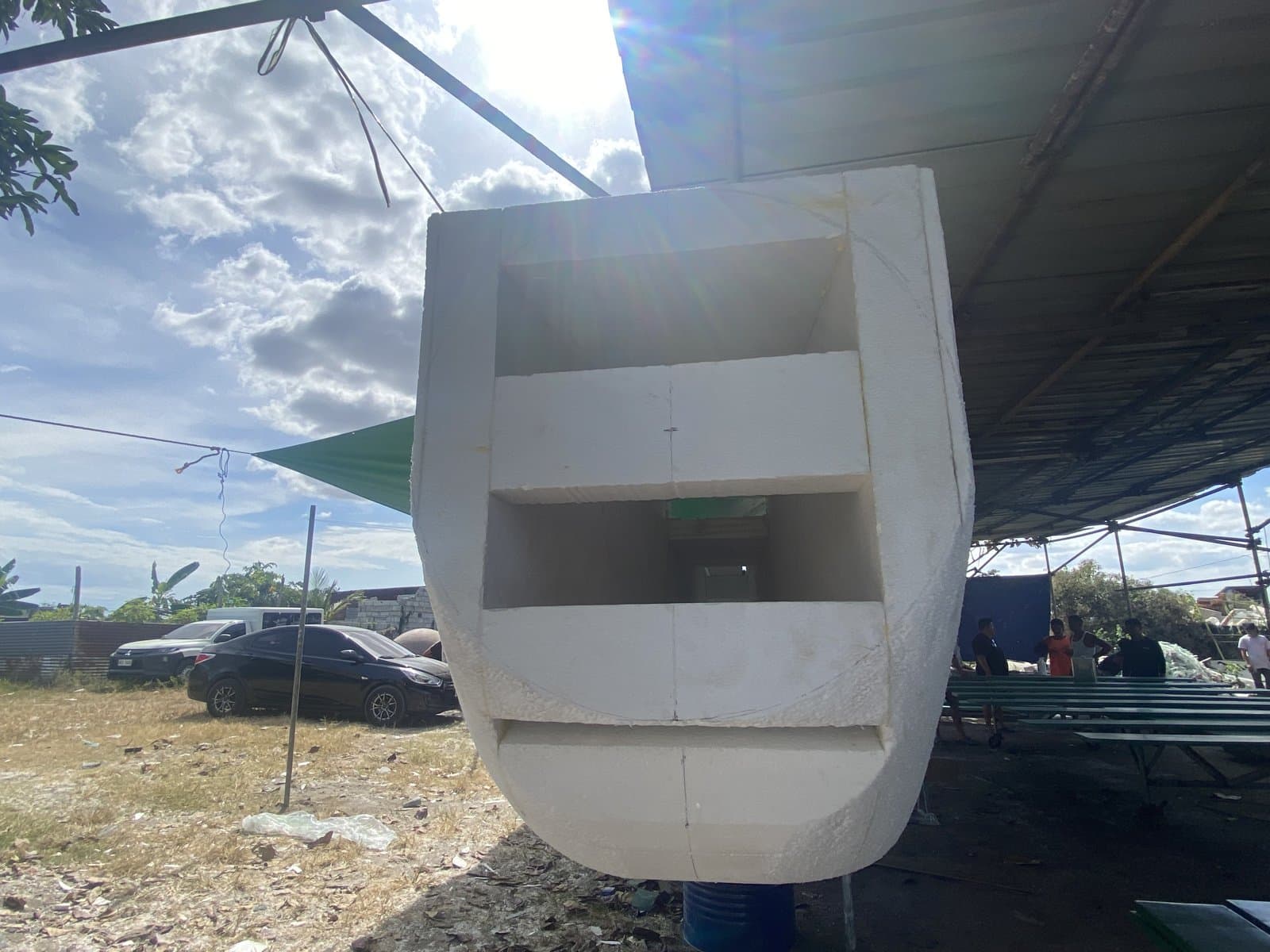
Foam forms shape parts that need internal openings before they are skinned and finished.
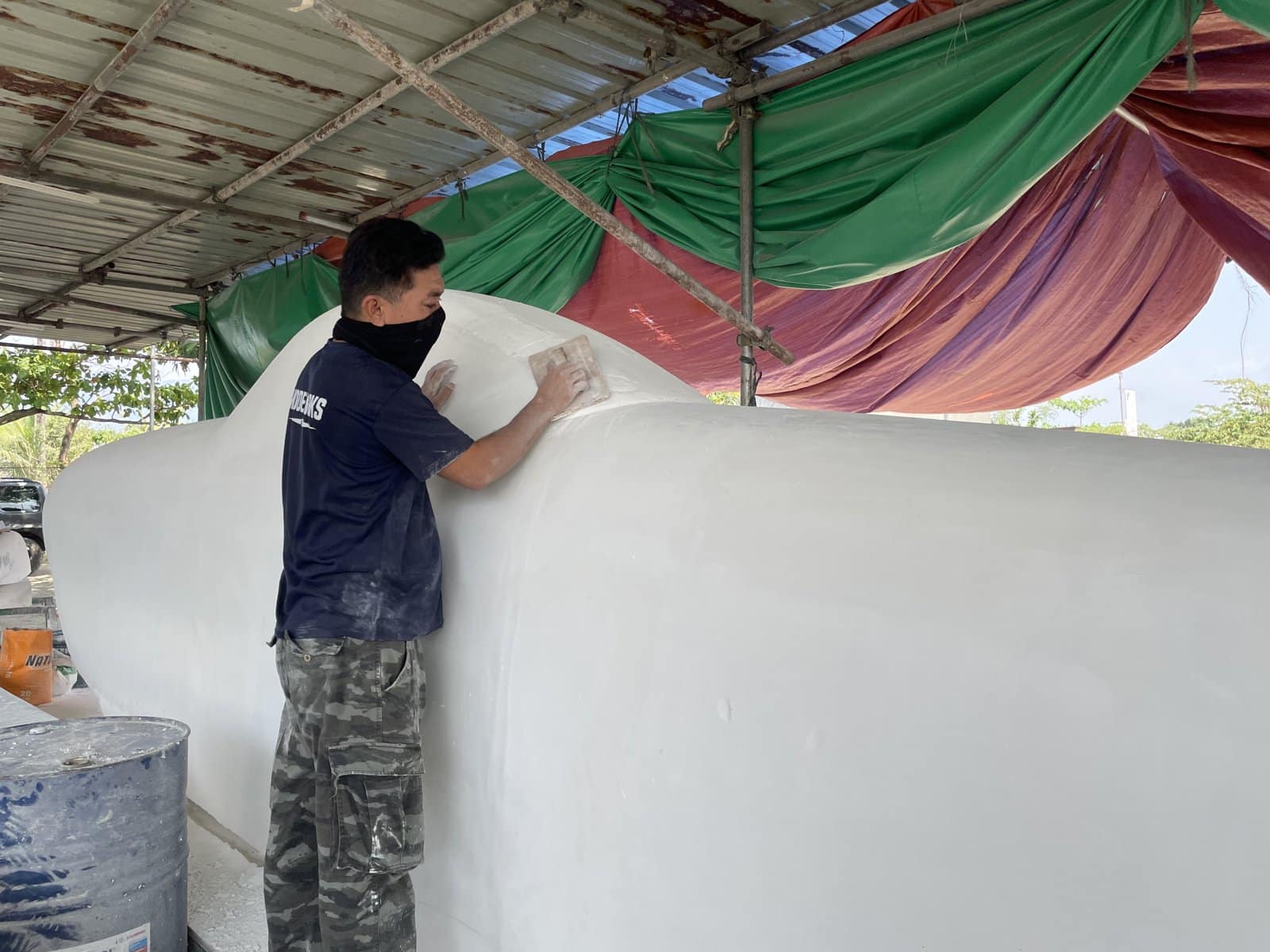
Finishing is manual too. The surface is hand-sanded until the skin is smooth enough to take paint.
Iconic Aircraft Worth Replicating
The P-51 is a natural 1:1 subject. A total of 15,686 P-51s were built, and the prototype NA-73X first flew on 26 October 1940, 149 days after the contract was signed. The P-51D was powered by a Packard-built Merlin, the V-1650-7, rated at 1,490 hp, and carried six .50 caliber Browning machine guns.
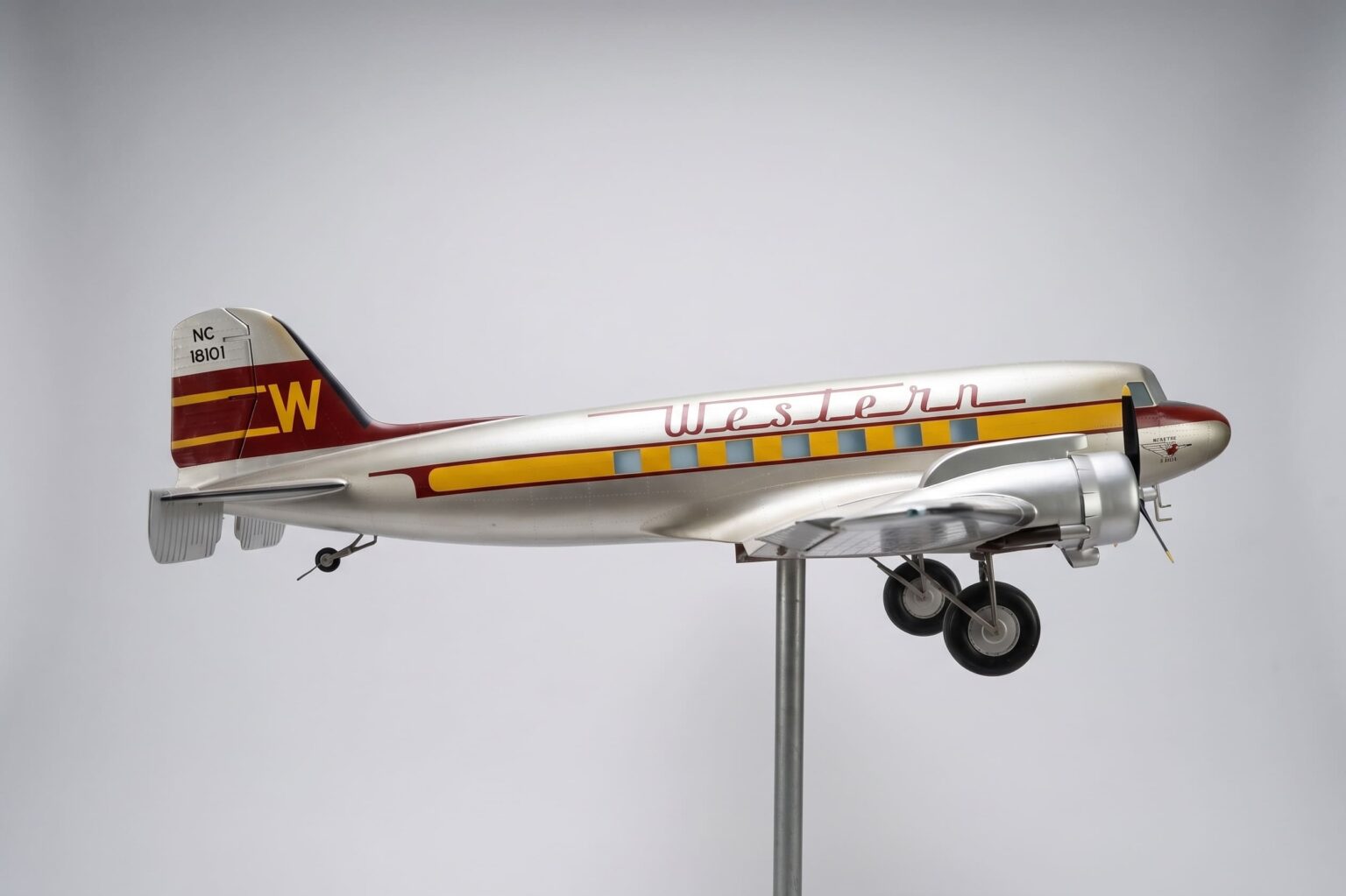
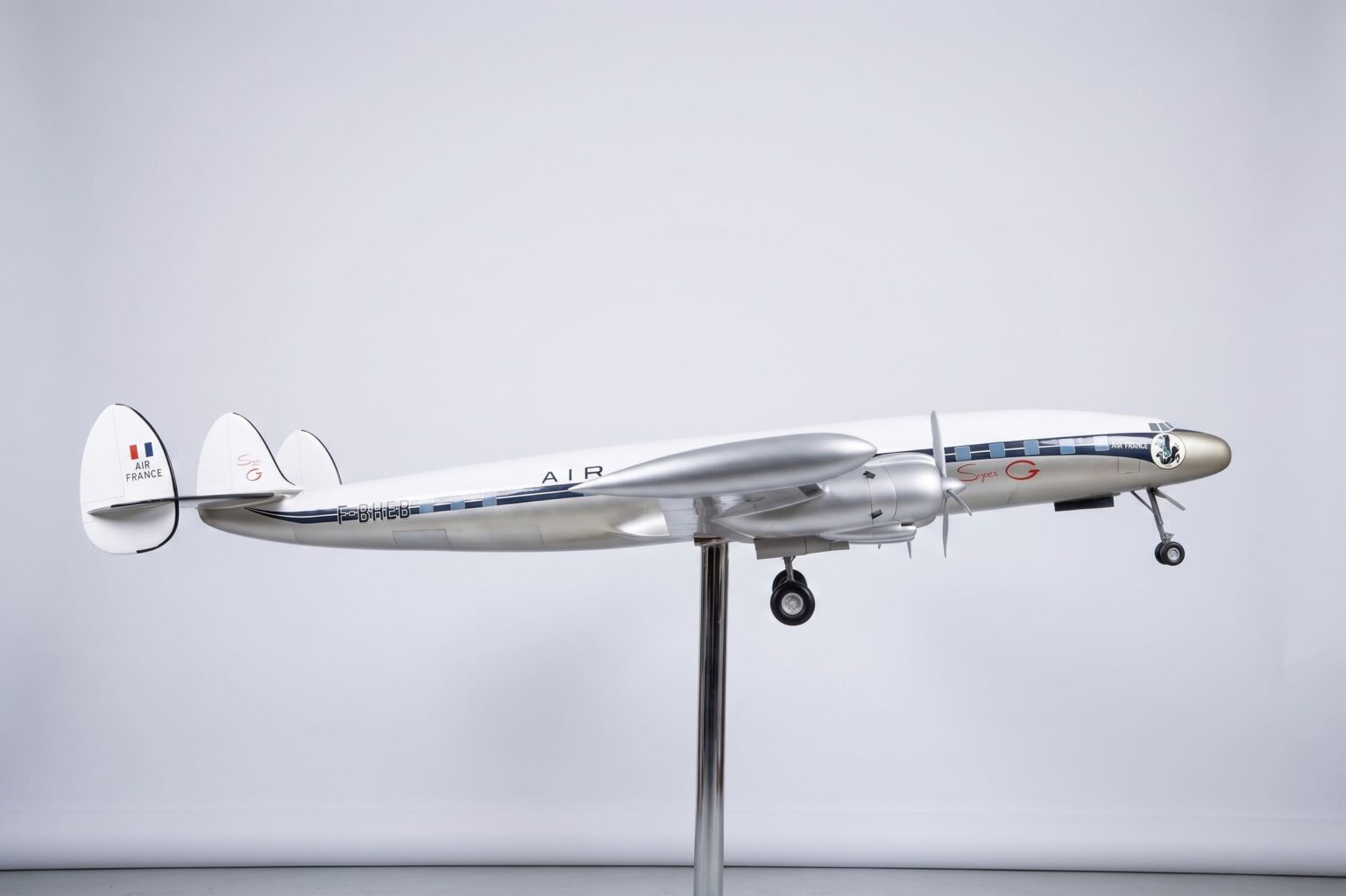
Not every aircraft needs to be 1:1 to make an impact. Our large scale plane gallery shows large models of a Lockheed Constellation, a Douglas DC-3, a Van’s RV-8 and a Universal Hydrogen ATR 72, made for museums, airports, trade shows and corporate displays.
Where to Commission Your Own
Start with documentation: gather drawings, manuals and photos of the exact aircraft and variant you want. Then talk to a builder who has already worked at large scale, like the team at Modelworks Direct.
To judge proportions before you commit, visit one of the aviation museums near you and walk around the real aircraft. It is the best reference you can get.