

Aviation safety is written in hard lessons. Every regulation, every checklist, every design standard exists because something once went wrong. Helicopters, with their mechanical complexity and demanding flight regimes, have their own chapters in that history.
Some accidents were tragic.
Some were preventable.
All of them forced change.
These are the helicopter crashes that didn’t just make headlines — they reshaped how rotorcraft are designed, maintained, and flown.
The 1982 New Orleans S-76 crash — The birth of modern gearbox oversight

Credit- Admiral Cloudberg
In 1982, an offshore Sikorsky S-76 suffered catastrophic gearbox failure near New Orleans, killing everyone onboard. The cause was traced to fatigue cracking in the main rotor gearbox, combined with inadequate inspection practices.
The impact was immediate and lasting.
Gearbox monitoring standards were rewritten.
Inspection regimes became far more rigorous.
Manufacturers began treating gearbox health as a critical safety priority rather than a maintenance afterthought.
Today’s vibration monitoring systems, chip detectors, and strict component life limits trace their roots directly back to accidents like this.
The 2009 Hudson River mid-air — Airspace awareness redefined

Credit- The Guardian
When a sightseeing helicopter and a small airplane collided over the Hudson River in 2009, the issue wasn’t mechanical failure. It was airspace management.
The crash forced regulators to confront a growing problem: congested low-altitude airspace over major cities, filled with helicopters, light aircraft, and tourism traffic operating under different rules.
The result was tighter airspace coordination, improved traffic awareness requirements, and stronger operational limitations in busy urban corridors. It also accelerated discussions around ADS-B adoption and traffic awareness technology for helicopters operating in mixed environments.
The 2013 Glasgow police helicopter crash — Urban operational risk under the microscope

Credit- Wikipedia
A police helicopter crashed into a crowded pub in Glasgow in 2013 after fuel exhaustion. The aircraft remained airborne longer than expected due to misleading fuel indications, and the crew believed they had more endurance than they actually did.
The investigation changed how operators and regulators viewed fuel monitoring in helicopters. It wasn’t enough for systems to work most of the time. They had to communicate clearly under stress.
This accident led to renewed scrutiny of fuel indication systems, better training on fuel management, and stricter operational procedures for police and emergency aviation units operating over populated areas.
The 2020 Kobe Bryant crash — Weather judgment under renewed scrutiny
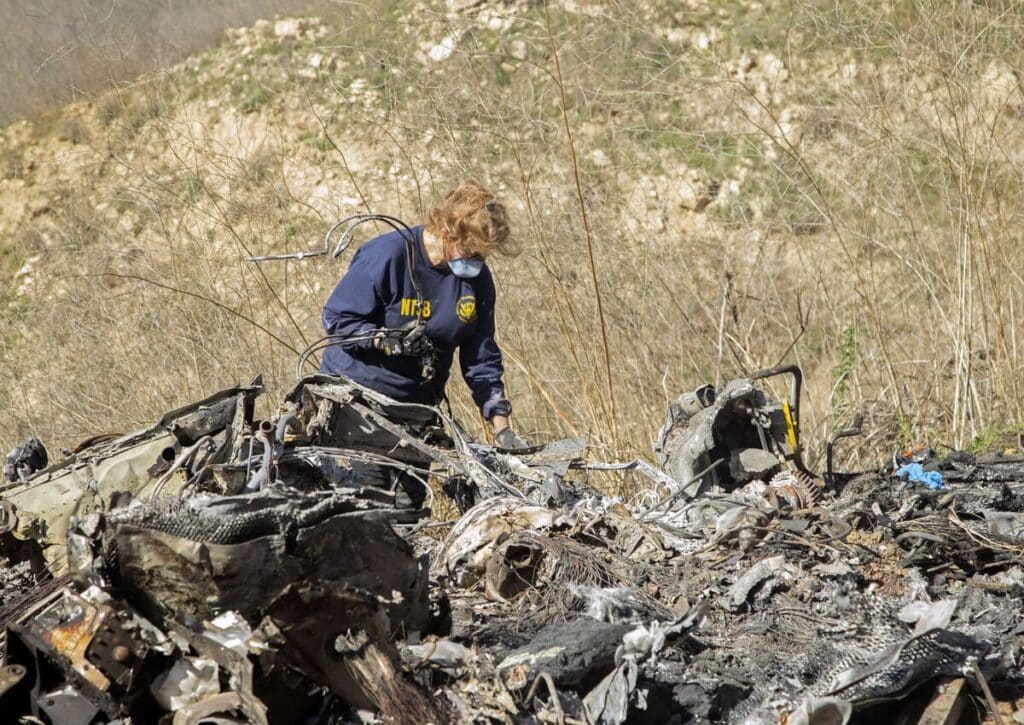
Credit- The New York Times
Few helicopter accidents have drawn global attention like the crash that killed Kobe Bryant, his daughter, and seven others in 2020. The aircraft was mechanically sound. The issue was decision-making in marginal weather.
The term “scud running” — flying low to avoid clouds in poor visibility — became part of mainstream conversation almost overnight.
The consequences have been tangible:
- Increased scrutiny on pilot decision-making standards
- More widespread adoption of safety management systems
- Renewed focus on scenario-based weather training
- Greater pressure on operators to support pilots who choose to decline unsafe flights
It forced the public to see what aviation professionals already knew: many accidents are not about skill, but about pressure and judgment.
The 1997 CH-47 Chinook crash in the UK — Maintenance accountability transformed

Credit- Wikipedia
When a Royal Air Force Chinook crashed into the Mull of Kintyre in Scotland, killing 29 people, the official response initially blamed pilot error. Years later, further investigation revealed serious concerns about the aircraft’s software and flight control systems.
The case became a landmark example of why technical systems must be transparent, testable, and accountable. It influenced how flight-critical software is certified, how accident investigations assign blame, and how organizations handle uncertainty when human lives are involved.
Why these accidents mattered beyond headlines
These crashes were not isolated events. They became catalysts.
New regulations.
Better training.
Stricter maintenance.
Improved technology.
Cultural change within aviation organizations.
Modern helicopter safety — from terrain awareness systems to stricter fuel policies to more realistic simulator training — is built on the lessons extracted from these tragedies.
That’s uncomfortable, but it’s also why aviation continues to improve.
Understanding these stories changes how you see helicopters
For aviation enthusiasts, studying these accidents isn’t morbid curiosity. It’s understanding the machinery honestly. Helicopters are remarkable machines, but they demand respect. They operate in environments where margins are often thin: low altitude, complex terrain, unpredictable weather.
That depth of understanding is why collectors, historians, and professionals study aircraft details so closely. A detailed model plane of a helicopter isn’t just about shape — it represents design decisions born from decades of learning, including learning from failure. A custom airplane model of a specific aircraft type often reflects configuration changes that exist because earlier versions taught painful lessons.
You’re not just looking at a machine. You’re seeing the evolution of safety in physical form.
The uncomfortable truth behind aviation progress
Helicopter safety didn’t evolve because everything went right. It evolved because people refused to ignore what went wrong.
Every improved warning system.
Every stricter checklist.
Every new training method.
Somewhere behind it is an accident report filled with names, details, and lessons.
That’s not a weakness of aviation. It’s its strength.
Because unlike many industries, aviation doesn’t hide from failure. It documents it, studies it, and builds better machines and better systems because of it.
That’s why, despite the complexity of helicopters and the environments they operate in, rotorcraft safety today is far stronger than it was a generation ago.
Not because accidents stopped happening entirely.
But because the industry chose to learn from every single one that did.