

Quick Answer
For most collectors and display purposes, 1:18 is the most popular custom car model scale — large enough to show fine detail, practical enough to display on a desk or shelf. Larger scales like 1:8 suit showroom or statement pieces. Smaller scales like 1:43 work well for multi-car collections where space is limited. The right scale depends on where the model will live and how much detail matters to you.
Scale is one of those decisions that sounds technical but is really quite personal. Get it wrong and a beautifully built replica ends up either too small to appreciate or too large for the space it was meant to occupy. Get it right and the model feels exactly as significant as the vehicle it represents. Here’s how to think through it properly before commissioning.

What Scale Options Actually Exist
Most serious scale model work for commissioned car replicas falls into four main ratios. Each has a different footprint, a different price point, and a different relationship to detail:
- 1:8 scale — the largest commonly commissioned ratio. A standard saloon car at 1:8 runs roughly 55–60cm in length. Built for impact. These are statement pieces — boardroom displays, trophy commissions, collector centrepieces.
- 1:18 scale — the sweet spot for most collectors. Around 25–28cm for a typical car. Large enough to hold panel lines, badges, interior detail, and livery markings with accuracy. Practical enough for a shelf, desk, or display cabinet.
- 1:24 scale — compact but still capable of strong detail. Around 18–20cm. A good choice when space is genuinely limited but quality still matters.
- 1:43 scale — the smallest worth commissioning at a handcrafted level. Around 10cm. Surface detail is limited at this size, but for collectors building multi-car displays or representing a racing series, the smaller footprint makes it workable.
Which Scale Suits Which Purpose
The question isn’t which scale is best in the abstract — it’s which scale fits the specific role the model is meant to play.
For a desk or office display, 1:18 is almost always the right answer. It’s present enough to be noticed and discussed, without taking over the surface it sits on. For a dedicated display cabinet or collection room, 1:18 and 1:24 both work well depending on how many pieces are being displayed together. For a boardroom, reception, or trophy commission — somewhere the piece needs to command attention from across the room — 1:8 is the appropriate scale. The extra size justifies the extra presence.
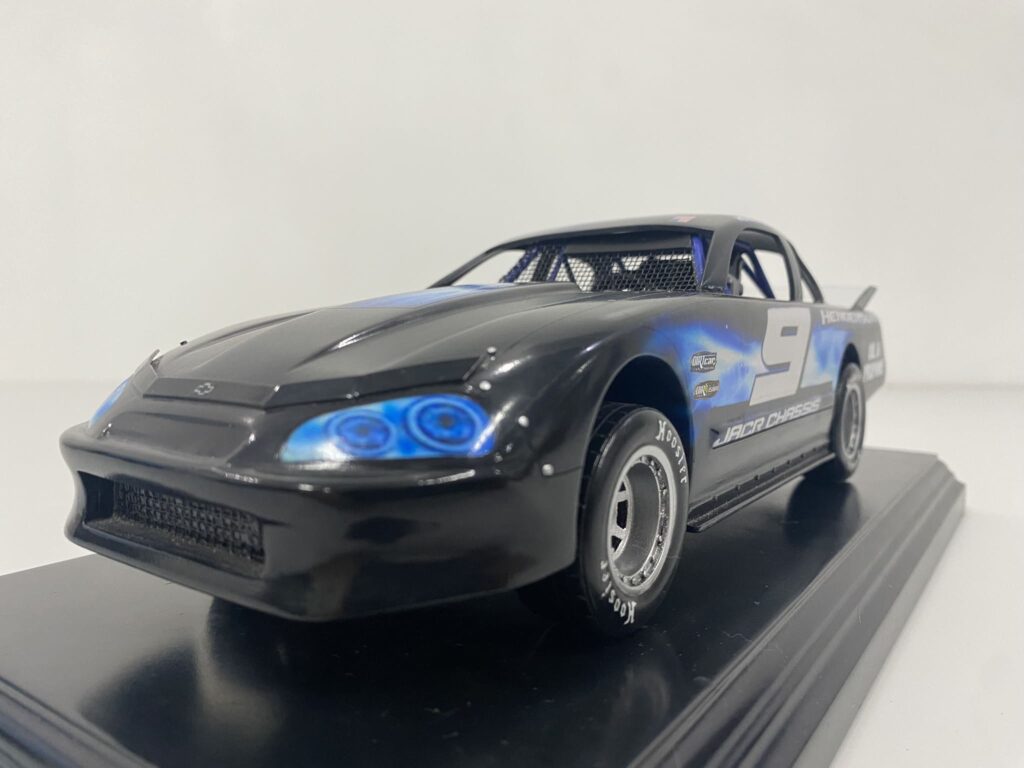
Gifting adds another consideration. A 1:18 custom car model ships and presents well. A 1:8 commission requires more planning around packaging, delivery, and the space the recipient has available. Worth factoring in before deciding.
How Scale Affects the Level of Detail
This is where the choice gets more nuanced. Larger scale doesn’t automatically mean more detail — it means detail has more room to be executed properly. At 1:8, a maker can accurately represent door handles, wing mirrors, grille slats, stitching on seat upholstery, dashboard instrumentation. At 1:43, many of those elements simply don’t exist at the scale required to be rendered faithfully.
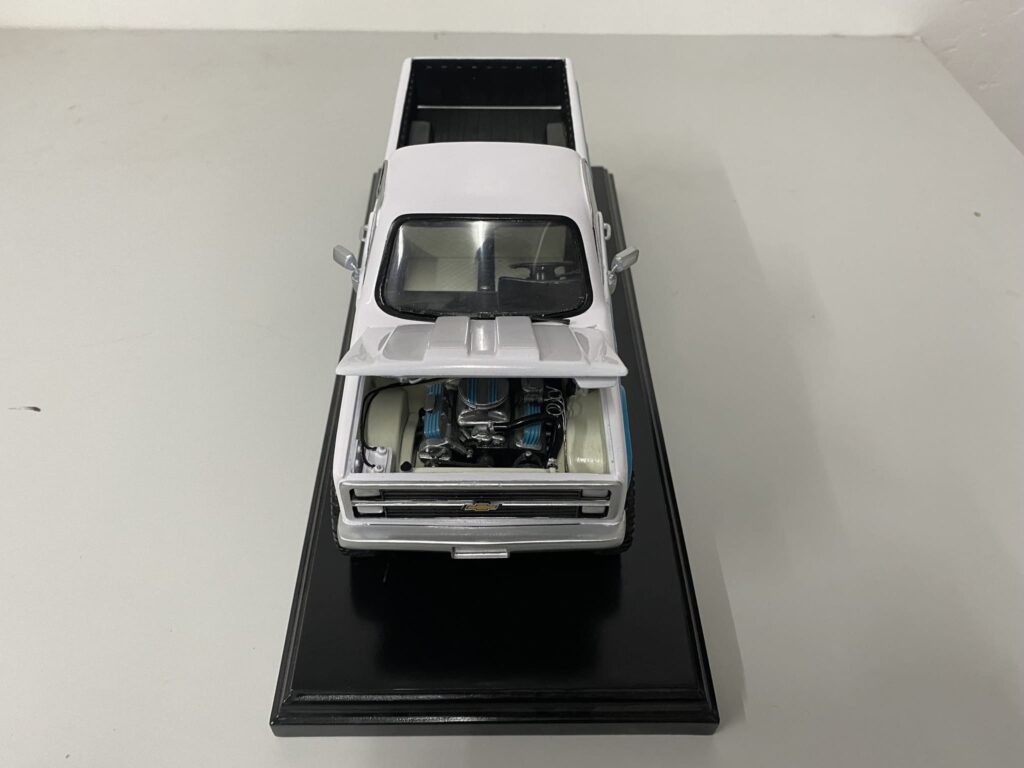
For collectors whose primary interest is accuracy — replicating a specific vehicle at a specific point in time with the correct specification, colour, and wear — larger scales give the maker more to work with. The level of reference material the client provides matters here too. A commission backed by detailed photographs of the actual vehicle will always outperform one built from general reference, regardless of scale.
How Scale Affects Materials and Build Time
Larger commissions naturally take longer and involve more material. A 1:8 replica built from mahogany, resin, and metal components is a months-long project. A 1:24 commission can be completed in less time, though the quality of finish — paint layers, clear coat, weathering — remains the same regardless of size. The base the model sits on is also affected. Mahogany bases scale up with the model, and at 1:8 the base itself becomes a considered part of the display.
Build time matters if the commission has a deadline — a retirement gift, an anniversary, a corporate event. Starting with the scale decision early gives the maker enough runway to do the work properly.
The Scale Decision Is Really a Display Decision
Most collectors who spend time on this question eventually arrive at the same conclusion: choose the scale based on where the model will live, then let the maker handle everything else. The detail, the materials, the finish — those are the maker’s responsibility. The scale is yours to decide, and it’s worth deciding deliberately.
If you’re ready to start thinking through a commission, take a look at the range of custom car models available and what the process looks like from brief to finished piece.
Know the vehicle you want to preserve? Build My Car Model from Photos →