 ❮
❯
❮
❯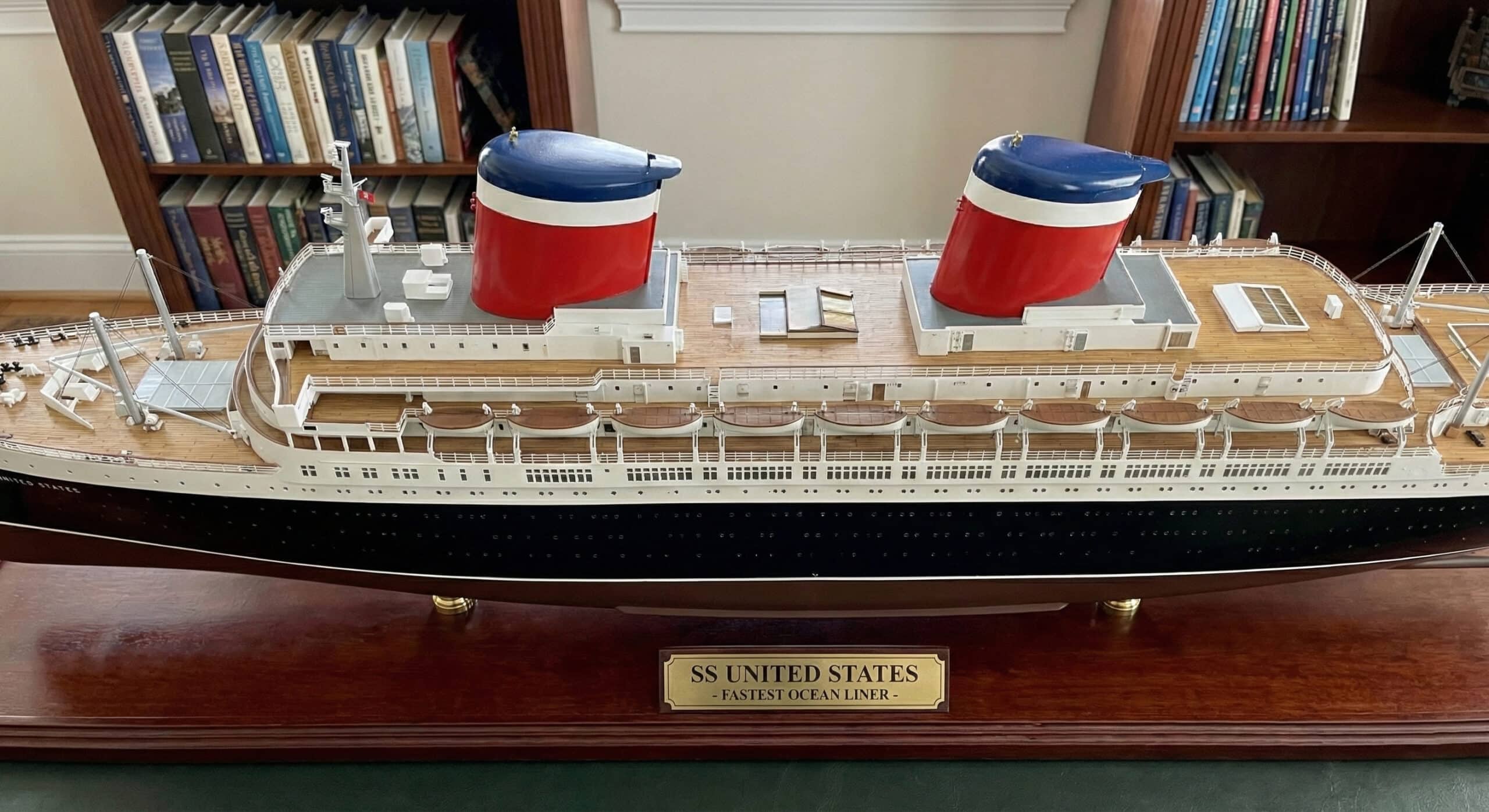
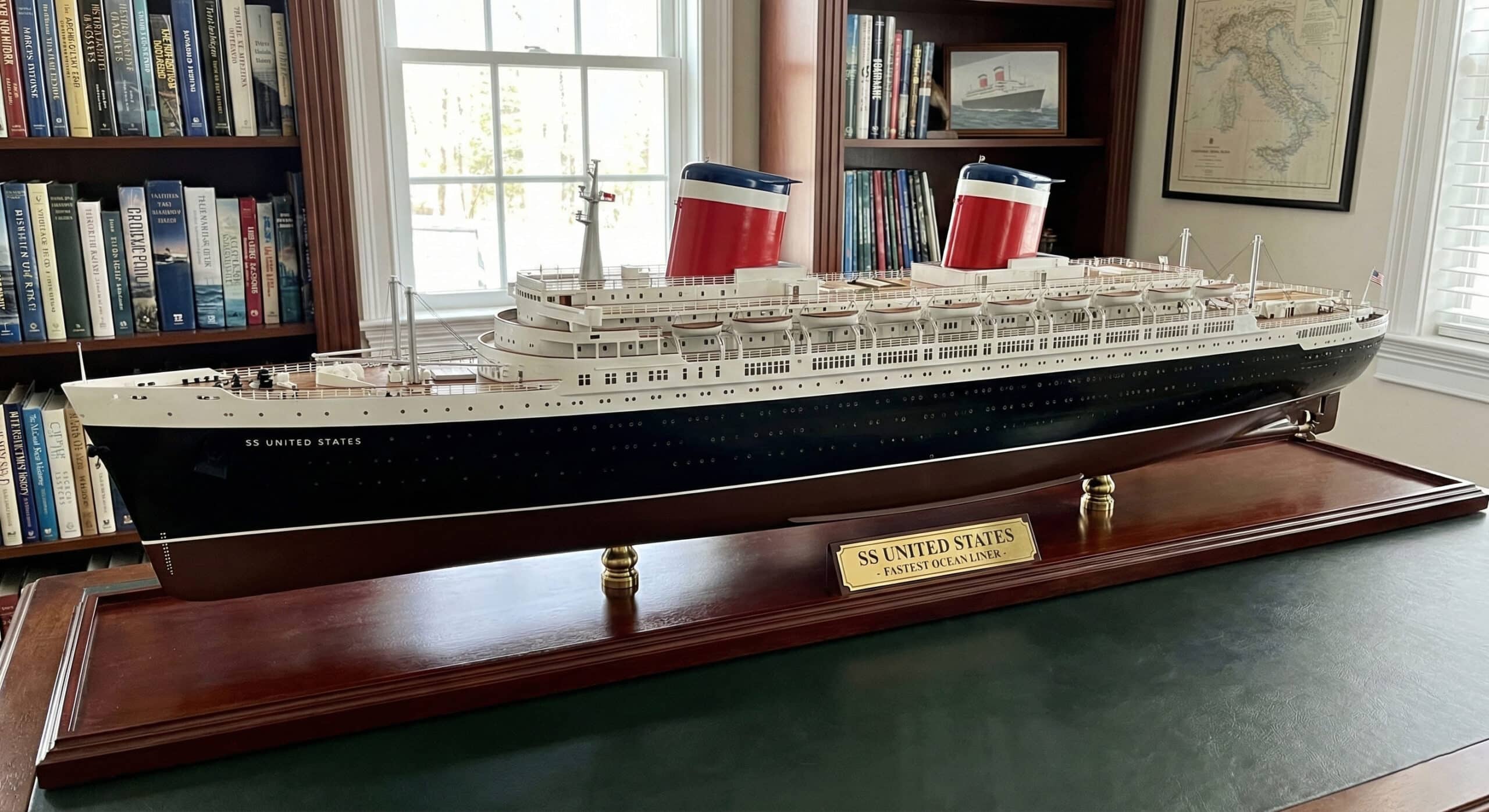
SS United States Ship Model
- Material: Mahogany/Balsa/Resin/Plastic/Diecast
- Finish: Hand-painted
- Base: Wooden/Plastic stand
The SS United States Ship Model represents one of the most extraordinary achievements in 20th-century shipbuilding. The real SS United States was not merely an ocean liner; it was a technological statement, a strategic asset, and a symbol of American industrial ambition. Launched in 1952, the vessel remains the fastest ocean liner ever to cross the Atlantic, a record that still stands today. A finely built SS United States ship model carries that legacy forward in physical form, preserving the story of a ship that was designed to outperform everything afloat.
SS United States and the Peak of Ocean Liner Engineering
Designed by the legendary naval architect William Francis Gibbs, SS United States was engineered with unprecedented attention to speed, structural integrity, and national security. Much of her construction was influenced by naval design principles, including extensive use of lightweight aluminum in the superstructure and advanced compartmentalization. Her exact top speed remains classified, but during sea trials she reportedly exceeded 38 knots — a figure unmatched by any passenger liner before or since.
The vessel’s design history and technical significance are well documented through sources such as the SS United States historical record, the SS United States Conservancy archive, and the National Park Service profile, all of which explore why the ship is still regarded as one of the most advanced liners ever built.
Why the SS United States Is Especially Powerful as a Model Ship
The SS United States is defined by proportion and restraint. The long, clean hull, the sharply angled bow, the balanced funnel placement, and the low, elegant superstructure create a silhouette that is unmistakable to anyone familiar with classic ocean liners. This is not a forgiving subject. If the sheer line, deck height, or funnel geometry is misjudged, the identity of the vessel is immediately lost.
When executed properly, an SS United States ship model carries a presence that feels architectural rather than decorative. Collectors of serious model ship work recognize this instantly. It stands apart from generic liners because the real ship itself was engineered with such discipline and intention.
Craftsmanship Guided by Material and Proportion
A museum-quality SS United States ship model relies on careful material selection and disciplined construction. Many clients prefer traditional approaches using premium woods such as balsa for internal shaping and mahogany wood for visible surfaces and structural refinement. When properly handled, a wooden ship model built from these materials offers longevity, stability, and a tactile quality that synthetic models cannot replicate.
Deck fittings, lifeboats, mast structures, rail detailing, and superstructure geometry must all align with historical reference material for the model ship to feel credible. This is not surface ornamentation. It is controlled interpretation based on real-world documentation.
Customization That Reflects Purpose and Legacy
Commissions for an SS United States ship model are often driven by historical interest rather than decoration. Maritime museums request models for educational display. Collectors of significant vessels include it alongside liners such as Queen Mary and Normandie. Architects, engineers, and historians commission replicas as study pieces. Scale can be adjusted to suit anything from private library display to large institutional installations.
Display bases can remain minimal and architectural or include engraved plaques with vessel specifications, launch dates, and historical context. Some clients request period-specific detailing to reflect the ship’s appearance during active service, while others prefer a cleaner presentation that emphasizes form and proportion.
Who Typically Commissions This Type of Model Ship
The SS United States Ship Model is most often commissioned by maritime historians, ocean liner enthusiasts, museums, serious collectors of model ship craftsmanship, and families with professional ties to naval architecture or shipping. Corporate environments in legal, architectural, and engineering fields also choose this vessel as a display piece because it communicates precision, legacy, and discipline rather than decoration.
Preserving the Legacy of America’s Greatest Ocean Liner
SS United States was designed to be unmatched. That ambition is still visible in her lines, her proportions, and her story. A carefully executed SS United States ship model preserves that legacy with respect. It becomes a historical artifact, a study in engineering restraint, and a lasting tribute to one of the most important vessels ever built.
Testimonials

Known & Trusted by