 ❮
❯
❮
❯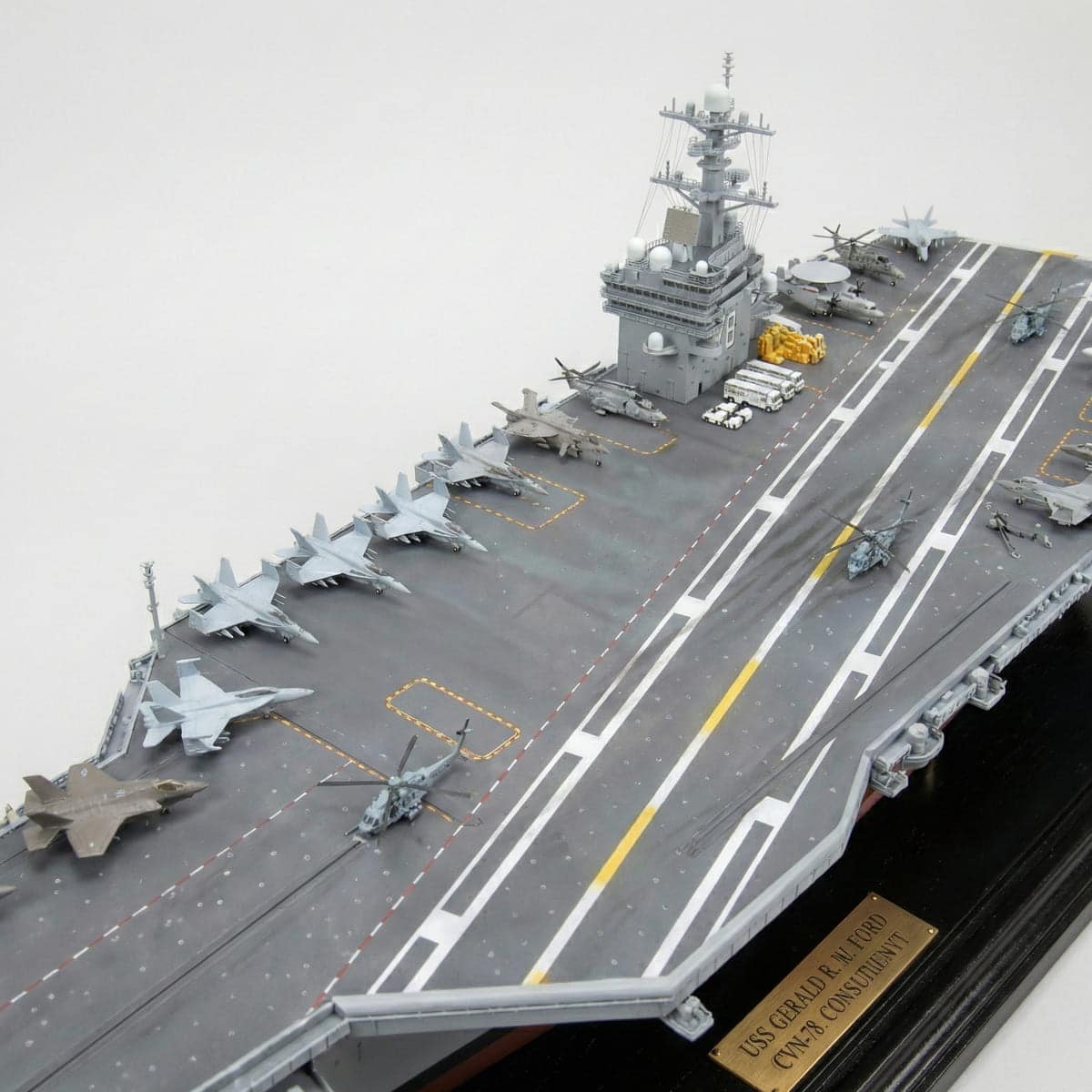
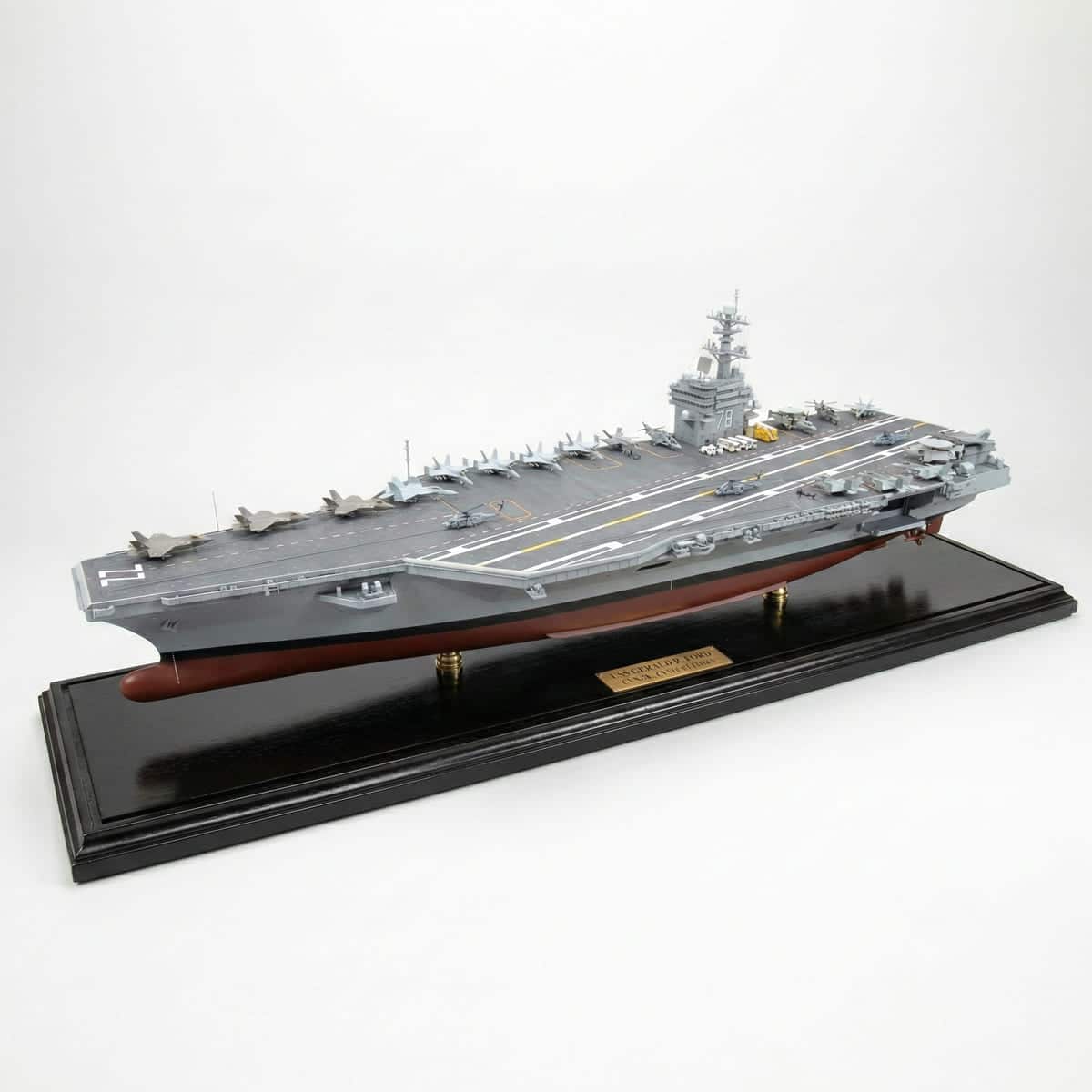
USS Gerald R. Ford Aircraft Carrier Model
- Material: Mahogany/Balsa/Resin/Plastic/Diecast
- Finish: Hand-painted
- Base: Wooden/Plastic stand
The USS Gerald R. Ford aircraft carrier model represents a turning point in naval aviation that many people discuss but few truly understand. The real ship is not just a larger Nimitz-class. It is a fundamentally different carrier in how it generates power, launches aircraft, manages crew workload, and sustains operations over decades. For anyone who has studied carrier aviation seriously, the Ford-class marks the moment when design philosophy shifted from incremental improvement to systemic reinvention. A credible model of this ship must reflect that gravity. It should feel engineered, deliberate, and structurally convincing rather than ornamental.
The Ford-Class and the Redesign of the Modern Aircraft Carrier
Commissioned in 2017, USS Gerald R. Ford (CVN-78) was designed to solve long-term operational limitations that had accumulated across previous carrier generations. The most visible change is the Electromagnetic Aircraft Launch System (EMALS), which replaced steam catapults and altered how aircraft are accelerated, monitored, and managed on deck. Less visible, but arguably more important, is the redesigned electrical architecture, expanded automation, and radically reconfigured island structure intended to reduce crew requirements and improve sortie generation over the ship’s lifetime.
These changes were not cosmetic. They reshaped flight deck choreography, internal space allocation, and the overall engineering logic of the vessel. The technical background of the class is documented through sources such as the USS Gerald R. Ford overview, operational and design context provided by the U.S. Navy Ford-class program documentation, and analysis published by institutions like the U.S. Naval Institute Proceedings, which explores why the class represents a true generational shift rather than a simple upgrade.
Why the USS Gerald R. Ford Deserves a Serious Scale Model
Few modern warships carry as much symbolic and technical weight as this one. The geometry of the flight deck, the repositioned island, the altered elevator locations, and the sheer scale of the hull all communicate design intent. When proportions are handled correctly, a USS Gerald R. Ford aircraft carrier model becomes more than a display piece. It becomes a physical explanation of how modern carrier doctrine is expressed through structure.
This is why museums, naval institutions, and experienced collectors tend to gravitate toward Ford-class models rather than generic carrier representations. The ship is not merely famous. It is instructive. Its layout tells a story about modern naval engineering priorities in a way few other platforms can.
Craftsmanship Focused on Proportion and Structural Logic
A convincing aircraft carrier model demands discipline. The spacing of deck markings, the angle of the island, the geometry of the flight deck edges, and the balance between hull height and superstructure must all align with reference. Small inaccuracies quickly compound on a subject of this size. Each USS Gerald R. Ford aircraft carrier model is therefore developed with close attention to technical imagery, deck plans, and real-world proportions so that the finished piece reads as a credible naval platform rather than a simplified silhouette.
Surface finish also matters. The flight deck should not feel polished. It should feel operational. The island should not appear decorative. It should feel functional. When these relationships are resolved properly, the model gains authority. It stops looking like a souvenir and starts reading like an object of study.
Customization for Institutions, Collectors, and Professional Environments
Commissions for a USS Gerald R. Ford aircraft carrier model are often purpose-driven. Naval museums request them for educational display. Defense contractors commission them for boardrooms and client environments. Veterans and families request them as commemorative pieces tied to service. Scale is often adapted based on whether the model is intended for desktop presentation, large exhibition, or institutional installation.
Display bases, engraved plaques, and interpretive labels can be designed to support the model’s intended role. Some clients prefer clean architectural presentation. Others request historically contextualized displays that explain the ship’s role, technology, and significance within modern naval strategy.
Who Typically Commissions This Type of Naval Model
The USS Gerald R. Ford aircraft carrier model is most often commissioned by naval museums, defense organizations, military historians, serving and retired personnel, serious collectors, and institutions that require accurate physical representations of contemporary naval assets. These are rarely casual acquisitions. They are usually requested by people who understand what the ship represents in both operational and historical terms.
Preserving the Physical Story of a New Generation of Naval Power
The Ford-class does not simply extend the carrier tradition. It redefines how that tradition continues. A carefully executed USS Gerald R. Ford aircraft carrier model preserves that shift in tangible form. It becomes a lasting record of a moment when naval engineering chose to rethink fundamentals rather than repeat established patterns.
Testimonials

Known & Trusted by